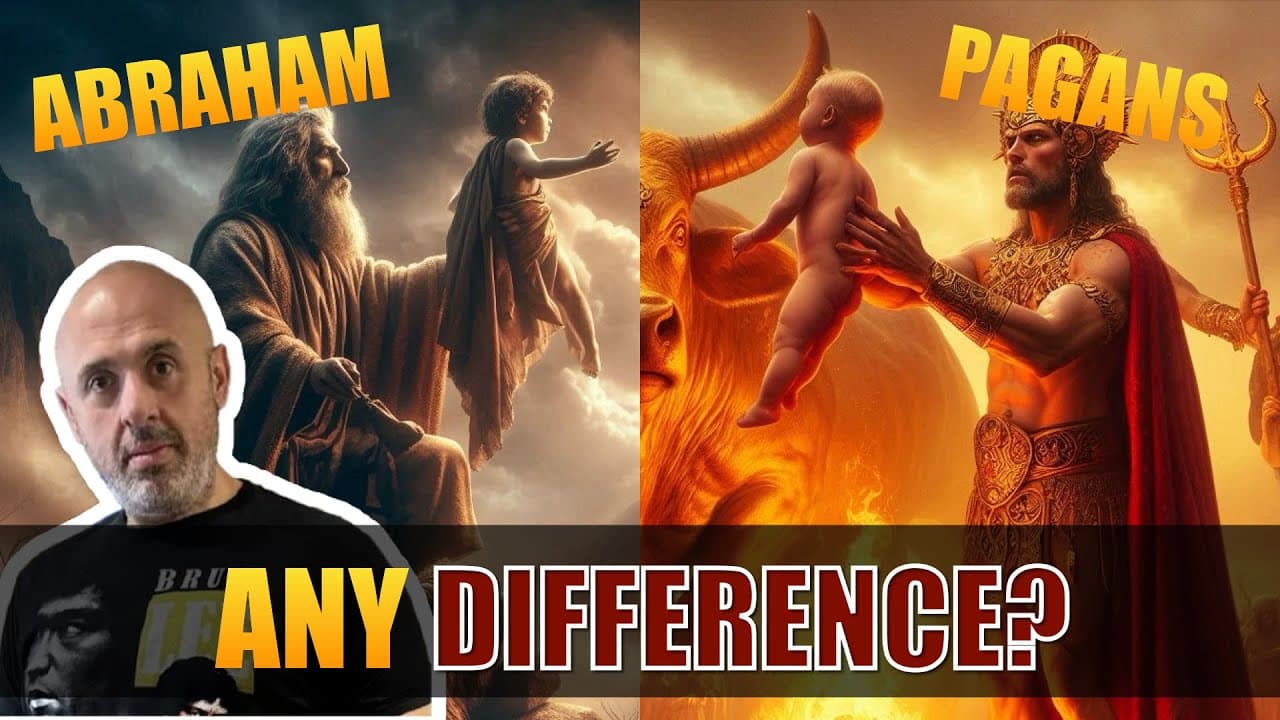
Why Did God Command Abraham To Sacrifice His Son When The Pagans Did The Same? | @shamounian
TL;DR
God's command to Abraham was a test of faith and a foreshadowing of Christ.
Transcript
Why would God command Abraham to offer Isaac? Oh, a test of faith. But why? Because in the picture of Abraham, Isaac is a picture of God the Father and the Lord Jesus Christ. Get ready. You're going to see how marvelous, miraculous, and supernatural our Bible is. And that even the Old Testament points to Jesus Christ our Lord. Because ... Read More
Key Insights
- The story of Abraham and Isaac is a profound test of faith, illustrating Abraham's trust in God's promises and character.
- God's command to Abraham to sacrifice Isaac contrasts with pagan practices, highlighting God's unique nature and plan.
- Abraham's willingness to sacrifice Isaac symbolizes God's ultimate sacrifice of His Son, Jesus Christ, for humanity's salvation.
- The narrative foreshadows Christ's resurrection, as Abraham believed God could raise Isaac from the dead, symbolically receiving him back on the third day.
- Isaac carrying the wood for his sacrifice parallels Jesus carrying His cross, emphasizing the connection between the two events.
- The substitution of a ram for Isaac prefigures Christ as the Lamb of God, who takes away the sins of the world.
- The location of Abraham's intended sacrifice, Mount Moriah, later becomes the site of Solomon's temple, linking Old Testament events with Christ's sacrifice.
- The story underscores the concept of the Trinity, illustrating the equality between the Father and the Son in the context of sacrifice.
Install to Summarize YouTube Videos and Get Transcripts
Explore YouTube Video Summarizer or Get YouTube Transcript Extractor
Questions & Answers
Q: Why did God command Abraham to sacrifice Isaac?
God commanded Abraham to sacrifice Isaac as a test of faith and to illustrate a profound theological truth. The command was not an endorsement of human sacrifice but a demonstration of Abraham's trust in God. It also served as a foreshadowing of God's own sacrifice of His Son, Jesus Christ, for the salvation of humanity.
Q: What is the significance of the third day in the story of Abraham and Isaac?
The third day is significant because it parallels the resurrection of Christ. Abraham believed that if he sacrificed Isaac, God could raise him from the dead. This belief symbolically represents the resurrection, as Abraham received Isaac back on the third day. The third day motif underscores the connection between Isaac's story and the resurrection of Jesus.
Q: How does the story of Abraham and Isaac foreshadow Jesus Christ?
The story foreshadows Jesus Christ through several parallels: Isaac carrying the wood for his sacrifice mirrors Jesus carrying His cross, and the substitution of a ram for Isaac prefigures Christ as the Lamb of God. Additionally, the location of the intended sacrifice, Mount Moriah, later becomes the site of Solomon's temple, linking Old Testament events with Christ's ultimate sacrifice.
Q: What lesson does God teach Abraham through the command to sacrifice Isaac?
God teaches Abraham that He is not like pagan deities who demand human sacrifice. Instead, God reveals His plan to offer His own Son for the salvation of the world. The lesson highlights God's unique nature and foreshadows the ultimate act of love and sacrifice through Jesus Christ. It emphasizes God's faithfulness and the depth of His love for humanity.
Q: Why did Abraham believe God could raise Isaac from the dead?
Abraham believed God could raise Isaac from the dead because he had witnessed God's faithfulness and power in fulfilling His promises. Despite the impossibility of Sarah bearing a child at an advanced age, God provided Isaac. Abraham reasoned that since God cannot lie and had promised descendants through Isaac, He would resurrect Isaac if necessary to fulfill His word.
Q: What is the connection between Isaac carrying the wood and Jesus carrying the cross?
Isaac carrying the wood for his sacrifice is a direct parallel to Jesus carrying His cross. This connection emphasizes the typology between Isaac and Jesus, illustrating the foreshadowing of Christ's sacrifice. Both carried the instruments of their intended execution, highlighting the continuity between the Old Testament narrative and the New Testament fulfillment in Christ.
Q: How does the substitution of a ram relate to the concept of Jesus as the Lamb of God?
The substitution of a ram for Isaac prefigures Jesus as the Lamb of God. In the story, God provides a ram as a substitute sacrifice, sparing Isaac's life. This act foreshadows Jesus, who is referred to as the Lamb of God, taking away the sins of the world. The substitution emphasizes God's provision and the ultimate sacrifice of Jesus for humanity's redemption.
Q: What theological insight does the story provide about the Trinity?
The story provides a theological insight into the Trinity by illustrating the equality between the Father and the Son in the context of sacrifice. Just as Abraham offered Isaac, his equal, God offers Jesus, who is fully God and equal to the Father. This underscores the concept of the Trinity, where the Father, Son, and Holy Spirit are distinct yet equal in essence and glory.
Summary & Key Takeaways
-
The story of Abraham and Isaac is a test of faith, demonstrating Abraham's trust in God's promises. God contrasts Himself with pagan gods by not requiring human sacrifice, instead offering His Son for humanity's salvation.
-
Abraham's narrative foreshadows Christ's resurrection, as he believed God could raise Isaac from the dead, symbolically receiving him back on the third day. The parallels between Isaac and Jesus emphasize the connection between the two events.
-
The substitution of a ram for Isaac prefigures Christ as the Lamb of God. The story highlights the Trinity, illustrating the equality between the Father and the Son in the context of sacrifice, connecting Old Testament events with Christ's ultimate sacrifice.
Read in Other Languages (beta)
Share This Summary 📚
Summarize YouTube Videos and Get Video Transcripts with 1-Click
Try YouTube Summary with ChatGPT & Claude or YouTube Transcript Generator
Explore More Summaries from Christ Over ALL 📚




Summarize YouTube Videos and Get Video Transcripts with 1-Click
Try YouTube Summary with ChatGPT & Claude or YouTube Transcript Generator