Courage is contagious | Damon Davis
TL;DR
This content explores the author's personal experiences with fear, courage, and the power of art during the Ferguson protests.
Transcript
So, I'm afraid. Right now, on this stage, I feel fear. In my life, I ain't met many people that will readily admit when they are afraid. And I think that's because deep down, they know how easy it spreads. See, fear is like a disease. When it moves, it moves like wildfire. But what happens when, even in the face of that fear, you do what you've got... Read More
Key Insights
- 🔥 Fear is contagious, but so is courage. In the face of fear, taking action and doing what you need to do is an act of courage that can inspire others and spark change.
- ❤️ In times of crisis and injustice, love for oneself and the community can be a powerful tool in overcoming fear and amplifying voices.
- 🚔 The use of fear as a weapon by those in power can be seen in the militarized police response to protests, the media's portrayal of events, and attempts to divide and isolate communities.
- 😨 The presence of heavily armed police and armored vehicles can instill fear in individuals, but it can also ignite a sense of defiance and resistance.
- 👥 Unity and collective action can transform fear into courage. When people join together, raise their voices, and stand up against injustice, the feeling of courage becomes immensely empowering.
- 🎨 Artists have the ability to convey courage through their work and become conduits for change. This includes creating awareness, uplifting stories, and fortifying communities' morale.
- 🌍 Thought leaders, movers, and shakers have a responsibility to use their gifts to break free from the fear that binds society. They have the power to inspire and lead change towards a more just and compassionate world.
- 💪 Fear is a natural emotion, but it should not cripple us. Instead, it can be harnessed as a source of strength, protection, and motivation to make a difference.
Install to Summarize YouTube Videos and Get Transcripts
Explore YouTube Video Summarizer or Get YouTube Transcript Extractor
Questions & Answers
Q: How does fear spread like a disease according to the speaker?
Fear spreads like a disease because when it moves, it moves rapidly and easily, just like wildfire. The speaker explains that people often refrain from admitting their fear because deep down, they understand how easily it can be transmitted to others.
Q: Why did the police try to use fear as a weapon after Michael Brown's death?
After the death of Michael Brown, the powers that be attempted to use fear as a weapon in response to the protests and mourning in the community. The police sought to impose fear upon the people through the deployment of militarized forces, threatening imprisonment and fines. Additionally, the media played a role in spinning the story in a manner that aimed to instill fear among individuals.
Q: How did the speaker initially feel when witnessing the police response during the protests?
The speaker admits feeling personally terrified when confronted with the police response during the protests. The sight of armored vehicles, extensive gear, guns, and numerous policemen evoked fear within the speaker. Moreover, the speaker observed that many others in the crowd felt the same way.
Q: What sparked a change in the speaker's emotions during the protests?
Amidst the fear and terror, the speaker noticed something different within individuals. Alongside anger, the speaker witnessed love - love for themselves and love for their community. However, the arrival of the police injected a new emotion into the situation: fear. Yet, the speaker also experienced a surge of courage within themselves, as well as among the people in the crowd.
Q: How did the speaker use their artistic skills to contribute to the protest movement?
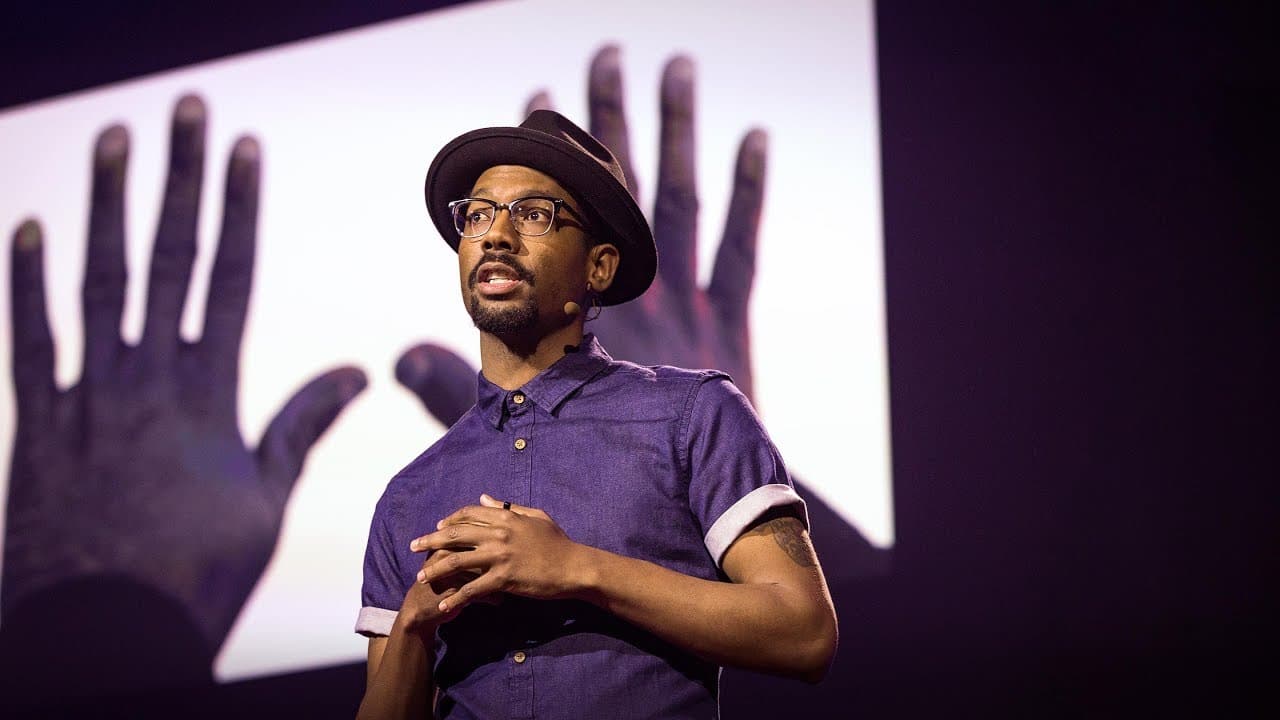
Realizing their role as an artist, the speaker felt compelled to do more. They started creating artwork specifically for the protests, aimed to be weapons in a spiritual war. These creations were meant to give people a voice and build their strength for the challenges ahead. For instance, the speaker photographed the hands of protesters, showcasing them on boarded-up buildings and community shops to raise awareness and bolster morale.
Q: What was the purpose behind the speaker's documentary "Whose Streets?"
Along with their friend and filmmaker Sabaah Folayan, the speaker aimed to uplift the stories of the courageous individuals they witnessed during the protests. The documentary, "Whose Streets?," served as a means to convey those stories and shed light on the bravery exhibited by the community. The speaker became a conduit for the courage they had received, believing that it is the role of artists to convey courage through their work.
Q: What does the speaker expect from the audience, particularly the thought leaders, in breaking free from fear?
The speaker turns to the audience, addressing them as the movers, shakers, and thought leaders. The speaker expresses their hope that these individuals will utilize the gifts they possess to break free from the fear that restricts society daily. They encourage the audience to consider the ways in which their abilities and influence can combat fear and hate, especially during challenging times.
Summary & Key Takeaways
-
Fear is contagious, but so is courage. The speaker describes how fear spread in their community after the death of Michael Brown, but also witnessed the courage of protesters who stood up against the intimidating police.
-
The speaker decided to use their artistic abilities to contribute to the protests, raising awareness and morale. They created projects and a documentary to uplift the stories of courageous individuals.
-
The speaker highlights the responsibility of artists to convey courage in their work and urges the audience, as thought leaders, to use their gifts to break the cycle of fear that binds society.
Read in Other Languages (beta)
Share This Summary 📚
Summarize YouTube Videos and Get Video Transcripts with 1-Click
Try YouTube Summary with ChatGPT & Claude or YouTube Transcript Generator
Explore More Summaries from TED 📚


Summarize YouTube Videos and Get Video Transcripts with 1-Click
Try YouTube Summary with ChatGPT & Claude or YouTube Transcript Generator