2.1 Basics of machine translation
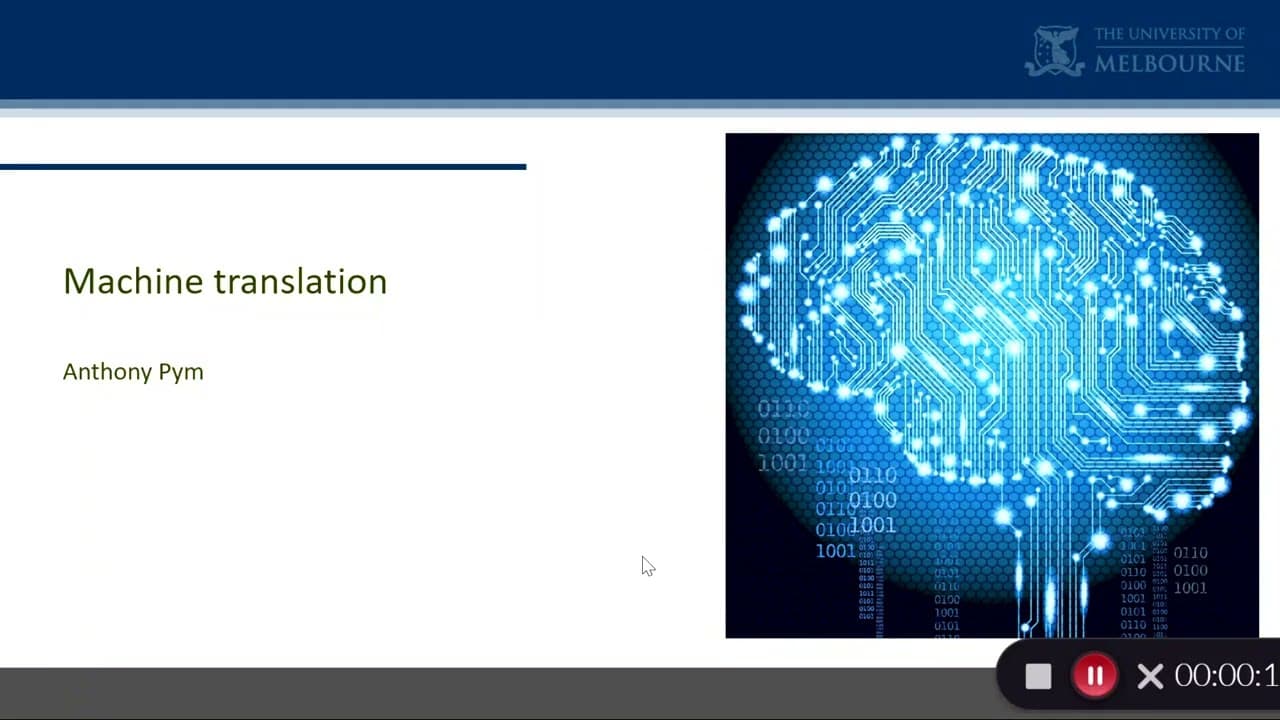
TL;DR
Machine translation has become prevalent in many industries, processing billions of words daily, but it still faces challenges and cannot fully replace human translation.
Transcript
These days, if you want to translate, you at least have to know about machine translation. Even if you don't want to use machine translation, even if you don't like it, you have to know what it is because it is very much present in the market. The history of machine translation can be looked up in many places. I'm not going to focus on it here. Th... Read More
Key Insights
- 😒 Machine translation has become an essential tool, even for those who do not use or like it, as it is prevalent in the market.
- 💦 Professional translators can work more effectively and efficiently by post-editing machine-translated text.
- 🎰 Machine translation's accuracy is limited by its reliance on statistical probabilities and the database of human translations.
- 🖤 High-stakes text requires human expertise to ensure accurate translations, as machine translation lacks the ability to analyze risks.
Install to Summarize YouTube Videos and Get Transcripts
Explore YouTube Video Summarizer or Get YouTube Transcript Extractor
Questions & Answers
Q: How has machine translation improved over time?
Machine translation has evolved from traditional linguistic algorithms to statistical machine translation and now neural machine translation, which combines statistical algorithms with deep learning techniques.
Q: Is machine translation taking away work from professional translators?
While machine translation processes a vast amount of words, it is often used in situations where human translators would not have been used before. Many professional translators also utilize post-editing to improve machine-translated text.
Q: Can machine translation accurately handle ambiguous language?
Machine translation relies on probability and context to understand ambiguous language. However, minor ambiguities can lead to errors, as seen in the example of German word "selbstverständlich" being translated as "natural" or "of course" depending on the database's interpretation.
Q: Can machine translation accurately convey the semantics and form of a text?
Machine translation has achieved semantic parity with human translation according to some studies, but it may still lack the ability to produce well-written and context-specific translations.
Summary & Key Takeaways
-
Machine translation has a long history and has significantly improved over the years, with statistical and neural machine translation being the most recent advancements.
-
Google Translate, for example, processes 148 billion words each day, compared to less than 1 billion words produced by professional translators.
-
However, machine translation is not without its flaws, and it often requires post-editing by human translators for accurate and context-specific translations.
Read in Other Languages (beta)
Share This Summary 📚
Summarize YouTube Videos and Get Video Transcripts with 1-Click
Try YouTube Summary with ChatGPT & Claude or YouTube Transcript Generator
Explore More Summaries from Anthony Pym 📚



Summarize YouTube Videos and Get Video Transcripts with 1-Click
Try YouTube Summary with ChatGPT & Claude or YouTube Transcript Generator