Ocean Acidification (Intro to Solid-State Chemistry)
TL;DR
Ocean acidification is causing the shells of pteropods to dissolve due to changes in the water's chemistry, leading to significant consequences for their survival.
Transcript
Why does this matter? We go back to the pteropod. And by the way, I didn't have this link, and I should have when I showed you the-- and this is your goody bag, et cetera. There's some really nice articles here that you can find related to these experiments and other things about ocean acidity in case you're interested. But see, what I did was that... Read More
Key Insights
- 🌊 Ocean acidification is causing the pH of the ocean to decrease, making it more acidic than it has been in millions of years.
- 🐚 Pteropods, a type of sea creature, are particularly vulnerable to ocean acidification due to the dissolution of their calcium carbonate shells.
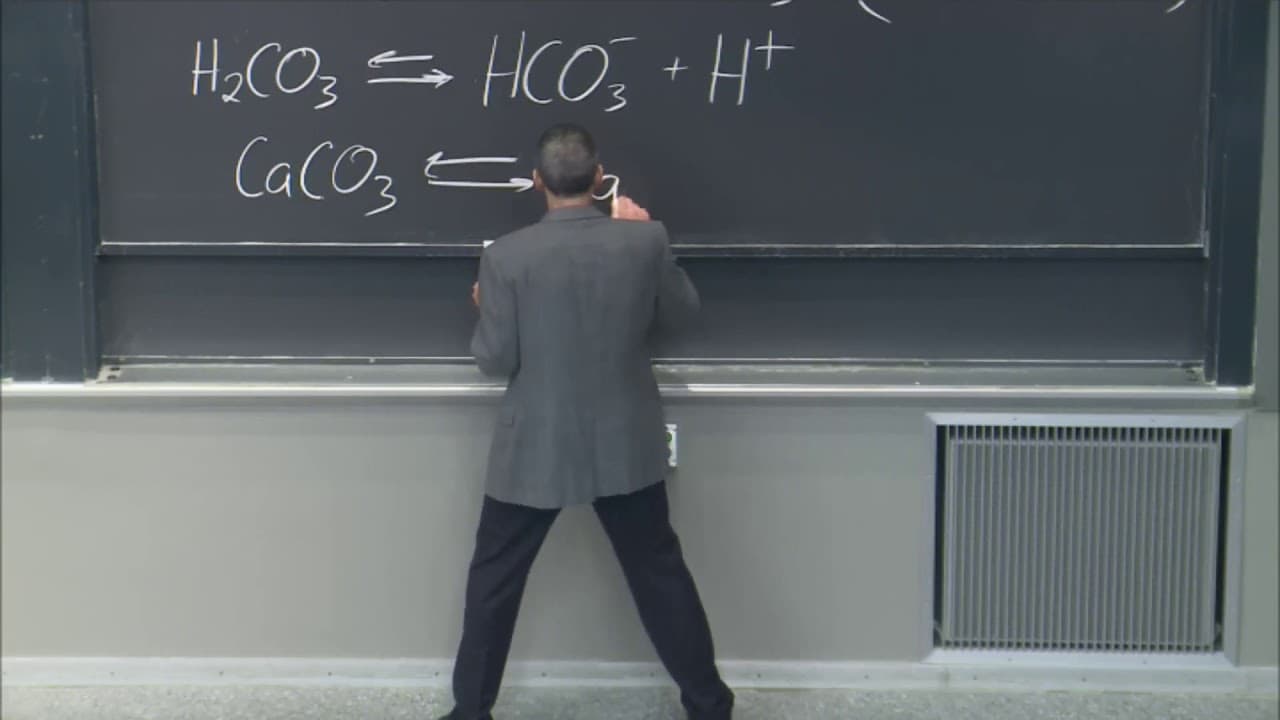
- 😑 The dissolution of pteropod shells is driven by chemical reactions involving carbonic acid, carbonate ions, and changes in their concentrations.
- 🐚 The increased dissolution of pteropod shells has significant implications for their survival and the overall marine ecosystem.
- 🌊 The consequences of ocean acidification extend beyond pteropods to other marine organisms that rely on calcium carbonate structures for protection and support.
- ☠️ The current rate of ocean acidification is unprecedented in millions of years and is projected to worsen in the future if CO2 emissions are not reduced.
- 🙂 Understanding the chemistry behind ocean acidification helps shed light on the mechanisms and impacts of this phenomenon.
Install to Summarize YouTube Videos and Get Transcripts
Explore YouTube Video Summarizer or Get YouTube Transcript Extractor
Questions & Answers
Q: Why does ocean acidification occur and how is it related to CO2?
Ocean acidification occurs when excess carbon dioxide (CO2) from human activities is absorbed by the oceans. When CO2 dissolves in seawater, it reacts with water to form carbonic acid, leading to a decrease in pH and increased acidity.
Q: How does ocean acidification affect pteropods?
Pteropods rely on their shells for protection and buoyancy. As the oceans become more acidic, their shells begin to dissolve, making it challenging for pteropods to survive and reproduce.
Q: What is the role of chemical equilibrium in the dissolution of pteropod shells?
The dissolution of pteropod shells is affected by equilibrium reactions between carbonic acid, HCO3- ions, and carbonate ions (CO3 2-) in the water. Changes in the concentrations of these chemical species can drive the dissolution process.
Q: How does ocean acidification impact the concentration of carbonate ions near the shells?
Ocean acidification leads to an increase in the concentration of H+ ions in the water. These H+ ions react with carbonate ions (CO3 2-), reducing their concentration near the shells and leading to increased dissolution of the shells.
Summary & Key Takeaways
-
Ocean acidification is causing the pH of the ocean to decrease, making it more acidic, and this is having a detrimental effect on marine organisms like pteropods.
-
The shells of pteropods are made of calcium carbonate, and the increased acidity of the water is causing the shells to dissolve.
-
The dissolution of pteropod shells is driven by a chemical reaction involving carbonic acid and the concentration of carbonate ions in the water.
Read in Other Languages (beta)
Share This Summary 📚
Summarize YouTube Videos and Get Video Transcripts with 1-Click
Try YouTube Summary with ChatGPT & Claude or YouTube Transcript Generator
Explore More Summaries from MIT OpenCourseWare 📚



Summarize YouTube Videos and Get Video Transcripts with 1-Click
Try YouTube Summary with ChatGPT & Claude or YouTube Transcript Generator