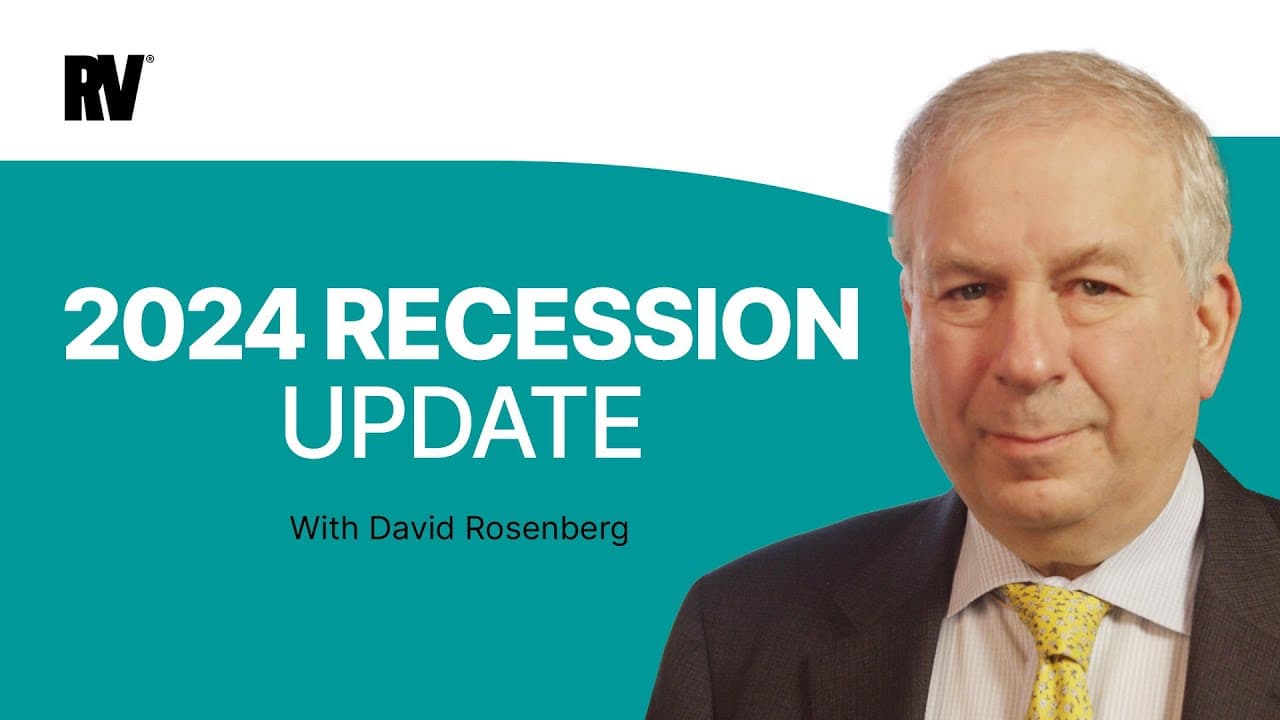
Are We Still Heading for a Recession? w/ David Rosenberg
TL;DR
David Rosenberg predicts a potential recession due to economic imbalances.
Transcript
it's a brilliant brilliant event and you'll come away with lots of new ideas and a better understanding of this incredible exponential world you get to speak to the smartest people people like you trying to figure this out but also the people on stage they're the experts so we get all of that all in one place in Singapore what more can you ask see ... Read More
Key Insights
- David Rosenberg believes the economy is heading towards a recession due to unsustainable fiscal stimulus and rising credit card delinquencies.
- He highlights the disconnect between supply and demand, with supply-side productivity gains not matched by consumer demand, leading to disinflation.
- Rosenberg criticizes the Federal Reserve's optimistic view of the economy, suggesting that economic activity is actually slowing down.
- He points out that excess savings from stimulus checks have been depleted, contributing to a consumer revolt against high prices.
- Rosenberg warns of a potential bubble in the stock market, driven by passive indexation and concentration in a few high-performing tech stocks.
- He suggests that thematic investing in sectors like aerospace, defense, utilities, and healthcare could offer better opportunities amid economic uncertainty.
- Rosenberg foresees a decline in inflation towards the Fed's target, expecting significant rate cuts in the near future.
- He advises investors to focus on capital preservation and consider rebalancing portfolios to mitigate risks associated with current market conditions.
Install to Summarize YouTube Videos and Get Transcripts
Explore YouTube Video Summarizer or Get YouTube Transcript Extractor
Questions & Answers
Q: What is David Rosenberg's view on the current economic outlook?
David Rosenberg is pessimistic about the current economic outlook, predicting a potential recession. He argues that the economy is being propped up by unsustainable fiscal stimulus and that rising credit card delinquencies indicate underlying financial stress. He believes that the disconnect between supply and demand will lead to disinflation and challenges the Federal Reserve's optimistic assessment of economic growth.
Q: How does Rosenberg compare the current economic situation to past events?
Rosenberg draws parallels between the current economic situation and the period leading up to the 2008 financial crisis. He notes that, like in 2007, there is a prevailing narrative that the economy is strong, despite underlying weaknesses. He also compares the current stock market bubble to the late 1990s tech bubble, highlighting the risks of excessive valuations and concentration in a few high-performing stocks.
Q: What are Rosenberg's views on inflation and interest rates?
Rosenberg expects inflation to decline towards the Federal Reserve's target of 2% by the end of the year, driven by a mismatch between supply and demand. He predicts significant interest rate cuts in the near future as the economy slows down. Rosenberg emphasizes the importance of understanding supply and demand dynamics in forecasting inflation and suggests that disinflationary pressures will persist.
Q: What investment opportunities does Rosenberg identify amid economic uncertainty?
Rosenberg suggests focusing on thematic investing in sectors with growth potential, such as aerospace, defense, utilities, and healthcare. He highlights the importance of capital preservation and advises investors to consider rebalancing portfolios to mitigate risks associated with current market conditions. Rosenberg also sees potential in gold and gold mining stocks, given their relative value and the expected decline in real interest rates.
Q: How does Rosenberg view the impact of passive indexation on the stock market?
Rosenberg is concerned about the impact of passive indexation on the stock market, noting that it has led to a concentration of investment in a few high-performing tech stocks. He warns that this concentration risk could exacerbate market volatility and contribute to a bubble. Rosenberg suggests that the inflows into index funds have distorted risk allocation and capital distribution, potentially leading to a reinforcing cycle of buying and selling.
Q: What are the risks of a stock market bubble according to Rosenberg?
Rosenberg warns that the current stock market bubble, driven by excessive valuations and concentration in a few tech stocks, poses significant risks. He notes that the bubble could burst if investor sentiment shifts or if companies fail to meet earnings expectations. Rosenberg emphasizes the importance of historical context in understanding market cycles and cautions against complacency in the face of rising asset prices.
Q: What advice does Rosenberg offer to investors in the current market environment?
Rosenberg advises investors to focus on capital preservation and consider rebalancing portfolios to mitigate risks associated with the current market environment. He suggests taking profits in overvalued stocks and reallocating to sectors with more stable growth potential. Rosenberg also recommends protective strategies, such as selling calls against portfolios, to hedge against potential market corrections and volatility.
Q: How does Rosenberg view the role of consumer behavior in the current economic landscape?
Rosenberg observes a shift in consumer behavior towards frugality, driven by depleted savings and high prices. He notes that consumers are trading down, opting for more affordable options and cutting back on discretionary spending. Rosenberg sees this trend as indicative of broader economic challenges and suggests that it could contribute to a slowdown in consumer-driven economic growth. He highlights the importance of understanding these behavioral shifts in assessing the overall economic outlook.
Summary & Key Takeaways
-
David Rosenberg discusses the potential for a recession, driven by unsustainable fiscal stimulus and rising credit card delinquencies. He highlights the disconnect between supply and demand, leading to disinflation.
-
Rosenberg critiques the Federal Reserve's optimistic view of the economy, suggesting that economic activity is actually slowing. He notes the depletion of excess savings and a consumer revolt against high prices.
-
He warns of a stock market bubble fueled by passive indexation and concentration in tech stocks. Rosenberg suggests thematic investing in sectors like aerospace and healthcare, while focusing on capital preservation.
Read in Other Languages (beta)
Share This Summary 📚
Summarize YouTube Videos and Get Video Transcripts with 1-Click
Try YouTube Summary with ChatGPT & Claude or YouTube Transcript Generator
Explore More Summaries from Real Vision 📚




Summarize YouTube Videos and Get Video Transcripts with 1-Click
Try YouTube Summary with ChatGPT & Claude or YouTube Transcript Generator