How a 3-Person Founder Team Beat Big Tech ㅣMangomint, Daniel Lang
TL;DR
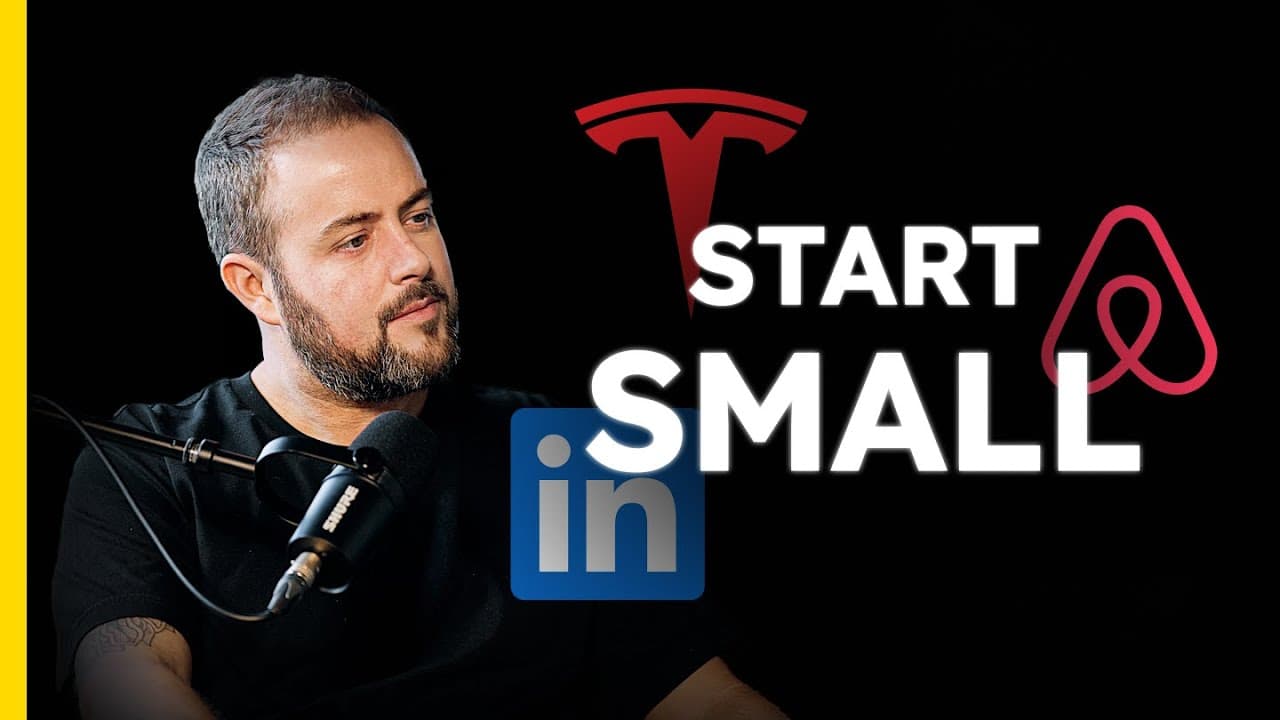
Mangomint’s three-person founding team competed with much larger companies by starting with a narrow product focus and learning directly from salon and spa operators. With no industry experience, the founders offered free marketing services and found their first 10, 20, and eventually 30 customers; it then took about two years to build a product someone would normally pay for. Read on for Daniel Lang’s lessons on differentiation, intuition, focus, and persistence.
Transcript
I think it would be foolish to believe that if you're competing against companies with thousands of employees and hundreds of millions of billions in revenue and you can just show up with like a threers Founder team and after like one year of work you're just better right that's just not how it works right you start out by not having very much of a... Read More
Key Insights
- Mangomint's founders initially lacked industry experience, leading them to offer free marketing services to understand the salon and spa market better.
- Daniel Lang emphasizes the importance of intuition in product development, advocating for opinionated decisions over formulaic approaches.
- Despite early challenges, Mangomint's founders chose to enter a competitive market, seeing the presence of incumbents as a positive indicator of market potential.
- Mangomint's initial niche was not a market segment but a focus on user-friendly calendar features, avoiding features like payment processing initially.
- Lang stresses the importance of saying 'no' to potential clients when requests don't align with the company's strategic vision, even at the cost of immediate revenue.
- The CEO's involvement in product development is crucial, as it ensures the product aligns with the company's vision and values.
- Mangomint's funding journey highlights the shift from struggling to secure meetings to having investors actively pursue them as the company gained traction.
- Lang advises aspiring entrepreneurs to embrace the long journey, understanding that success often takes years of persistence and resilience.
Install to Summarize YouTube Videos and Get Transcripts
Explore YouTube Video Summarizer or Get YouTube Transcript Extractor
Questions & Answers
Q: How did Mangomint’s three-person founder team compete against much larger technology companies?
The founders did not expect to outperform companies with thousands of employees after only one year. They focused on what the founders themselves could contribute, built for a very small and specific niche, and developed their competitive advantage over time.
Q: What is Mangomint, and who is Daniel Lang?
Mangomint is software for salons and spas, and Daniel Lang is its co-founder and CEO. The platform acts as an operating system for beauty and wellness businesses, supporting appointment scheduling, client marketing, payments, and payment processing.
Q: How did Mangomint’s founders learn about salons and spas without industry experience?
They used what Lang calls a “trojan horse approach,” offering salons free marketing services so they could spend time inside the businesses. They built websites and handled email marketing in exchange for the opportunity to understand how salons operated.
Q: How did Mangomint find its first customers before it had a product?
The founders walked into salons and explained that they had nothing to sell but could provide free marketing and technology help. Although some owners initially suspected a scam, persistence helped them find their first 10, then 20, and eventually 30 customers.
Q: Why did Daniel Lang see an opportunity in salon and spa software?
During a road trip through 32 states, Lang noticed that towns of every size had many local businesses. Although services such as Uber and Uber Eats already felt modern in 2016, booking a hair appointment or wellness treatment could still require calling and waiting for a response.
Q: How long did Mangomint take to build a product customers would pay for?
Lang says it took about two years to create a software product that a normal customer would pay for without being a friend of the founders. The first version itself took about two years to build and was still very incomplete.
Q: What was Mangomint’s initial product focus?
Mangomint initially concentrated on a beautifully designed, intuitive calendar rather than trying to provide every possible feature. The founders deliberately held back broader capabilities such as payment processing and reporting until they had established a stronger product foundation.
Q: What product-development philosophy does Daniel Lang advocate?
Lang favors intuition and opinionated decisions over relying entirely on rigid systems or formulas. He believes products become more exciting and beloved when their creators apply judgment and gut feeling while keeping the company’s vision coherent.
Summary & Key Takeaways
-
Mangomint's journey began with a lack of industry experience, prompting its founders to offer free services to learn about the salon and spa market. This approach helped them understand customer needs and build a competitive product over time.
-
Daniel Lang emphasizes the role of intuition in product development, advocating for decisions based on gut feelings rather than rigid systems. He believes this approach leads to more exciting and beloved products.
-
Entering a competitive market, Mangomint's founders saw incumbents as proof of market viability. They focused on a niche of user-friendly calendar features, deliberately avoiding broader functionality until they had a solid product foundation.
Read in Other Languages (beta)
Share This Summary 📚
Summarize YouTube Videos and Get Video Transcripts with 1-Click
Try YouTube Summary with ChatGPT & Claude or YouTube Transcript Generator
Explore More Summaries from EO 📚

Summarize YouTube Videos and Get Video Transcripts with 1-Click
Try YouTube Summary with ChatGPT & Claude or YouTube Transcript Generator