How Do Green Anacondas Hunt and Eat Their Prey?
TL;DR
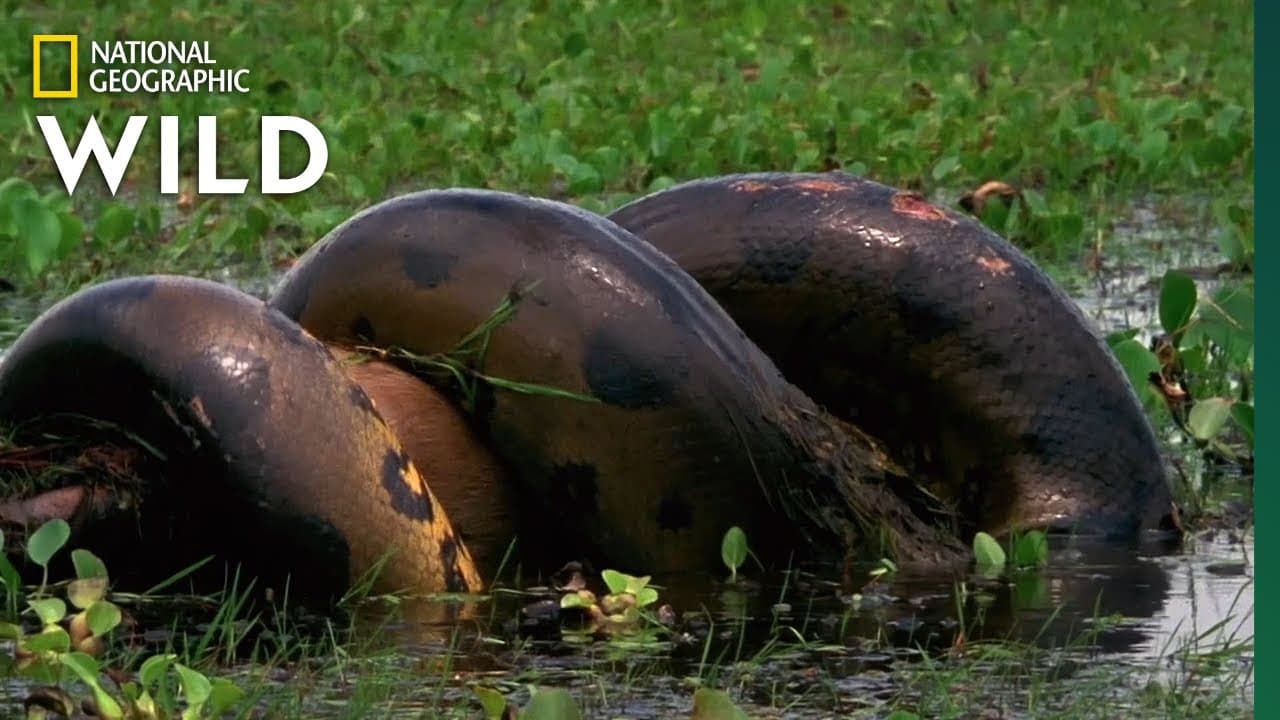
Green anacondas can grow up to 25 feet long and weigh over 300 pounds. They use camouflage and ambush techniques, primarily hunting capybaras by coiling around them to constrict and cut off blood flow. Anacondas can swallow their prey whole, aided by special mouth adaptations, and digest their meals over the course of weeks.
Transcript
NARRATOR: The green anaconda, known as the heaviest snake in the world. They reach up to 25 feet long, and can weigh more than 300 pounds. [music playing] To support its bulk, anacondas spend almost all of their time in and around water. [music playing] Camouflaged to blend into plant choked water, this snake usually waits for prey to come to it. [... Read More
Key Insights
- 💗 Green anacondas, known as the heaviest snakes, can grow up to 25 feet long and weigh over 300 pounds.
- 💦 Anacondas spend most of their time in and around water, utilizing camouflage and underwater stalking to catch their prey.
- 🤑 Their primary prey is the capybara, the largest rodent on Earth, which also inhabits water-rich areas.
- 🥰 Anacondas kill their prey by constricting them, cutting off blood flow to the heart and causing cardiac arrest.
- 🤑 With stretchy ligaments and mobile joints in their mouths, anacondas can swallow their prey whole, including limbs.
- 🤑 Despite their mouth being stretched tightly around their meal, anacondas have a solution for breathing by pushing their windpipe forward like a snorkel.
- 🌥️ Digesting a large meal can take weeks for an anaconda, and a substantial prey like a capybara can satisfy it for months.
Install to Summarize YouTube Videos and Get Transcripts
Explore YouTube Video Summarizer or Get YouTube Transcript Extractor
Questions & Answers
Q: How big can a green anaconda grow, and what is its primary hunting technique?
Green anacondas can grow up to 25 feet long and weigh over 300 pounds. They primarily rely on their camouflage and ambush skills, waiting for prey to come to them instead of actively hunting.
Q: How do anacondas kill their prey without using venom?
Anacondas are constrictors, meaning they kill their prey by compressing the blood flow to the prey's heart, causing cardiac arrest. They do not rely on venom to kill.
Q: How do anacondas eat their prey whole, considering their mouths are stretched tightly during the process?
Anacondas have stretchy ligaments and mobile joints in their mouths to accommodate swallowing prey whole. Additionally, they have two rows of backward pointing teeth that help them move their heads up and over their meals.
Q: How do anacondas breathe while feeding on their massive meals?
While eating, an anaconda's windpipe gets pushed forward from deep within its throat, functioning like a snorkel. This allows the snake to breathe effortlessly while its mouth is stretched tightly around its meal.
Key Insights:
- Green anacondas, known as the heaviest snakes, can grow up to 25 feet long and weigh over 300 pounds.
- Anacondas spend most of their time in and around water, utilizing camouflage and underwater stalking to catch their prey.
- Their primary prey is the capybara, the largest rodent on Earth, which also inhabits water-rich areas.
- Anacondas kill their prey by constricting them, cutting off blood flow to the heart and causing cardiac arrest.
- With stretchy ligaments and mobile joints in their mouths, anacondas can swallow their prey whole, including limbs.
- Despite their mouth being stretched tightly around their meal, anacondas have a solution for breathing by pushing their windpipe forward like a snorkel.
- Digesting a large meal can take weeks for an anaconda, and a substantial prey like a capybara can satisfy it for months.
- Eventually, an anaconda will need to feed again after digesting its catch.
Summary & Key Takeaways
-
The green anaconda, the heaviest snake in the world, can reach up to 25 feet long and weigh over 300 pounds.
-
These snakes spend most of their time in and around water, blending into their surroundings and waiting for prey to come to them.
-
Anacondas primarily feed on capybaras, the largest rodents on Earth, which spend a lot of time near water, making them prime targets for the snakes.
Read in Other Languages (beta)
Share This Summary 📚
Summarize YouTube Videos and Get Video Transcripts with 1-Click
Try YouTube Summary with ChatGPT & Claude or YouTube Transcript Generator
Explore More Summaries from Nat Geo WILD 📚




Summarize YouTube Videos and Get Video Transcripts with 1-Click
Try YouTube Summary with ChatGPT & Claude or YouTube Transcript Generator