How Bed Rotting Is Ruining Your Life
TL;DR
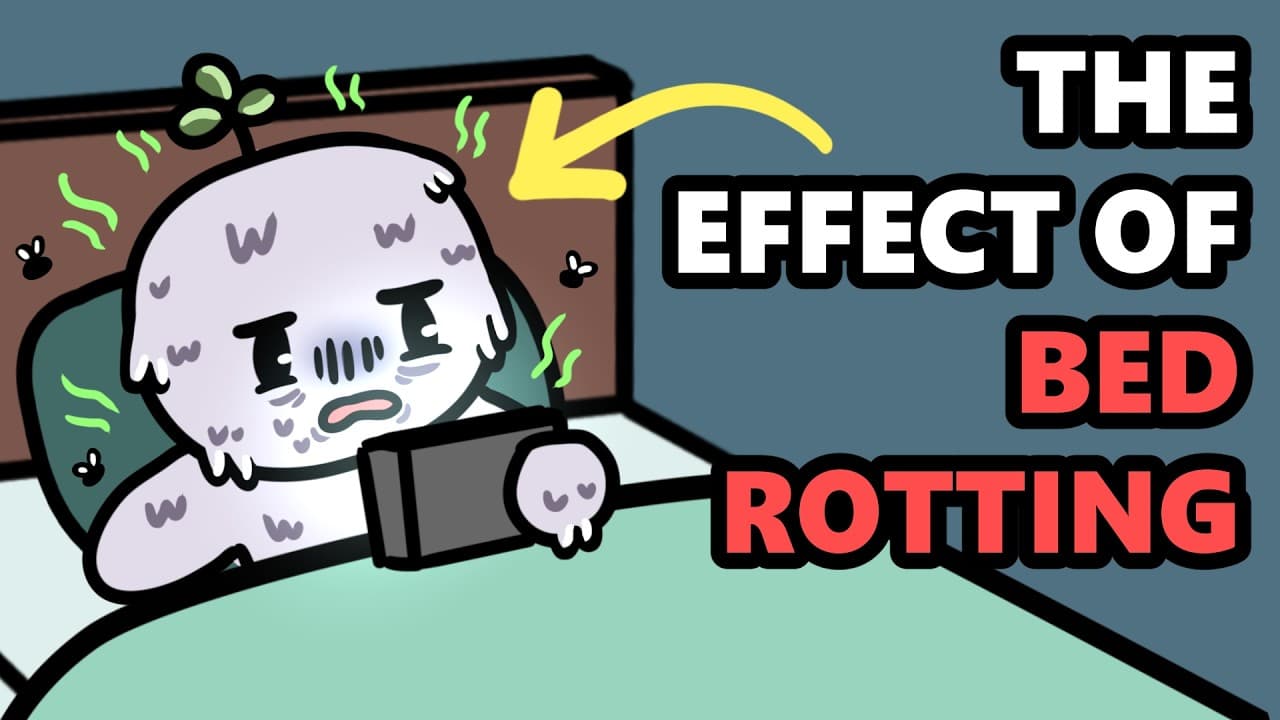
Bed rotting may worsen mental health despite feeling comforting.
Transcript
we already know the answer but have you ever found yourself lying in bed for hours not sleeping just scrolling on your phone binge watching shows or kind of just existing that's what people are calling bedrotting it's a way some of us cope when we're feeling totally drained burnt out or overwhelmed not the most glamorous term but pretty relatable r... Read More
Key Insights
- Bed rotting is a coping mechanism for burnout and depression, providing temporary comfort but potentially worsening mental health in the long run.
- The concept of bed rotting emphasizes the difference between physical and mental health recovery, highlighting the need for proactive mental health management.
- Prolonged bed rotting can lead to increased anxiety and procrastination due to rumination on uncompleted tasks, creating a cycle of inaction.
- Physical inactivity associated with bed rotting can negatively affect self-esteem, linking to studies showing active individuals have higher self-esteem.
- Family and friends' concerns about excessive bed rotting may indicate its negative impact on mental health, even if not immediately apparent.
- Bed rotting can be mistakenly seen as self-care, but when it becomes excessive, it may act as a barrier to addressing underlying issues.
- The video suggests breaking the bed-rotting cycle by taking small steps, such as light exercise, to gradually improve mental health and self-esteem.
- Research indicates that emotional rumination plays a significant role in anxiety and depression, exacerbating the effects of bed rotting.
Install to Summarize YouTube Videos and Get Transcripts
Explore YouTube Video Summarizer or Get YouTube Transcript Extractor
Questions & Answers
Q: What is bed rotting and why do people engage in it?
Bed rotting refers to spending extended periods in bed without engaging in productive activities, often as a response to feeling overwhelmed, burnt out, or depressed. People engage in bed rotting because it provides a sense of comfort and escape from the demands of daily life, even though it may ultimately have negative effects on mental health.
Q: How does bed rotting affect mental health?
Bed rotting can negatively impact mental health by increasing feelings of anxiety, procrastination, and low self-esteem. The inactivity associated with bed rotting can lead to rumination on uncompleted tasks, creating a cycle of inaction and further exacerbating symptoms of depression and anxiety. Over time, this can worsen an individual's overall well-being.
Q: What role does rumination play in bed rotting?
Rumination plays a significant role in bed rotting by keeping individuals trapped in a cycle of anxiety and procrastination. When people repeatedly think about their uncompleted tasks or perceived failures, it can lead to increased feelings of hopelessness and fear, making it more difficult to break free from the bed-rotting cycle and engage in productive activities.
Q: How can individuals break the cycle of bed rotting?
To break the cycle of bed rotting, individuals are encouraged to take small, manageable steps toward activity. This can include engaging in light exercise, starting with simple tasks, or gradually increasing daily movement. These actions can help improve mental health by boosting self-esteem and reducing anxiety, ultimately making it easier to tackle larger challenges.
Q: What are some signs that bed rotting is negatively impacting mental health?
Signs that bed rotting is negatively impacting mental health include increased feelings of anxiety, procrastination, and low self-esteem. Additionally, if family and friends express concern about the amount of time spent in bed, it may indicate that bed rotting is becoming a harmful habit rather than a form of self-care.
Q: Why might people mistake bed rotting for self-care?
People might mistake bed rotting for self-care because it initially provides a sense of comfort and relief from stress. However, when bed rotting becomes excessive and begins to interfere with daily functioning and mental health, it can act as a barrier to addressing underlying issues and lead to a decline in overall well-being.
Q: What does research say about physical inactivity and mental health?
Research indicates that physical inactivity is associated with worsened symptoms of depression, anxiety, and stress. Studies have shown that individuals who are physically active and pursue their goals tend to have higher self-esteem than those who are inactive, highlighting the importance of incorporating movement into daily life to support mental health.
Q: How can family and friends help someone struggling with bed rotting?
Family and friends can help someone struggling with bed rotting by expressing concern and offering support in a non-judgmental manner. Encouraging small steps toward activity, such as inviting them for a walk or engaging in a shared hobby, can provide motivation and help break the cycle of inactivity, ultimately supporting their mental health recovery.
Summary & Key Takeaways
-
Bed rotting is a term used to describe spending excessive time in bed doing nothing productive, often as a way to cope with burnout or depression. While it may feel comforting at first, it can worsen mental health by increasing anxiety, procrastination, and reducing self-esteem.
-
The video explores the psychological impact of bed rotting, explaining how prolonged inactivity and avoidance can lead to a decline in overall well-being. It highlights the importance of recognizing when bed rotting becomes a harmful habit rather than a form of self-care.
-
To combat the negative effects of bed rotting, the video suggests taking small, proactive steps such as engaging in light exercise or tackling simple tasks. These actions can help break the cycle of inaction and improve mental health over time.
Read in Other Languages (beta)
Share This Summary 📚
Summarize YouTube Videos and Get Video Transcripts with 1-Click
Try YouTube Summary with ChatGPT & Claude or YouTube Transcript Generator
Explore More Summaries from Psych2Go 📚



Summarize YouTube Videos and Get Video Transcripts with 1-Click
Try YouTube Summary with ChatGPT & Claude or YouTube Transcript Generator