Kernel vs Neuralink: Two approaches to brain-computer interfaces | Bryan Johnson and Lex Fridman
TL;DR
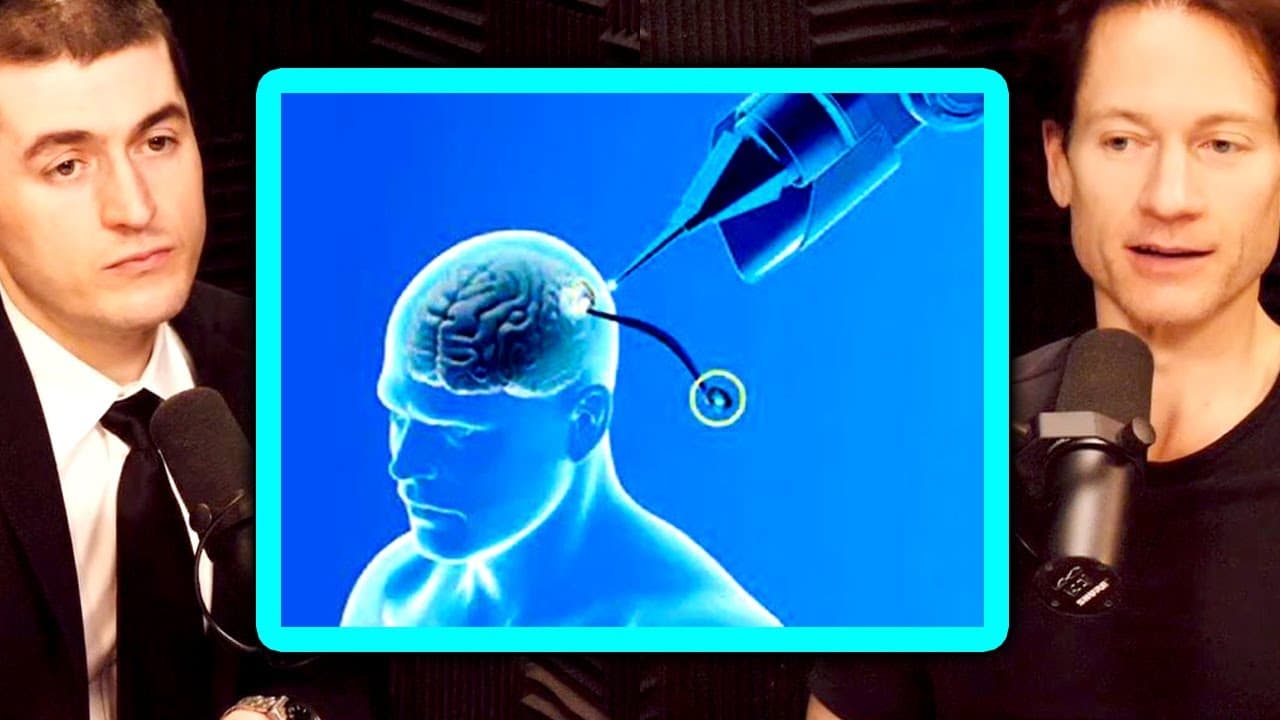
Kernel and Neuralink have different approaches to brain data collection, with Kernel focusing on non-invasive technology and Neuralink using invasive techniques.
Transcript
so there's a guy named elon musk and he has a company in one of the many companies called neuralink that has uh that's also excited about the brain so be interesting to hear your kind of opinions about a very different approach that's invasive that requires surgery that implants a data collection device in the brain how do you think about the diffe... Read More
Key Insights
- 🚱 The founder of Kernel initially explored partnering with Neuralink but chose to focus on non-invasive technology.
- 🤑 Both Kernel and Neuralink have invested significant amounts of money in their respective technologies.
- 🧠 It is too early to determine which approach, invasive or non-invasive, will be more successful in bringing brain interfaces mainstream.
- ❓ Other technological advancements in the future may render current approaches obsolete.
- 😌 The ultimate value lies in creating an ecosystem around brain interfaces, with various applications and insights enhancing people's lives.
- 😘 Kernel's non-invasive technology offers lower-resolution data, while Neuralink's invasive technology provides higher-resolution data.
- ⌛ Both companies emphasize the importance of time in assessing the success of their technologies.
Install to Summarize YouTube Videos and Get Transcripts
Explore YouTube Video Summarizer or Get YouTube Transcript Extractor
Questions & Answers
Q: How did Bryan Johnson's conversation with a respected neuroscientist impact his decision to focus on non-invasive technology?
The neuroscientist suggested that a new technology, possibly already existing but not yet visible, could change everything in the field. This inspired Johnson to explore non-invasive options for brain interfaces.
Q: What are the key differences between Kernel's non-invasive technology (Flux and Flow) and Neuralink's invasive technology?
Kernel's non-invasive technology provides a lower resolution of brain data with blurred images and muffled audio, while Neuralink's invasive technology offers higher-resolution data comparable to a 4K screen. Each has its pros and cons.
Q: Is it possible that other technologies may surpass both Kernel and Neuralink in the future?
Yes, considering the rapid advancements in technology, it is possible that other non-invasive or invasive techniques could emerge in the next 10-15 years, making current approaches obsolete.
Q: What is the ultimate goal of Kernel and Neuralink in developing brain interfaces?
Both companies aim to kick-start the mainstream adoption of brain quantification. They believe the real value lies in creating an ecosystem where various applications and insights can be built upon the hardware.
Summary & Key Takeaways
-
The founder of Kernel, Bryan Johnson, initially explored a partnership with Elon Musk's Neuralink but ultimately decided to continue building Kernel with a non-invasive approach.
-
Kernel shifted from invasive to non-invasive technology, believing that it could make brain interfaces more accessible, affordable, and mainstream.
-
Both Kernel and Neuralink have invested over $100 million in their respective technologies, with the goal of bringing brain interfaces to the mainstream, but it is still too early to determine which approach will be more successful.
Read in Other Languages (beta)
Share This Summary 📚
Summarize YouTube Videos and Get Video Transcripts with 1-Click
Try YouTube Summary with ChatGPT & Claude or YouTube Transcript Generator
Explore More Summaries from Lex Clips 📚



Summarize YouTube Videos and Get Video Transcripts with 1-Click
Try YouTube Summary with ChatGPT & Claude or YouTube Transcript Generator