How Is Indonesia Bridging Global Differences in Diplomacy?
TL;DR
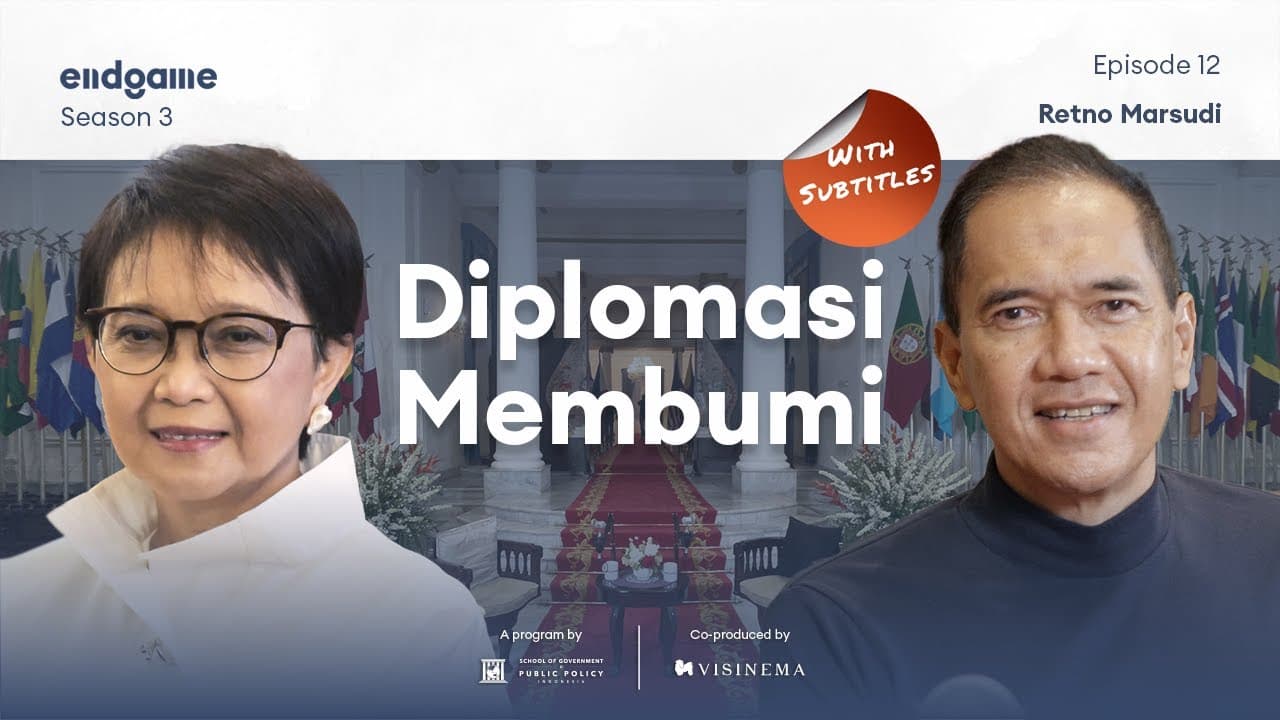
Indonesia is positioning itself as a trusted mediator on the world stage by leveraging its diplomatic integrity to bridge international differences. Foreign Minister Retno Marsudi emphasizes a merit-based system in the Ministry of Foreign Affairs, the importance of women's empowerment, and the successful vaccine diplomacy during the COVID-19 pandemic as vital components of Indonesia's approach to fostering global cooperation and trust.
Transcript
Sometimes we all forget that there is one asset that sometimes we don't realize. That's how other countries see Indonesia. That's the trust toward Indonesia’s diplomacy. Why? because we've tried to bridge any differences. [Voiceover: This is Endgame] GITA WIRJAWAN: Hello friends, Today we have Mrs. Retno Marsudi, Minister of Foreign Affairs (MFA) o... Read More
Key Insights
- Retno Marsudi emphasizes Indonesia's diplomatic trust and its role in bridging global differences, highlighting its potential as a mediator in international conflicts.
- Her career trajectory showcases the merit-based system within Indonesia's Ministry of Foreign Affairs, allowing individuals from ordinary backgrounds to rise through ranks based on merit.
- Marsudi discusses the challenges faced by women in diplomacy, stressing the importance of family support and institutional equality in overcoming gender-based barriers.
- Vaccine diplomacy during the COVID-19 pandemic was crucial, with Indonesia securing vaccines through strategic international partnerships, showcasing the importance of diplomatic networks.
- The Rohingya crisis is a complex issue requiring both immediate humanitarian aid and long-term solutions, with Indonesia advocating for repatriation and regional cooperation.
- Indonesia's non-aligned foreign policy is increasingly relevant, allowing strategic partnerships without allegiance to specific global powers, thus enhancing national interests.
- The G20 presidency is an opportunity for Indonesia to build global trust, attract investment, and promote sustainable economic recovery post-pandemic.
- Indonesia aims to be a bridge of civilization by 2045, leveraging its pluralistic society and historical assets to mediate between global powers and cultures.
Install to Summarize YouTube Videos and Get Transcripts
Explore YouTube Video Summarizer or Get YouTube Transcript Extractor
Questions & Answers
Q: What is the significance of Indonesia's diplomatic trust?
Indonesia's diplomatic trust is significant because it positions the country as a credible mediator in international conflicts. This trust is built on Indonesia's history of bridging differences and its commitment to non-alignment, allowing it to engage with various global powers without bias. Such trust enhances Indonesia's influence in international forums and its ability to advocate for global cooperation, as seen in its leadership roles in initiatives like COVAX-AMC and the G20 presidency.
Q: How did Retno Marsudi rise through the ranks in the Ministry of Foreign Affairs?
Retno Marsudi rose through the ranks in the Ministry of Foreign Affairs due to the merit-based recruitment system that prioritizes talent and performance over background. Her education in international relations at UGM and the direct recruitment program by the MFA allowed her to join the ministry early. Her dedication and the transparent system enabled her to become a director at 38 and an ambassador at 42, eventually leading to her appointment as Indonesia's first female foreign minister.
Q: What challenges do women face in diplomacy according to Marsudi?
Women in diplomacy face numerous challenges, including gender stereotypes and balancing family responsibilities with career demands. Marsudi highlights the importance of family support, particularly from her husband, and institutional equality in overcoming these barriers. She stresses the need for teamwork and flexible roles within the family to manage both professional and personal responsibilities effectively. Her experience shows that with the right support and policies, women can thrive in diplomacy.
Q: How did Indonesia secure vaccines during the COVID-19 pandemic?
Indonesia secured vaccines during the COVID-19 pandemic through proactive vaccine diplomacy, leveraging its global networks and partnerships. The government, led by President Jokowi, prioritized early access to vaccines, engaging with multiple vaccine developers like Sinovac and AstraZeneca. This strategic approach, supported by various ministries and international collaborations, enabled Indonesia to surpass WHO's vaccination targets, demonstrating the critical role of diplomacy in public health crises.
Q: What is Indonesia's approach to the Rohingya crisis?
Indonesia's approach to the Rohingya crisis involves both immediate humanitarian aid and long-term solutions. The country advocates for the repatriation of Rohingya refugees to Myanmar's Rakhine State, emphasizing the need for a conducive environment for their return. Indonesia also provides humanitarian assistance and infrastructure support in refugee camps and engages in regional cooperation through ASEAN to address the root causes of the crisis and promote stability in Myanmar.
Q: Why is Indonesia's non-aligned foreign policy relevant today?
Indonesia's non-aligned foreign policy is relevant today as it allows the country to engage with various global powers without allegiance to any specific bloc. This policy provides Indonesia with the flexibility to pursue its national interests, form strategic partnerships, and act as a mediator in international conflicts. In a world with increasing geopolitical tensions, Indonesia's ability to maintain neutrality and foster dialogue is crucial for promoting global cooperation and peace.
Q: What are Indonesia's goals for the G20 presidency?
Indonesia's goals for the G20 presidency include building global trust, attracting investment, and promoting sustainable economic recovery post-pandemic. The presidency provides an opportunity to showcase Indonesia's advancements and foster international cooperation on key issues such as health, energy transitions, and digital transformation. Indonesia aims to use the G20 platform to advocate for equitable vaccine distribution, green economic policies, and digital access for MSMEs, ultimately enhancing its global leadership and economic prospects.
Q: How does Indonesia plan to be a bridge of civilization by 2045?
Indonesia plans to be a bridge of civilization by 2045 by leveraging its pluralistic society, historical assets, and strategic geographic position. The country aims to mediate between global powers and cultures, such as China and the United States, and foster dialogue between Islam and the West. By capitalizing on its unique strengths and promoting tolerance, education, and sustainable development, Indonesia seeks to play a pivotal role in international relations, contributing to global peace and cooperation.
Summary & Key Takeaways
-
Retno Marsudi highlights the importance of Indonesia's diplomatic trust, emphasizing its role in bridging international differences. Her career exemplifies the merit-based system within the Ministry of Foreign Affairs, allowing individuals from ordinary backgrounds to rise through ranks based on merit.
-
Marsudi discusses the challenges faced by women in diplomacy, stressing the importance of family support and institutional equality in overcoming gender-based barriers. She also highlights Indonesia's successful vaccine diplomacy during the COVID-19 pandemic, securing vaccines through strategic international partnerships.
-
The Rohingya crisis requires both immediate humanitarian aid and long-term solutions, with Indonesia advocating for repatriation and regional cooperation. Indonesia's non-aligned foreign policy is increasingly relevant, allowing strategic partnerships without allegiance to specific global powers, enhancing national interests.
Read in Other Languages (beta)
Share This Summary 📚
Summarize YouTube Videos and Get Video Transcripts with 1-Click
Try YouTube Summary with ChatGPT & Claude or YouTube Transcript Generator
Explore More Summaries from Gita Wirjawan 📚
Summarize YouTube Videos and Get Video Transcripts with 1-Click
Try YouTube Summary with ChatGPT & Claude or YouTube Transcript Generator