Comets: Visitors from the Frozen Edge of the Solar System - Professor Carolin Crawford
TL;DR
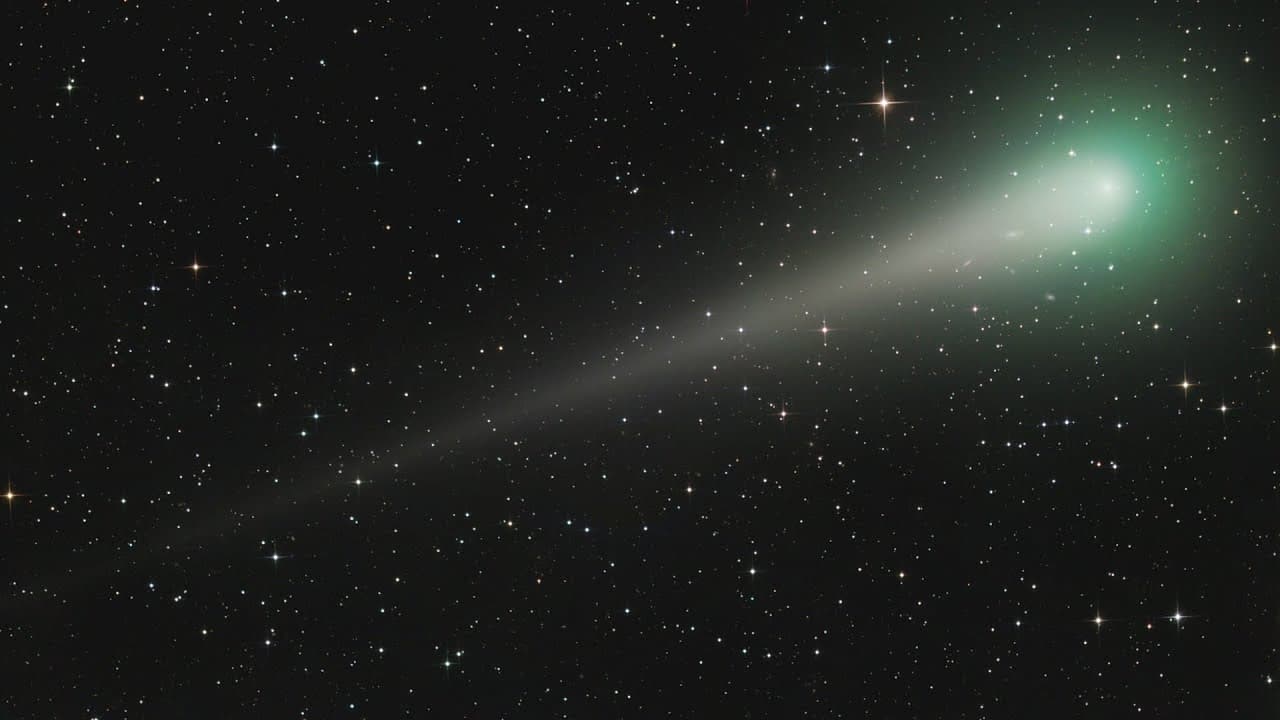
Comets, celestial objects that have fascinated ancient cultures, are still a mystery to scientists. They are believed to contain pristine material from the early solar system and may have delivered water to Earth. Missions like Stardust and Deep Impact have provided valuable insights into the composition and structure of comets.
Transcript
good afternoon everyone aha great response today's talk is about comets and these are members of our solar system and fresh comets arrived in our skies every year now some of them are complete newcomers to the inner part of the solar system some are old friends doing their repeat visit as they swing past the Sun but most of them are only of interes... Read More
Key Insights
- 🙈 Comets have fascinated ancient cultures and were seen as omens connected to both good and bad events.
- 🎭 Comets consist of a nucleus made of ice and rock, and emit gas and dust to form tails when heated by the Sun.
- ☄️ Short-period comets originate from the Kuiper belt beyond Neptune, while long-period comets come from the Oort cloud.
- ☄️ Missions like Stardust and Deep Impact have collected particles from comets, providing valuable insights into their composition and structure.
Install to Summarize YouTube Videos and Get Transcripts
Explore YouTube Video Summarizer or Get YouTube Transcript Extractor
Questions & Answers
Q: How do comets form and where do they come from?
Comets are believed to have formed in the outer regions of the solar system from the same nebula that gave rise to the planets. Short-period comets originate from the Kuiper belt beyond Neptune, while long-period comets come from the Oort cloud, which is even further out.
Q: How are comets different from asteroids?
Comets are composed of a nucleus made of ice and rock, while asteroids are primarily rocky or metallic. Comets also develop a tail when heated by the Sun, while asteroids do not.
Q: What can we learn from studying comets?
Studying comets can provide valuable insights into the composition and structure of the early solar system. They are believed to contain pristine material from the nebula, allowing scientists to understand the conditions during the formation of the solar system.
Q: How do comets deliver water to Earth?
The heavy bombardment of comets during the early solar system is thought to have delivered water to Earth. Comets are rich in water ice, and when they collide with Earth, the ice melts and adds to the planet's water content.
Summary & Key Takeaways
-
Comets are members of our solar system and can be newcomers or old friends making repeat visits to the inner part of the solar system.
-
Comets were seen as omens and connected to bad events throughout history.
-
Comets consist of a nucleus, made up of ice and rock, and emit gas and dust to form tails when heated by the Sun.
-
Short-period comets originate from the Kuiper belt beyond Neptune, while long-period comets come from the Oort cloud.
-
Missions like Stardust and Deep Impact have collected particles from comets, revealing complex chemistry and providing clues about the formation of the solar system.
-
The upcoming Rosetta mission aims to study and land on a comet nucleus, providing even more insight into these celestial objects.
Read in Other Languages (beta)
Share This Summary 📚
Summarize YouTube Videos and Get Video Transcripts with 1-Click
Try YouTube Summary with ChatGPT & Claude or YouTube Transcript Generator
Explore More Summaries from Gresham College 📚


Summarize YouTube Videos and Get Video Transcripts with 1-Click
Try YouTube Summary with ChatGPT & Claude or YouTube Transcript Generator