How to Read Marx's Capital Vol I Effectively

TL;DR
To read Marx's 'Capital Vol I' effectively, approach it as a complete work rather than excerpts, focusing on the interconnected concepts and dialectical reasoning within. Understanding the dynamics of socially necessary labor-time is essential, as it reveals how value functions in a capitalist economy. Setting aside preconceived notions about Marxism will enhance your engagement with the text and its insights.
Transcript
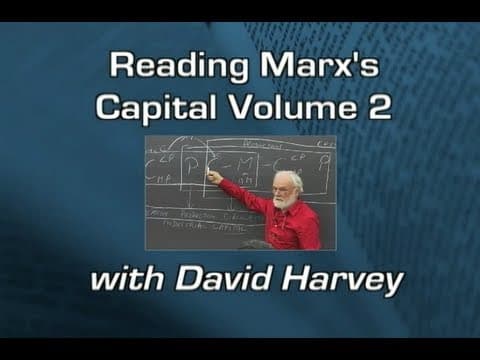
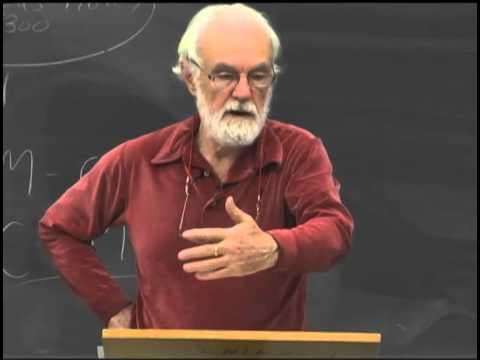
» NEIL SMITH: Well, you're in for a treat today. We're going to be talking with David Harvey on the lectures that he's been giving now for almost forty years, I think, on Capital. My name is Neil Smith. I teach in Anthropology and Geography at the City University of New York and David has been a colleague of mine since he ca... Read More
Key Insights
- David Harvey began reading Marx's 'Capital' during a tumultuous period in the late 1960s, seeking a framework to understand societal upheavals.
- Harvey emphasizes that Marx's 'Capital' should be read as a complete text to grasp its full narrative and insights, rather than just excerpts.
- The lecture highlights the importance of understanding Marx's dialectical method, which focuses on internal relations rather than causative structures.
- Harvey discusses the concept of socially necessary labor-time as a key component of Marx's value theory, which is dynamic and subject to change.
- Marx's work draws from various intellectual traditions, including political economy, German critical philosophy, and utopian socialism.
- The lecture underscores the importance of setting aside preconceived notions about Marxism to truly engage with the text.
- Harvey notes that Marx's 'Capital' is an exercise in understanding the complexities of the capitalist mode of production, focusing on production rather than market or global trade.
- The lecture encourages students to engage with the text actively, relating it to their own experiences and contemporary issues.
Install to Summarize YouTube Videos and Get Transcripts
Explore YouTube Video Summarizer or Get YouTube Transcript Extractor
Questions & Answers
Q: Why did David Harvey start reading 'Capital'?
David Harvey began reading Marx's 'Capital' in the early 1970s to find a framework to understand the societal upheavals occurring at the time, such as civil rights issues and the Vietnam War protests. He felt that existing social science frameworks were inadequate to explain these events, leading him to explore Marx's work for insights.
Q: What does Harvey emphasize about reading 'Capital'?
Harvey emphasizes the importance of reading Marx's 'Capital' as a complete text rather than relying on excerpts. He argues that the book is a dynamic literary construction that offers a grand narrative about the capitalist economy, and only by reading it in full can one truly grasp its insights and framework.
Q: What is the significance of dialectical reasoning in Marx's work?
Dialectical reasoning is central to Marx's work, focusing on internal relations rather than causative structures. Harvey explains that Marx's dialectical method captures the fluidity and dynamics of capitalism, emphasizing that everything is in motion and defined by transformative activities. This approach allows for a deeper understanding of the capitalist mode of production.
Q: What is socially necessary labor-time?
Socially necessary labor-time is a key concept in Marx's value theory, referring to the amount of labor time required to produce a commodity under normal conditions of production. It is a dynamic measure, influenced by factors such as technology, productivity, and social organization, and it plays a crucial role in determining the value of commodities.
Q: How does Marx's work draw from different intellectual traditions?
Marx's work in 'Capital' draws from various intellectual traditions, including English political economy, German critical philosophy, and French utopian socialism. He combines these traditions to create a new framework of knowledge, using a method of critical analysis that transforms existing ideas into a revolutionary understanding of capitalism.
Q: Why is it important to set aside preconceived notions about Marxism?
Harvey stresses the importance of setting aside preconceived notions about Marxism to engage with Marx's text authentically. Preconceived ideas can hinder understanding, and by approaching the text with an open mind, readers can better appreciate Marx's insights and the framework he provides for analyzing the capitalist mode of production.
Q: What is the focus of Marx's 'Capital' according to Harvey?
According to Harvey, Marx's 'Capital' focuses on understanding the capitalist mode of production from the perspective of production. It does not primarily address market or global trade aspects but rather examines the dynamics of production and the relationships that define capitalism. This focus is crucial for comprehending the broader narrative Marx constructs.
Q: How should students engage with Marx's 'Capital'?
Harvey encourages students to actively engage with Marx's 'Capital' by relating it to their own experiences and contemporary issues. He suggests that students should not only read the text but also think critically about its concepts and how they apply to real-world situations. This engagement helps to uncover the text's relevance and insights into the dynamics of capitalism.
Summary & Key Takeaways
-
David Harvey introduces his lecture series on Marx's 'Capital', explaining his initial motivation to read the text during the social upheavals of the late 1960s. He emphasizes the importance of reading 'Capital' as a complete work to fully understand its insights.
-
Harvey highlights the significance of dialectical reasoning in Marx's work, explaining that it focuses on internal relations rather than causative structures. He discusses the concept of socially necessary labor-time as central to Marx's value theory, which is dynamic and subject to change.
-
The lecture draws attention to Marx's method of presentation, which differs from his method of inquiry. Harvey encourages students to engage with the text actively, relating it to their own experiences and contemporary issues, while setting aside preconceived notions about Marxism.
Read in Other Languages (beta)
Share This Summary 📚
Summarize YouTube Videos and Get Video Transcripts with 1-Click
Try YouTube Summary with ChatGPT & Claude or YouTube Transcript Generator
Explore More Summaries from Reading Marx's Capital with David Harvey 📚

Summarize YouTube Videos and Get Video Transcripts with 1-Click
Try YouTube Summary with ChatGPT & Claude or YouTube Transcript Generator