💻 How Are Microchips Made?
TL;DR
Microchips, the brains behind our electronic devices, are made from silicon-rich sand through a complex process that involves separating silicon from oxygen, growing single crystal ingots, slicing them into wafers, and then going through several steps of deposition, lithography, doping, and etching to create a functional microchip.
Transcript
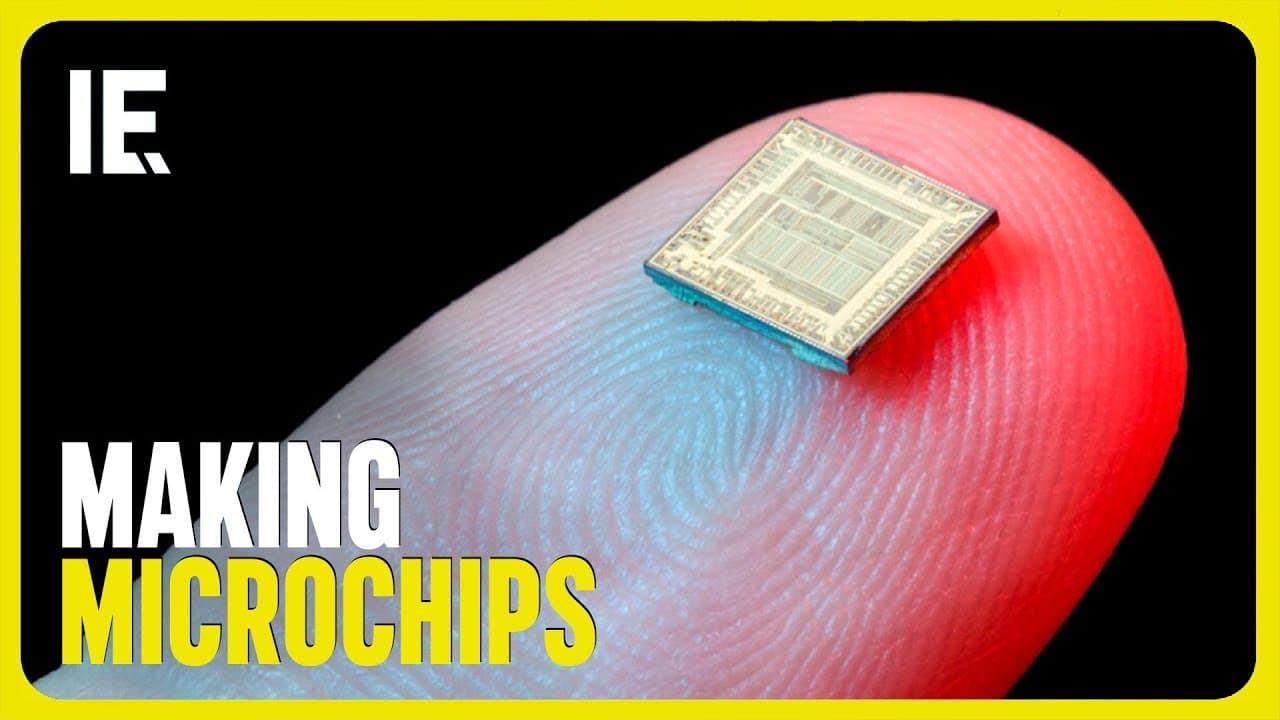
this microchip can take up to 26 weeks to make in its as many as 100 layers billions of transistors are packed into an area about the size of a fingernail they're the brains behind almost everything we use in our increasingly electronic world here's how these complex tiny devices are made the process begins with silicon-rich sand why silicon silico... Read More
Key Insights
- ❓ Silicon is the main material used in microchip manufacturing due to its semiconductor properties and abundance on Earth.
- 🤪 The production process involves separating silicon from oxygen, growing single crystal ingots, slicing them into wafers, and going through deposition, lithography, doping, and etching steps.
- 🏆 Each microchip undergoes testing for performance before being separated from the wafer.
- 🥹 Moore's Law, which predicts the doubling of transistor counts every two years, has held true as manufacturers continue to shrink transistor sizes and increase computational power.
Install to Summarize YouTube Videos and Get Transcripts
Explore YouTube Video Summarizer or Get YouTube Transcript Extractor
Questions & Answers
Q: Why is silicon used to make microchips?
Silicon is a semiconductor that can alter its conductivity by adding impurities, making it ideal for creating electronic devices. It is also abundant on Earth.
Q: How are silicon wafers produced from silicon ingots?
Silicon ingots are thinly sliced into wafers with diameters ranging from 1 to 18 inches, depending on the facility's capabilities. Bigger wafers yield more microchips.
Q: How are microchips protected from contaminants during production?
Microchips are made in sterile environments, free from contaminants like dust. Even a single particle of dust can ruin an entire batch.
Q: What components are present in microchips?
Microchips have basic components such as capacitors, resistors, and transistors. Advanced chips can contain billions of transistors, increasing computational power.
Summary & Key Takeaways
-
Microchips are made using silicon-rich sand, which is combined with carbon to produce pure silicon through a melting process.
-
Single crystal ingots of silicon are grown by placing a seed crystal in contact with molten silicon and slowly pulling it away.
-
The silicon ingots are thinly sliced into wafers, which undergo a series of steps including deposition, lithography, doping, and etching to create microchips.
Read in Other Languages (beta)
Share This Summary 📚
Summarize YouTube Videos and Get Video Transcripts with 1-Click
Try YouTube Summary with ChatGPT & Claude or YouTube Transcript Generator
Explore More Summaries from Interesting Engineering 📚


Summarize YouTube Videos and Get Video Transcripts with 1-Click
Try YouTube Summary with ChatGPT & Claude or YouTube Transcript Generator