How to Write an Effective SOP Quickly
TL;DR
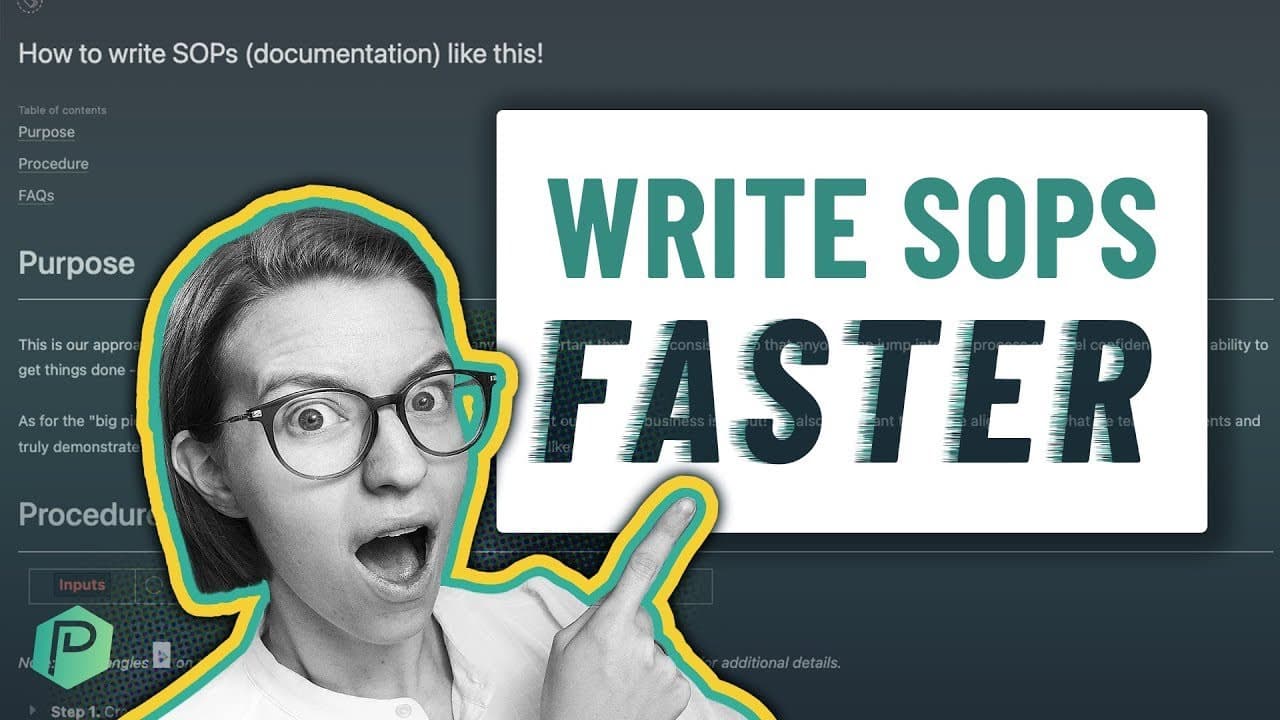
To write an effective Standard Operating Procedure (SOP) quickly, focus on three main sections: purpose, procedure, and FAQs. Start by noting where the process begins and ends, then outline key steps briefly. This approach allows for rapid documentation while enabling future improvements through iterative feedback.
Transcript
I think one of the most common myths I hear about standard operating procedures is that standard operating procedures or SOPs take a really long time. And the fact is, the way most people suggest creating SOPs, they do take a really long time. And I, like many of you, do not have an excess of time. I'm not a business owner who's running a team and ... Read More
Key Insights
- ⌛ Many professionals stress that SOP documentation is unnecessarily time-consuming, which discourages adoption.
- ❓ The simplified method proposed consists of focusing on purpose, procedure, and FAQs, enhancing clarity and efficiency in the process.
- 🍳 Breaking down complex tasks into smaller subprocesses ensures that SOP creation is less overwhelming and more practical.
- 😒 The iterative approach allows SOPs to evolve through ongoing use and immediate feedback, improving their utility over time.
- 🤩 Key components to document include clear start and stop points within a process, facilitating easy reference.
- 🎟️ Incorporating personal experiences when drafting SOPs helps capture essential nuances that are often missing in generalized templates.
- 📽️ Familiarity with effective project management tools can significantly enhance the SOP creation process and ongoing management.
Install to Summarize YouTube Videos and Get Transcripts
Explore YouTube Video Summarizer or Get YouTube Transcript Extractor
Questions & Answers
Q: What are the common misconceptions about creating SOPs?
A prevalent myth is that creating SOPs is a tedious and time-consuming endeavor, often requiring hours to compile detailed documentation. This belief can deter many from implementing SOPs, but in reality, effective SOP creation can be streamlined, focusing on key components to save time while ensuring clarity.
Q: How can one effectively structure an SOP?
An effective SOP should be structured around three critical sections: purpose, procedure, and FAQs. The procedure section is particularly vital, and instead of detailing every step, it should summarize key actions related to the process, helping team members understand the essentials without getting bogged down in excessive detail.
Q: What is the suggested time frame for creating an SOP?
The presenter advocates for creating SOPs that can be documented in less than 20 minutes. The focus is on identifying a start and stop for the process, writing down main steps, and refining the document during ongoing tasks, making the overall SOP creation much more manageable.
Q: Why is it important to focus on smaller subprocesses when creating SOPs?
Focusing on smaller subprocesses allows for more manageable documentation and helps prevent overwhelm. By breaking down larger processes into smaller, straightforward components that can be documented rapidly, one can create multiple SOPs that are less daunting and easier to implement.
Q: How can someone ensure the accuracy of the SOP being created?
To ensure the SOP's accuracy, it's essential to have the individual who performs the task consistently involved in writing the SOP. This personal experience helps capture nuances and necessary details that might be overlooked in a more detached approach, making the SOP more useful for others.
Q: How should one handle updates to existing SOPs?
Updates should be addressed iteratively, incorporating feedback and observations gathered during the execution of the process. It's recommended to allocate a few minutes for refinement after each use of the SOP, making small edits and recommendations based on actual application.
Q: What materials or inputs can assist in SOP creation?
Utilizing existing knowledge from team members who perform the tasks regularly, along with external resources such as instructional YouTube videos, can provide a wealth of information for creating effective SOPs. This blend of internal and external input can enhance the SOP's quality and comprehensiveness.
Q: What platforms can assist in creating and managing SOPs?
Various project management and documentation tools like ClickUp or Notion can be helpful for organizing SOPs. They offer features such as toggles and templates that streamline the creation process, allowing for clear formatting and easier updates as changes arise over time.
Summary & Key Takeaways
-
Many people believe that creating SOPs is a lengthy process; however, effective SOPs can actually be developed swiftly with the right approach.
-
The proposed method involves three key sections: purpose, procedure, and FAQs, focusing on brevity and clarity rather than exhaustive documentation.
-
By concentrating on smaller subprocesses and iteratively improving the SOPs, the time invested can be significantly reduced, allowing for efficient documentation of business processes.
Read in Other Languages (beta)
Share This Summary 📚
Summarize YouTube Videos and Get Video Transcripts with 1-Click
Try YouTube Summary with ChatGPT & Claude or YouTube Transcript Generator
Explore More Summaries from Layla at ProcessDriven 📚
Summarize YouTube Videos and Get Video Transcripts with 1-Click
Try YouTube Summary with ChatGPT & Claude or YouTube Transcript Generator