These Tiny Sea Critters Are Testing Darwin’s Theories
TL;DR
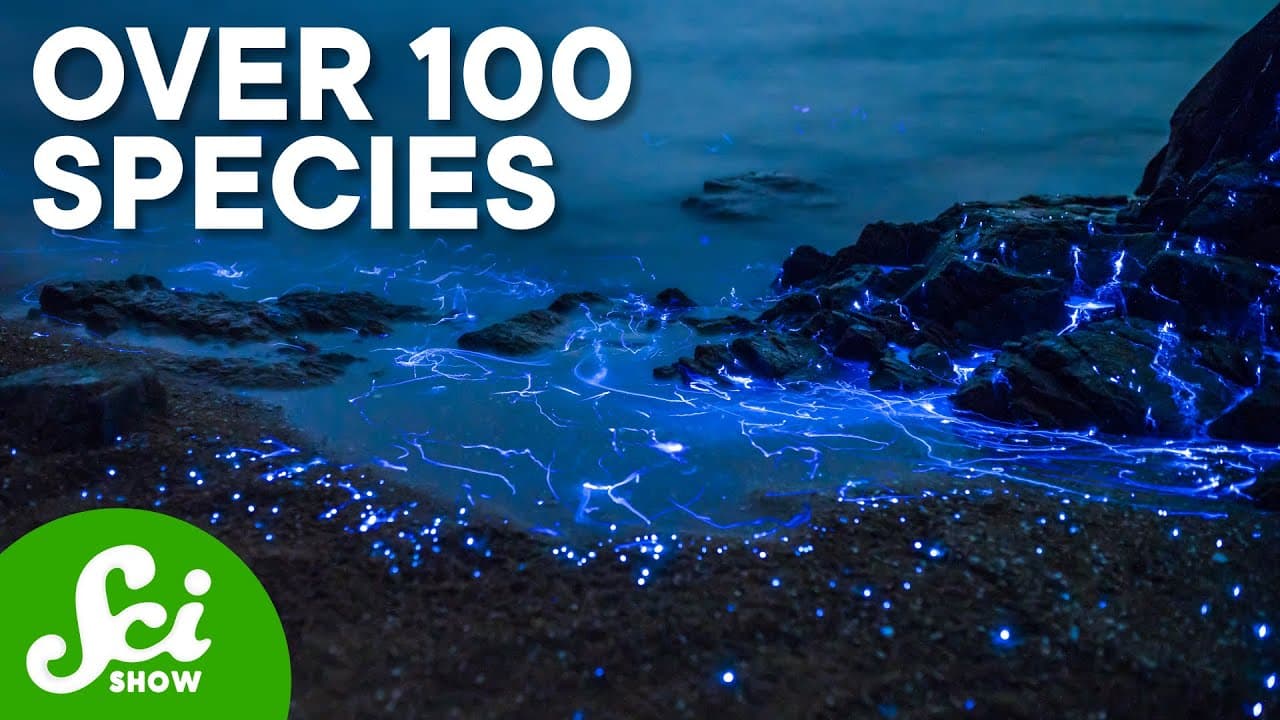
Bioluminescent ostracods in the Caribbean, through their mating displays, provide insight into how sexual selection can lead to the formation of new species.
Transcript
[♪ INTRO] While we’re pretty clear on the general idea of evolution, believe it or not, we still have plenty to learn about its specific mechanisms. In particular, there are still open questions around speciation, where one species diverges into two. And small, bioluminescent marine organisms called ostracods might hold the key to answering that qu... Read More
Key Insights
- 🌥️ Bioluminescent ostracods in the Caribbean have evolved into a large number of species, despite sharing the same habitat.
- 👶 Mating displays using bioluminescent displays may be driving the formation of new species in ostracods through sexual selection.
- 👶 The more elaborate the mating displays, the more likely it is for ostracod groups to isolate themselves and form new species.
- ❓ Studying the full ostracod genome could provide further insights into how different species diverge.
Install to Summarize YouTube Videos and Get Transcripts
Explore YouTube Video Summarizer or Get YouTube Transcript Extractor
Questions & Answers
Q: How do ostracods use their bioluminescent displays for mating?
Male ostracods use their blinking blue light displays to attract potential mates, while in other parts of the ocean, both male and female ostracods use the glowing blue vomit for defense.
Q: Why is the presence of multiple similar species in the same habitat unusual?
It is unusual because traditionally, the formation of new species occurs when populations become isolated from each other. However, Caribbean ostracods live in the same place and share the same resources.
Q: What is sexual selection?
Sexual selection is the process in which the traits that are passed onto future generations are influenced by what the females of a species look for in potential mates. It is related to natural selection but specifically focuses on traits that attract mates.
Q: How have researchers studied the formation of new species in ostracods?
Researchers have examined the ostracods' RNA and morphology, looking for differences that classify certain groups as different species. They have also compared Caribbean ostracods to those in other regions and analyzed the fossil record to understand their evolutionary relationships.
Summary & Key Takeaways
-
Bioluminescent ostracods are small marine organisms that produce blue light through vomiting up glowing blue mucus, using it for mating displays or defense.
-
In the Caribbean, these ostracods have evolved into more than 100 species, despite occupying the same habitat.
-
Scientists believe that sexual selection, driven by the mating displays, is leading to the formation of new species.
Read in Other Languages (beta)
Share This Summary 📚
Summarize YouTube Videos and Get Video Transcripts with 1-Click
Try YouTube Summary with ChatGPT & Claude or YouTube Transcript Generator
Explore More Summaries from SciShow 📚
Summarize YouTube Videos and Get Video Transcripts with 1-Click
Try YouTube Summary with ChatGPT & Claude or YouTube Transcript Generator