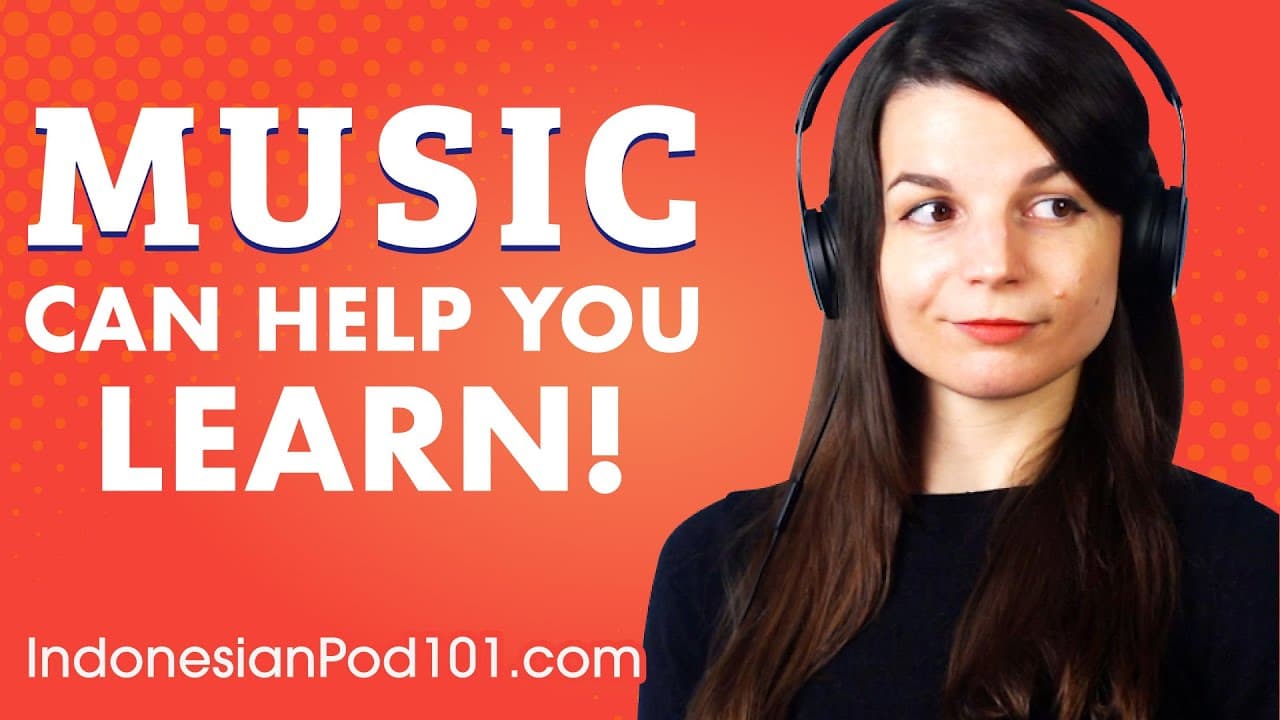
Learning Indonesian Through Music
TL;DR
Use music to enhance Indonesian language learning effectively.
Transcript
want to speak real indonesian from your first lesson sign up for your free lifetime account at indonesianpod101.com all cultures have a form of music music is one of the most basic tools we can use to learn a language parents use music and songs to teach their young children simple words music can help us focus help us remember better and thus help... Read More
Key Insights
- Music is a universal tool that aids in language acquisition by enhancing memory and focus, making it effective for both children and adults.
- Passive listening to music in a target language helps create a familiar environment, aiding in language immersion and fluency development.
- Memorizing song lyrics improves vocabulary retention and enhances listening and reading skills through repeated exposure to words and phrases.
- Singing along to songs encourages active listening, improving pronunciation, grammar, and spelling while making learning enjoyable.
- Transcribing song lyrics sharpens listening skills and spelling, as learners write down what they hear, identifying missed words over multiple listens.
- Children's songs are particularly useful for beginners due to their repetitive nature, helping identify key vocabulary quickly.
- Incorporating music into language study plans can make learning fun and improve memory, serving as a valuable self-study tool.
- IndonesianPod101 offers comprehensive resources for language learning, including music-based methods, to help learners achieve fluency efficiently.
Install to Summarize YouTube Videos and Get Transcripts
Explore YouTube Video Summarizer or Get YouTube Transcript Extractor
Questions & Answers
Q: How can passive listening to music aid in language learning?
Passive listening involves playing music in the target language while doing other activities, allowing learners to become accustomed to the language's sounds and rhythms. This method creates a familiar environment, promoting immersion and aiding in the development of fluency by exposing learners to key words, intonation, and grammar patterns.
Q: What role does memorization play in learning a language through music?
Memorization through music involves studying and recalling song lyrics, which helps build vocabulary and enhances listening and reading skills. By repeatedly listening to and memorizing lyrics, learners can improve their ability to recall words and phrases, making it an effective method for language acquisition.
Q: Why is singing along to songs beneficial for language learners?
Singing along to songs encourages active listening and helps learners improve pronunciation, grammar, and spelling. By engaging with music in this way, learners enjoy the process while also reinforcing their understanding of the language. This method also aids in developing reading and listening skills, making it a comprehensive learning tool.
Q: How does transcribing song lyrics help improve language skills?
Transcribing song lyrics involves listening to music and writing down what is heard, which sharpens listening skills and improves spelling. This exercise helps learners identify words they may have missed initially, enhancing their ability to recognize and understand language patterns through repeated exposure.
Q: What makes children's songs effective for language beginners?
Children's songs are effective for beginners due to their repetitive nature, which helps learners quickly identify and retain key vocabulary. The simple language and catchy melodies make these songs easy to remember, providing a fun and accessible way to build foundational language skills.
Q: How can music be integrated into a language self-study plan?
Music can be integrated into a self-study plan by using methods such as passive listening, memorization, singing along, and transcription. These techniques make learning enjoyable and improve memory, offering a diverse approach to language acquisition that complements other study methods and resources.
Q: What resources does IndonesianPod101 offer for language learners?
IndonesianPod101 provides comprehensive resources for language learners, including music-based methods, to help achieve fluency efficiently. The platform offers a variety of tools, such as lessons, videos, and tips, to support learners in developing conversational skills and mastering the Indonesian language.
Q: How can learners benefit from using music as a language learning tool?
Learners benefit from using music as a language learning tool by enhancing their memory, focus, and enjoyment of the process. Music aids in retaining vocabulary, improving pronunciation, and understanding grammar, making it a versatile and effective method for language acquisition that can be tailored to individual learning preferences.
Summary & Key Takeaways
-
Music is a powerful tool for language learning, aiding in memory retention and making the process enjoyable for learners of all ages. This video explores various methods to use music effectively for learning Indonesian, including passive listening, memorization, singing along, and transcription.
-
Passive listening involves playing music in the background while engaging in other activities, helping learners become familiar with the language's sounds and rhythms. This method promotes language immersion and aids in developing fluency over time.
-
Memorization and singing along to song lyrics enhance vocabulary, pronunciation, and grammar skills. Transcribing lyrics improves listening and spelling abilities, making music a comprehensive tool for language acquisition and a fun addition to self-study plans.
Read in Other Languages (beta)
Share This Summary 📚
Summarize YouTube Videos and Get Video Transcripts with 1-Click
Try YouTube Summary with ChatGPT & Claude or YouTube Transcript Generator
Explore More Summaries from Learn Indonesian with IndonesianPod101.com 📚


Summarize YouTube Videos and Get Video Transcripts with 1-Click
Try YouTube Summary with ChatGPT & Claude or YouTube Transcript Generator