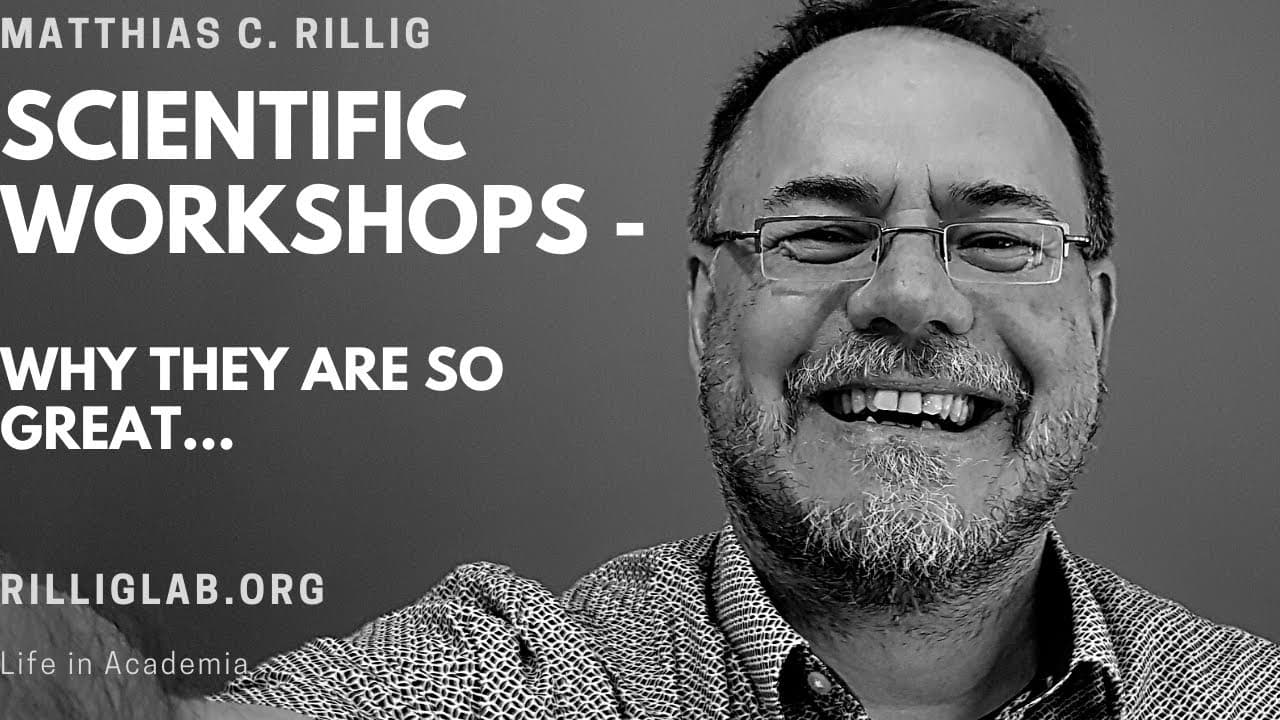
Scientific workshops - why they're so great! #meetings #academia #phd
TL;DR
Workshops in academic settings offer focused goal-oriented work, opportunities to collaborate and learn from colleagues, and a more intimate networking environment compared to conferences.
Transcript
so let's talk about meetings the meetings that you can go to can be can be broadly divided into conferences and workshops and here i want to talk about workshops and why i think they're so great and we're starting right now so whenever there is a workshop opportunity i typically just say yes and there is a number of reasons for that the first reaso... Read More
Key Insights
- 🥅 Workshops in academic settings have specific goals and produce tangible outcomes.
- 👻 Collaboration with colleagues in workshops allows for immediate application of knowledge and skill sharing.
- ♻️ Workshops provide a more intimate networking environment compared to conferences.
- ❓ Organizing a workshop requires careful planning and can be stressful for the organizer.
- ❓ Participating in workshops offers valuable learning experiences and networking opportunities.
- 🧑 In-person workshops provide additional social interactions, fostering deeper connections among participants.
- 👻 Online workshops also allow for some level of networking and collaboration.
Install to Summarize YouTube Videos and Get Transcripts
Explore YouTube Video Summarizer or Get YouTube Transcript Extractor
Questions & Answers
Q: Why do workshops in academic settings typically have a specific goal?
Workshops in academic settings have specific goals to ensure focused work over a short period of time, leading to the creation of a tangible product such as a proposal or paper.
Q: How do workshops foster collaboration and learning among participants?
Workshops bring together individuals with complementary skills and shared interests, enabling participants to work together, learn from one another, and apply their learnings immediately towards the workshop's goal.
Q: What advantage do workshops offer over conferences?
Workshops are smaller in size, typically consisting of 10 to 15 participants, allowing for better opportunities to get to know and connect with colleagues on a deeper level compared to larger conferences.
Q: What challenges are involved in organizing a workshop?
While organizing a workshop can be rewarding, it can also be stressful and draining. Organizers must carefully plan the agenda, ensure the goals are met, and make the experience worthwhile for participants.
Summary & Key Takeaways
-
Workshops provide a specific goal that participants work together to achieve, resulting in a finished product such as a proposal, paper, or dataset.
-
Collaborating with colleagues in workshops allows for learning and immediate application of knowledge towards the shared goal.
-
Workshops offer a smaller, more intimate setting compared to conferences, allowing for deeper connections and networking opportunities.
Read in Other Languages (beta)
Share This Summary 📚
Summarize YouTube Videos and Get Video Transcripts with 1-Click
Try YouTube Summary with ChatGPT & Claude or YouTube Transcript Generator
Explore More Summaries from Life in academia 📚


Summarize YouTube Videos and Get Video Transcripts with 1-Click
Try YouTube Summary with ChatGPT & Claude or YouTube Transcript Generator