How to Speak Up in Difficult Conversations Effectively
TL;DR
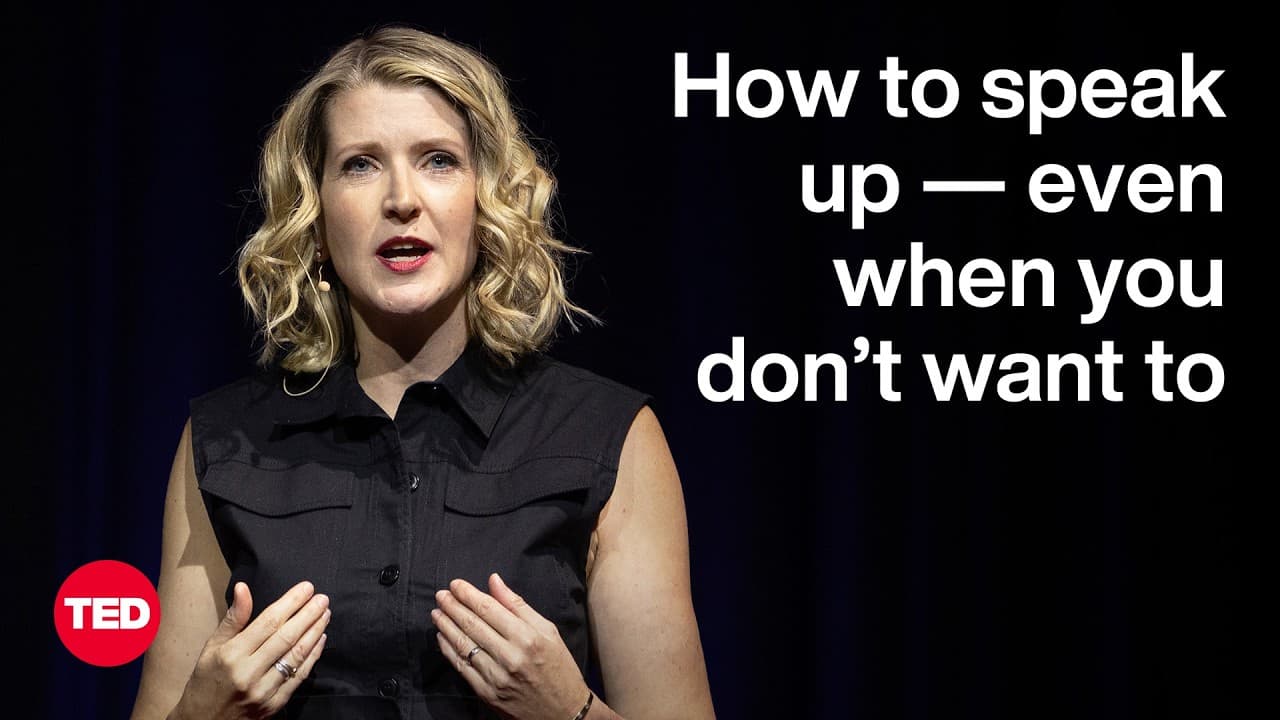
To speak up effectively in challenging conversations, focus on empathy, support, and curiosity. This approach helps transform discomfort into constructive dialogue, making it essential for personal growth and collaboration in high-stakes environments like healthcare. Embracing difficult discussions can lead to better outcomes and stronger relationships.
Transcript
Silence. It can be a needed moment of peace and contemplation. But what happens when silence becomes a barrier? A barrier that muffles the voice of truth, of advocacy, of change? Speak up. Advocate for yourself. Stand up for what you believe in. That's what they say, right? Well even though I know they’re right, it's easier said than done. I'm sure... Read More
Key Insights
- Silence can hinder advocacy and change, making it vital to speak up even when it's uncomfortable.
- Research indicates many prefer leaving jobs over facing challenging conversations, highlighting the need for better communication.
- In healthcare, speaking up is crucial for patient safety and team performance, leading to better outcomes.
- Developing the skill to engage in difficult conversations is like exercise; it requires practice but yields significant benefits.
- A moral compass, inspired by strong role models, can guide individuals in making ethical decisions in tough situations.
- Using principles like support, empathy, and curiosity can transform reactive responses into proactive, value-driven actions.
- Engaging in difficult conversations with a focus on understanding and empathy can lead to personal growth and improved relationships.
- Leaders play a key role in fostering environments where open communication is encouraged and valued.
Install to Summarize YouTube Videos and Get Transcripts
Explore YouTube Video Summarizer or Get YouTube Transcript Extractor
Questions & Answers
Q: Why is silence considered a barrier in the context of the talk?
Silence is seen as a barrier because it prevents the expression of truth, advocacy, and change. It can hinder necessary conversations that drive progress and improvement, particularly in professional settings where open communication is critical for effective teamwork and achieving better outcomes.
Q: What role does a moral compass play in difficult conversations?
A moral compass provides guidance during difficult conversations, helping individuals make ethical decisions and act in alignment with their values. It serves as a personal guide to navigate tricky situations with integrity, ensuring that actions taken are for the greater good and true to one's principles.
Q: How does the speaker relate personal experiences to the topic of speaking up?
The speaker shares personal experiences, such as her mother's influence and her own challenges in healthcare leadership, to illustrate the importance of speaking up. These anecdotes highlight how personal history and role models can shape one's ability to engage in difficult conversations effectively.
Q: What are the benefits of speaking up according to the talk?
Speaking up leads to increased job satisfaction, improved team morale, and better outcomes, especially in healthcare. It fosters an environment where individuals feel valued and heard, contributing to personal growth and the overall effectiveness of the team or organization.
Q: How does the speaker suggest overcoming the initial fear of difficult conversations?
The speaker suggests viewing the process like exercise, where practice leads to improvement. By focusing on principles such as empathy, support, and curiosity, individuals can overcome the initial fight, flight, or freeze response, making it easier to engage in challenging discussions.
Q: What framework does the speaker propose for engaging in difficult conversations?
The speaker proposes using a compass framework, where each direction represents a key principle: North for doing the right thing, South for support, East for empathy, and West for wonder. This framework helps guide individuals through difficult conversations with clarity and heart.
Q: How can leaders create a safe environment for open communication?
Leaders can create a safe environment by modeling courageous conversations themselves and encouraging others to do the same. By fostering a culture of empathy, support, and curiosity, leaders can ensure that team members feel comfortable speaking up and sharing their perspectives.
Q: What impact does the speaker hope to achieve by promoting open conversations?
The speaker hopes to inspire individuals to find and use their voices to stand up against wrongs and champion rights. By promoting open conversations, she aims to create a culture of advocacy and change, where all individuals feel empowered to contribute to positive outcomes and stronger relationships.
Summary & Key Takeaways
-
Sarah Crawford-Bohl emphasizes the importance of speaking up in difficult situations, particularly in professional settings like healthcare, where communication can impact outcomes significantly. She shares personal experiences and a framework for engaging in these conversations effectively.
-
The talk highlights the role of a moral compass in guiding individuals through challenging conversations, drawing on lessons from Crawford-Bohl's mother, who exemplified courage and advocacy. These principles are crucial for personal and professional growth.
-
Crawford-Bohl encourages the audience to embrace difficult conversations by focusing on empathy, support, and curiosity. These elements can transform interactions, leading to better understanding, stronger teams, and positive change.
Read in Other Languages (beta)
Share This Summary 📚
Summarize YouTube Videos and Get Video Transcripts with 1-Click
Try YouTube Summary with ChatGPT & Claude or YouTube Transcript Generator
Explore More Summaries from TED 📚






Summarize YouTube Videos and Get Video Transcripts with 1-Click
Try YouTube Summary with ChatGPT & Claude or YouTube Transcript Generator