The Smallest Pathogen on Earth: Viroids Explained
TL;DR
Viroids are small RNA-based pathogens that infect plants and have potential implications for the origins of life on Earth.
Transcript
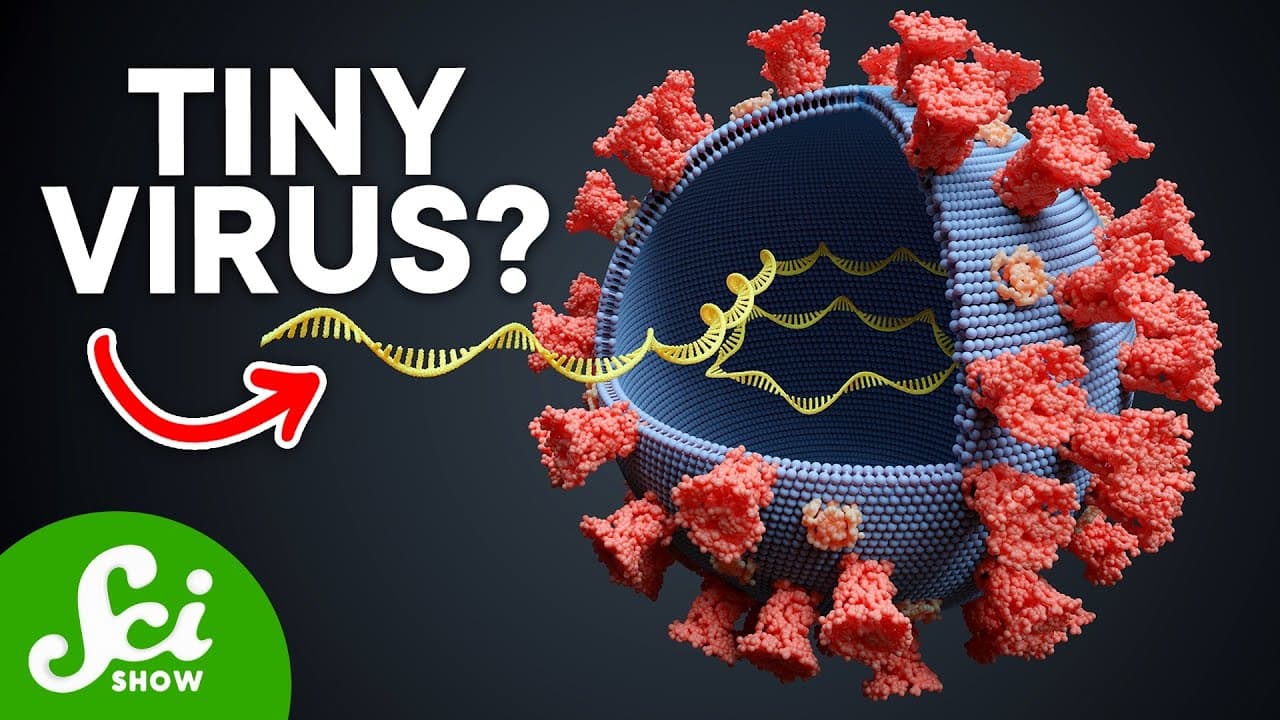
♪ INTRO ♪ In 1971, a USDA plant scientist named Theodor Otto Diener discovered what could be the smallest pathogen on the planet. It was unlike anything biologists had ever seen: it could make copies of itself, like a virus, but was much, much simpler. It didn’t have any kind of outer protein coating, and just a tiny bit of RNA. At the time, scient... Read More
Key Insights
- 🛩️ Viroids are smaller and simpler than viruses, consisting only of circular RNA molecules.
- 👻 Replication of viroids occurs within plant cells using the host's RNA polymerase enzyme.
- 🧑🌾 Viroids can spread through contaminated farm tools, seeds, pollen, and insects.
- 🥺 Some viroids cause cosmetic damage, while others can lead to the death of an entire plant.
- 🛟 Viroids have connections to the RNA World hypothesis and could provide insight into the origins of life on Earth.
- 🌱 Studying viroids is essential for understanding plant diseases and their impact on agriculture.
- 🧑⚕️ Viroids are not a threat to human health, with the exception of hepatitis D, which resembles a viroid but is not classified as one.
Install to Summarize YouTube Videos and Get Transcripts
Explore YouTube Video Summarizer or Get YouTube Transcript Extractor
Questions & Answers
Q: What are viroids and how do they differ from viruses?
Viroids are small RNA-based pathogens that lack a protein coat. Unlike viruses, viroids do not rely on proteins for replication and are composed solely of RNA.
Q: How do viroids infect plants?
Viroids enter a plant cell's nucleus or chloroplasts and utilize the host's RNA polymerase enzyme to replicate themselves. Some viroids can also cut RNA, aiding in their replication process.
Q: Do viroids pose a threat to humans?
Viroids do not infect humans, although there is a viroid-like pathogen called hepatitis D. However, hepatitis D is technically not a viroid as it codes for a protein and does not self-replicate.
Q: What is the RNA World hypothesis, and how do viroids relate to it?
The RNA World hypothesis suggests that life on Earth originated with RNA. Viroids are considered living fossils and could provide clues about the role of RNA in the evolutionary history of life.
Summary & Key Takeaways
-
Viroids are the smallest known pathogens, consisting only of circular RNA molecules without a protein coat.
-
They infect plants, causing diseases that range from minor cosmetic damage to the death of the entire plant.
-
Viroids could be living fossils that provide insight into the RNA World hypothesis, which suggests that life on Earth began with RNA.
Read in Other Languages (beta)
Share This Summary 📚
Summarize YouTube Videos and Get Video Transcripts with 1-Click
Try YouTube Summary with ChatGPT & Claude or YouTube Transcript Generator
Explore More Summaries from SciShow 📚
Summarize YouTube Videos and Get Video Transcripts with 1-Click
Try YouTube Summary with ChatGPT & Claude or YouTube Transcript Generator