Why Is the Universe Experiencing a Renaissance of Novelty?
TL;DR
The universe is waking up from a state of monotony due to humans' unique ability to create explanatory knowledge, allowing for significant change and progress. Unlike past generations that accepted static lives, we now have the potential to continuously innovate and transform our surroundings, making novelty a possibility in our cosmic narrative.
Transcript
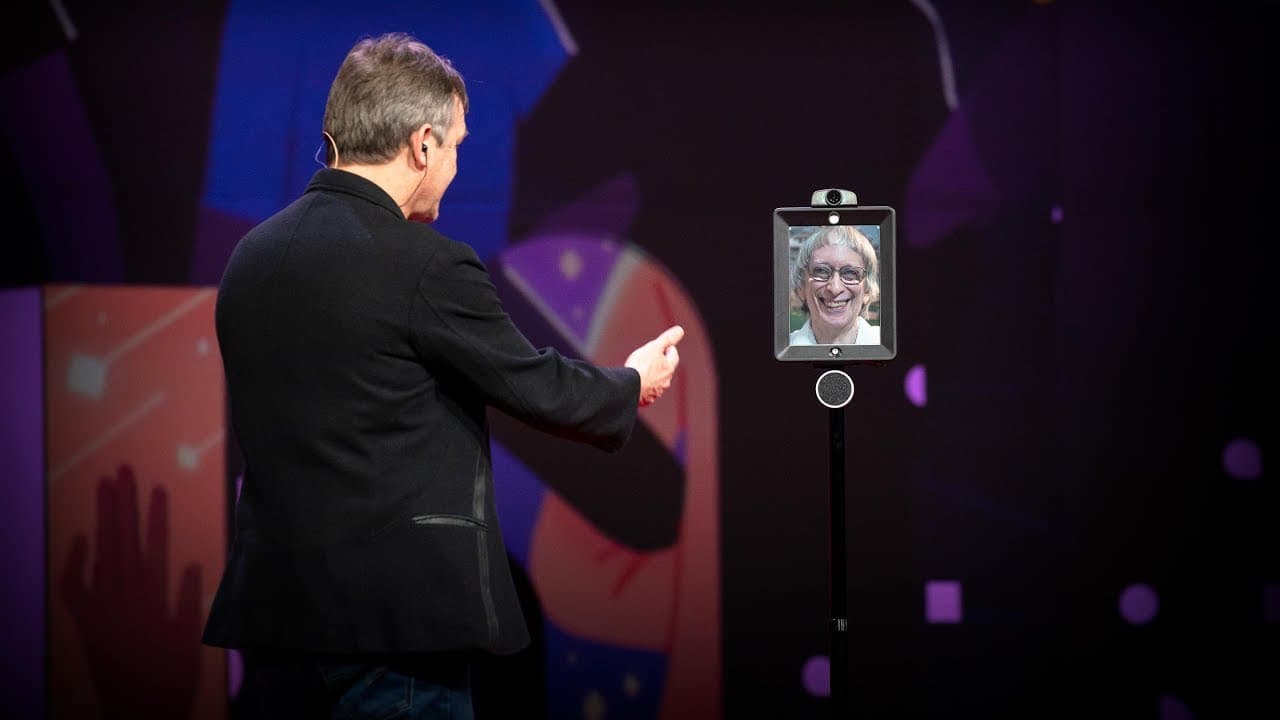
I'm thrilled to be talking to you by this high-tech method. Of all humans who have ever lived, the overwhelming majority would have found what we are doing here incomprehensible, unbelievable. Because, for thousands of centuries, in the dark time before the scientific revolution and the Enlightenment, people had low expectations. For their lives, f... Read More
Key Insights
- 🌍 People in ancient times had low expectations for their lives and did not expect significant change or progress.
- 🌞 Ancient myths and explanations for suffering and monotony were mostly false but helped people make sense of their world.
- 🔬 Twentieth-century physics offered a new explanation for the human condition, framing it as a cosmic war between order and chaos.
- 💔 Staticity and lack of novelty in life contribute to human suffering, but advancements in knowledge and progress can alleviate it.
- ✨ The origin of life on Earth created the first genetic knowledge, leading to the transformation of the planet's surface and the emergence of novelty.
- 🌍 Explanatory knowledge is the defining adaptation of our species and has the power to control physical processes.
- 🌌 The universe at large is simple and marked by monotony due to the hierarchy rule, but our biosphere defies this rule with the disproportionate influence of molecule-sized objects like genes.
- 🚀 Explanatory knowledge has the potential to control the entire galaxy and is the ultimate agent of novelty and creativity in the universe.
- 🎙️ More videos with David Deutsch:
Install to Summarize YouTube Videos and Get Transcripts
Explore YouTube Video Summarizer or Get YouTube Transcript Extractor
Questions & Answers
Q: What did ancient people believe about the world and their own condition?
Ancient people believed that the world was devoid of novelty and progress. They saw their lives as full of suffering and grueling labor, with nothing significantly new or better ever expected to be achieved. They explained their condition through grandiose cosmic terms, such as an endless war between good and evil, which led to their own suffering and lack of progress.
Q: How did Qohelet describe the world?
Qohelet described a world without novelty and change. He famously wrote, "What has been is what will be, and what has been done is what will be done; there is nothing new under the sun." In his view, nothing truly new or significant could happen, as everything had already been done in previous ages.
Q: What is the significance of explanatory knowledge?
Explanatory knowledge is the defining adaptation of the human species. It differs from nonexplanatory knowledge, such as genes in DNA, by being universal and allowing for an understanding of the world. Explanatory knowledge can control physical processes limited only by the laws of physics. It has the potential to transform the Earth's surface and create large-scale physical effects.
Q: What is the war portrayed in pessimistic stories?
The war portrayed in pessimistic stories is between order and chaos, or entropy. This cosmic war reflects the battle between sustainability (order) and wastefulness (chaos). However, these stories often view humans as the evil side of the war and suggest that we should not even strive to win. This view ultimately leads to a pessimistic outlook on the human condition.
Summary & Key Takeaways
-
The majority of humans in the past had low expectations for their lives and did not anticipate significant change or progress.
-
Qohelet described a world without novelty, where there were no significant changes or advancements.
-
Explanatory knowledge and the creation of new ideas and behaviors are the driving forces behind progress, novelty, and the potential to overcome the monotony of the universe.
Read in Other Languages (beta)
Share This Summary 📚
Summarize YouTube Videos and Get Video Transcripts with 1-Click
Try YouTube Summary with ChatGPT & Claude or YouTube Transcript Generator
Explore More Summaries from TED 📚
Summarize YouTube Videos and Get Video Transcripts with 1-Click
Try YouTube Summary with ChatGPT & Claude or YouTube Transcript Generator