The Tesla Robotaxi is Confusing...
TL;DR
Tesla's Robotaxi event showcased ambitious tech but left many questions unanswered.
Transcript
(gentle music) - Okay, so the Tesla Robtaxi unveiling event was a couple days ago and it might be the weirdest tech event I've ever been to. You might have seen some clips from it at this point. I was there, I rode in the self-driving Robotaxi. I explored the insane looking Robovan and I talked to the Optimus robot and then I left feeling kind of c... Read More
Key Insights
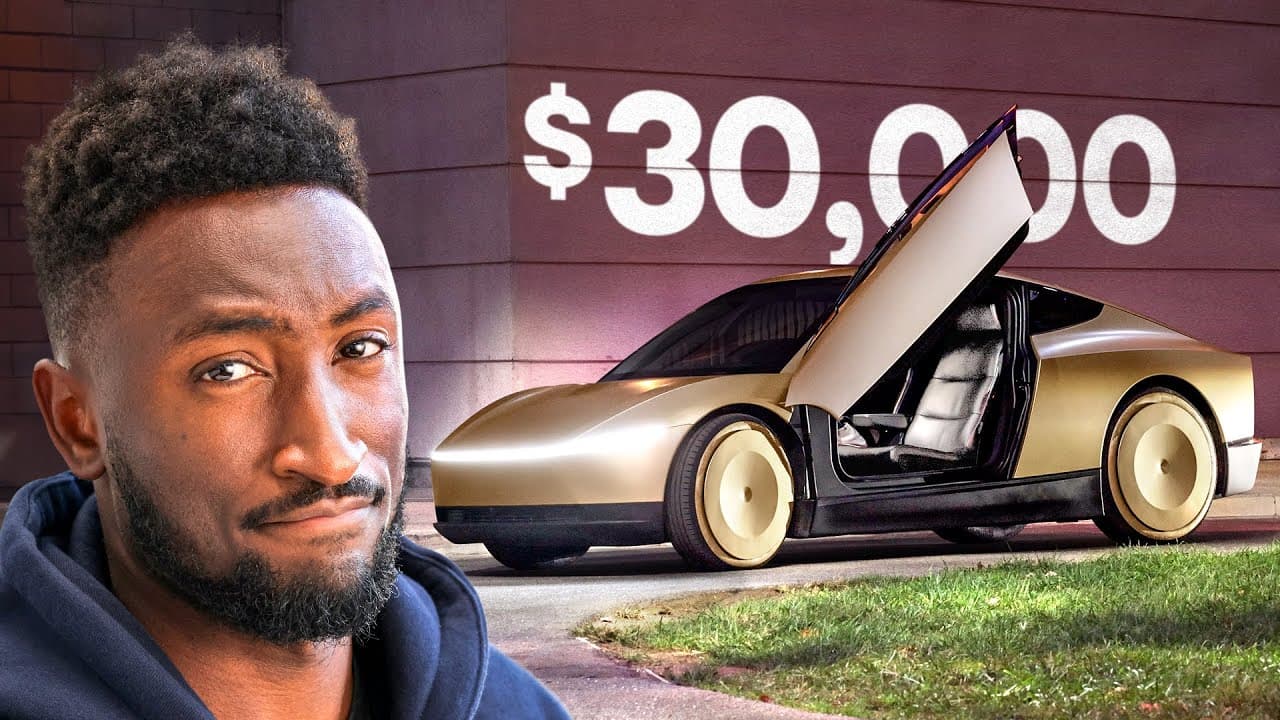
- Tesla's Robotaxi design resembles a mini Cybertruck with unique features like no steering wheel or pedals, emphasizing full self-driving capabilities.
- The Robotaxi aims for high efficiency with a target of 5.5 miles per kilowatt hour, potentially using a smaller battery.
- Tesla's timeline and pricing promises, such as a $30,000 Robotaxi by 2027, are met with skepticism due to past unfulfilled commitments.
- The Robotaxi lacks a charge port, relying solely on inductive wireless charging, which raises concerns about practicality and efficiency.
- Tesla's Robovan concept, presented at the event, is seen as unlikely to materialize due to its futuristic design and lack of detailed information.
- The Optimus robot showcased at the event appeared to interact with attendees, but its capabilities are questioned due to potential human assistance.
- Tesla's event highlighted an optimistic vision for the future, but the feasibility and timeline of these innovations remain uncertain.
- Despite the skepticism, Tesla's significant data gathering advantage positions it as a leading contender to achieve these technological advancements.
Install to Summarize YouTube Videos and Get Transcripts
Explore YouTube Video Summarizer or Get YouTube Transcript Extractor
Questions & Answers
Q: What are the key features of Tesla's Robotaxi?
Tesla's Robotaxi features a design similar to a mini Cybertruck, with no steering wheel or pedals. It emphasizes full self-driving capabilities and includes a large 21-inch touchscreen. The vehicle aims for high efficiency with a target of 5.5 miles per kilowatt hour and relies solely on inductive wireless charging.
Q: Why is there skepticism about Tesla's timeline and pricing promises?
Skepticism arises from Tesla's history of making ambitious promises that are often delayed or unfulfilled. For example, the promised $35,000 Model 3 and $39,000 Cybertruck prices were not sustained. The proposed $30,000 Robotaxi by 2027 is viewed with doubt due to these past experiences.
Q: What concerns are there about the Robotaxi's charging capabilities?
The Robotaxi lacks a traditional charge port and relies solely on inductive wireless charging. This raises concerns about the practicality and efficiency of aligning the vehicle perfectly over the charging pad, as well as the inability to use Tesla's Supercharger network for faster charging.
Q: What is the Robovan concept introduced at the event?
The Robovan is a futuristic concept vehicle designed to transport up to 20 people autonomously. It features a sleek design with no steering wheel and aims to provide efficient group transportation. However, the lack of details and the ambitious nature of the design make its realization doubtful.
Q: How did the Optimus robot perform at the event?
The Optimus robot appeared to interact with attendees, performing tasks and engaging in conversations. However, its capabilities were questioned due to the likelihood of human assistance in its operations. The fast response times suggested potential human control rather than full AI autonomy.
Q: What is the main advantage of Tesla's Robotaxi over a Model 3?
The main advantage of Tesla's Robotaxi is its potential for lower cost, smaller size, and ease of operation in a fleet setting. It is designed for autonomous operation without the need for manual driving, which could make it more suitable for fleet use compared to a Model 3.
Q: What challenges does Tesla face in achieving its Robotaxi vision?
Tesla faces significant challenges in achieving its Robotaxi vision, including obtaining regulatory approval for full self-driving capabilities, reducing production costs to meet the proposed $30,000 price, and overcoming technical hurdles related to wireless charging and vehicle efficiency.
Q: What impression did the event leave about Tesla's future innovations?
The event left an impression of Tesla's ambitious vision for the future, showcasing potential advancements in transportation and robotics. However, the feasibility and timeline for these innovations remain uncertain, with many questioning the likelihood of their realization within the proposed timeframe.
Summary & Key Takeaways
-
Tesla's Robotaxi event featured the unveiling of a self-driving vehicle with no steering wheel or pedals, aiming for high efficiency and autonomous operation. However, the lack of detailed specifications and reliance on wireless charging raised concerns about practicality and feasibility.
-
The event also introduced the Robovan concept and showcased the Optimus humanoid robot, both of which were met with skepticism due to the ambitious nature of the designs and unclear timelines for delivery. Attendees questioned the realism of Tesla's promises.
-
Overall, Tesla's event presented a bold vision for the future of transportation and robotics, but the company's history of delayed timelines and unfulfilled promises left many questioning the likelihood of these innovations becoming reality within the proposed timeframe.
Read in Other Languages (beta)
Share This Summary 📚
Summarize YouTube Videos and Get Video Transcripts with 1-Click
Try YouTube Summary with ChatGPT & Claude or YouTube Transcript Generator
Explore More Summaries from Marques Brownlee 📚



Summarize YouTube Videos and Get Video Transcripts with 1-Click
Try YouTube Summary with ChatGPT & Claude or YouTube Transcript Generator