Bacteria Could Someday Power Our Cell Phones
TL;DR
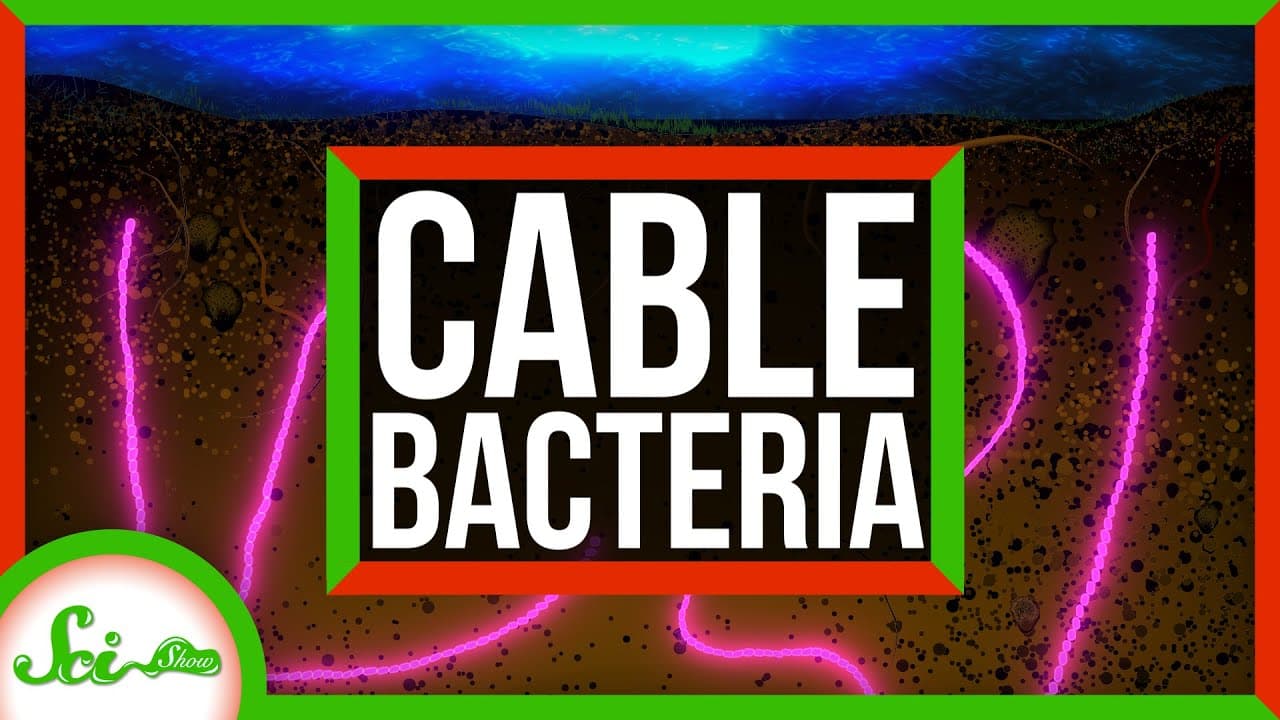
Cable bacteria, found in anoxic environments, can transport electrons over long distances and have potential applications in future technology, such as biodegradable electronics and medical implants.
Transcript
Thanks to Brilliant for supporting this episode of SciShow. Go to Brilliant.org/SciShow to see if you can solve today’s Daily Challenges. [♩INTRO] All living things need energy to survive, and when you break it down, all of that energy comes from electrons. But most of us can’t just lick a battery for energy and call it a day: We need chemical reac... Read More
Key Insights
- 🌍 Cable bacteria are capable of transporting electrons over long distances, which is a unique trait in the microbial world.
- 📱 Their high conductivity rivals state-of-the-art polymers used in technologies like foldable cell phones and solar panels.
- 😷 Cable bacteria have potential applications in biodegradable electronics and medical implants.
- 👶 The discovery of cable bacteria highlights the importance of studying seemingly ordinary substances, such as mud, to uncover new scientific knowledge.
- 🥺 Understanding the mechanisms of electron transportation in cable bacteria could lead to advancements in various fields, including energy production and bioengineering.
- 🚠 Cable bacteria provide a natural model for efficient electron transportation, which could inspire the development of synthetic materials with similar properties.
- 👻 The multicellular nature of cable bacteria allows them to perform complex tasks, such as electron shuttling, more efficiently.
Install to Summarize YouTube Videos and Get Transcripts
Explore YouTube Video Summarizer or Get YouTube Transcript Extractor
Questions & Answers
Q: How do cable bacteria transport electrons over long distances?
Cable bacteria use their multicellular structure, with up to 10,000 cells forming a long, thin strand, to shuttle electrons along their cells and connect different parts of a redox reaction.
Q: What are the potential applications of cable bacteria in technology?
Cable bacteria could be used to grow living electrical wires in the lab, which could be used in biodegradable electronics. They could also be utilized in medical implants that degrade over time in the human body.
Q: What are the unique features of cable bacteria?
Cable bacteria have high conductivity and use parallel fibers to transport electrons. They are also multicellular, which is rare in the microbial world.
Q: How did scientists discover cable bacteria?
Scientists observed the disappearance of hydrogen sulfide in anoxic sediment, leading them to investigate the possibility of electron transportation. Cable bacteria were eventually discovered in the sediment.
Summary & Key Takeaways
-
Cable bacteria are multicellular microbes that can transport electrons over centimeters, connecting oxidizers and reducers in a redox reaction.
-
These bacteria have high conductivity and are capable of producing enough energy for the entire organism.
-
The discovery of cable bacteria opens up possibilities for growing living electrical wires in the lab and developing biodegradable electronic devices and medical implants.
Read in Other Languages (beta)
Share This Summary 📚
Summarize YouTube Videos and Get Video Transcripts with 1-Click
Try YouTube Summary with ChatGPT & Claude or YouTube Transcript Generator
Explore More Summaries from SciShow 📚


Summarize YouTube Videos and Get Video Transcripts with 1-Click
Try YouTube Summary with ChatGPT & Claude or YouTube Transcript Generator