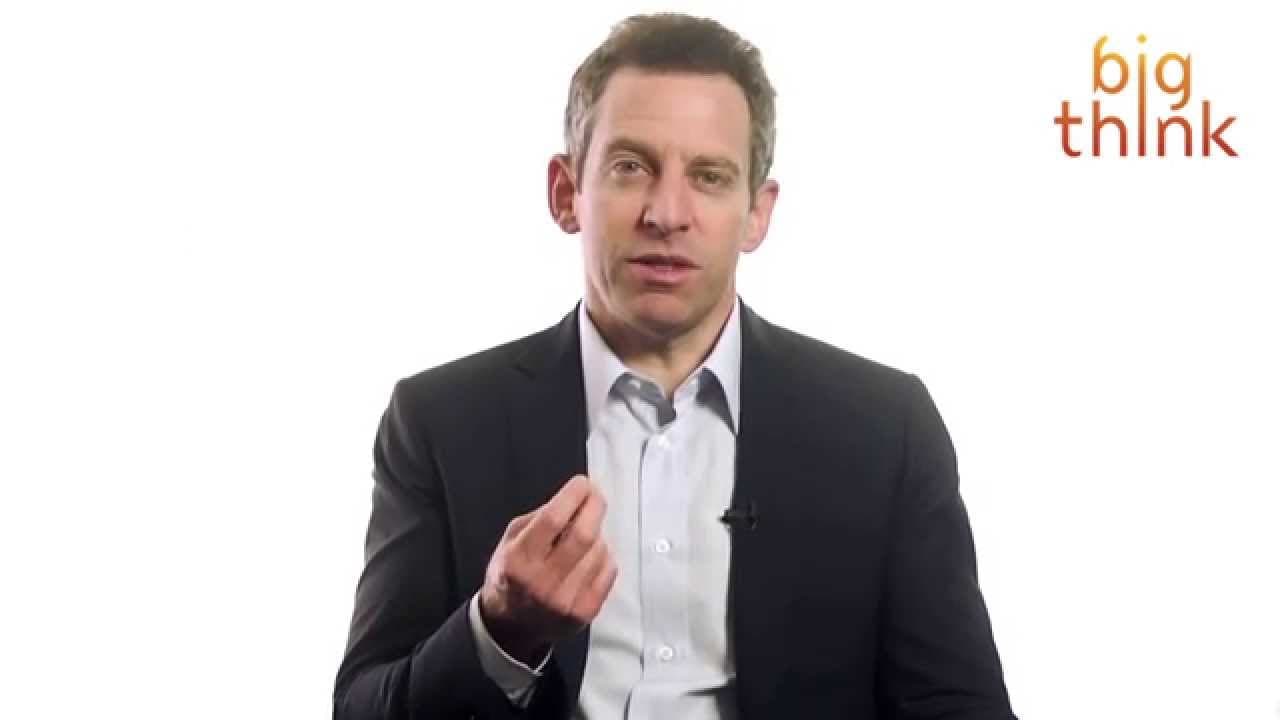
Sam Harris: The Self is an Illusion | Big Think
TL;DR
Consciousness is irreducibly subjective, and self-transcendence can lead to a loss of the ego illusion, enhancing human consciousness.
Transcript
What one of the problems we have in discussing consciousness scientifically is that consciousness is irreducibly subjective. This is a point that many philosophers have made – Thomas Nagel, John Sorrell, David Chalmers. While I don’t agree with everything they’ve said about consciousness I agree with them on this point that consciousness is what it... Read More
Key Insights
- ❓ Consciousness is irreducibly subjective, resisting complete reduction to physical processes.
- 😚 Self-transcendence involves losing the ego illusion and experiencing consciousness without a sense of center.
- 🤳 Self-transcendence does not validate religious dogmas but enhances understanding of human consciousness.
- 🤳 Neuroscience and self-transcendence intersect by aligning human experience with brain processes.
- 🤳 Experiences of self-transcendence offer insights into human consciousness beyond religious claims.
- 🫥 Self-transcendence leads to a faithful experience of the world in line with brain functioning.
- 🤳 Religious experiences must be grounded in the understanding of human consciousness and self-transcendence.
Install to Summarize YouTube Videos and Get Transcripts
Explore YouTube Video Summarizer or Get YouTube Transcript Extractor
Questions & Answers
Q: Why is consciousness considered irreducibly subjective?
Consciousness is subjective because it is defined by the internal experiential quality of being oneself, which cannot be reduced to purely objective measures like brain states.
Q: How does self-transcendence relate to the sense of ego?
Self-transcendence involves losing the sense of a unitary and unchanging self, leading to an experience without a center or ego illusion.
Q: What implications does self-transcendence have for religious experiences?
Self-transcendence does not validate religious dogmas but offers insight into the nature of human consciousness and bridges science and spirituality.
Q: How does self-transcendence align with neuroscience?
Self-transcendence aligns with neuroscience by removing the illusion of a unitary self, bringing human consciousness closer to how the brain processes information.
Summary & Key Takeaways
-
Consciousness is subjective and cannot be reduced to just brain states or physical processes.
-
The self is an illusion, and self-transcendence can lead to a loss of the ego's sense of center.
-
Self-transcendence is a real experience that aligns with neuroscience and classic spirituality.
Read in Other Languages (beta)
Share This Summary 📚
Summarize YouTube Videos and Get Video Transcripts with 1-Click
Try YouTube Summary with ChatGPT & Claude or YouTube Transcript Generator
Explore More Summaries from Big Think 📚




Summarize YouTube Videos and Get Video Transcripts with 1-Click
Try YouTube Summary with ChatGPT & Claude or YouTube Transcript Generator