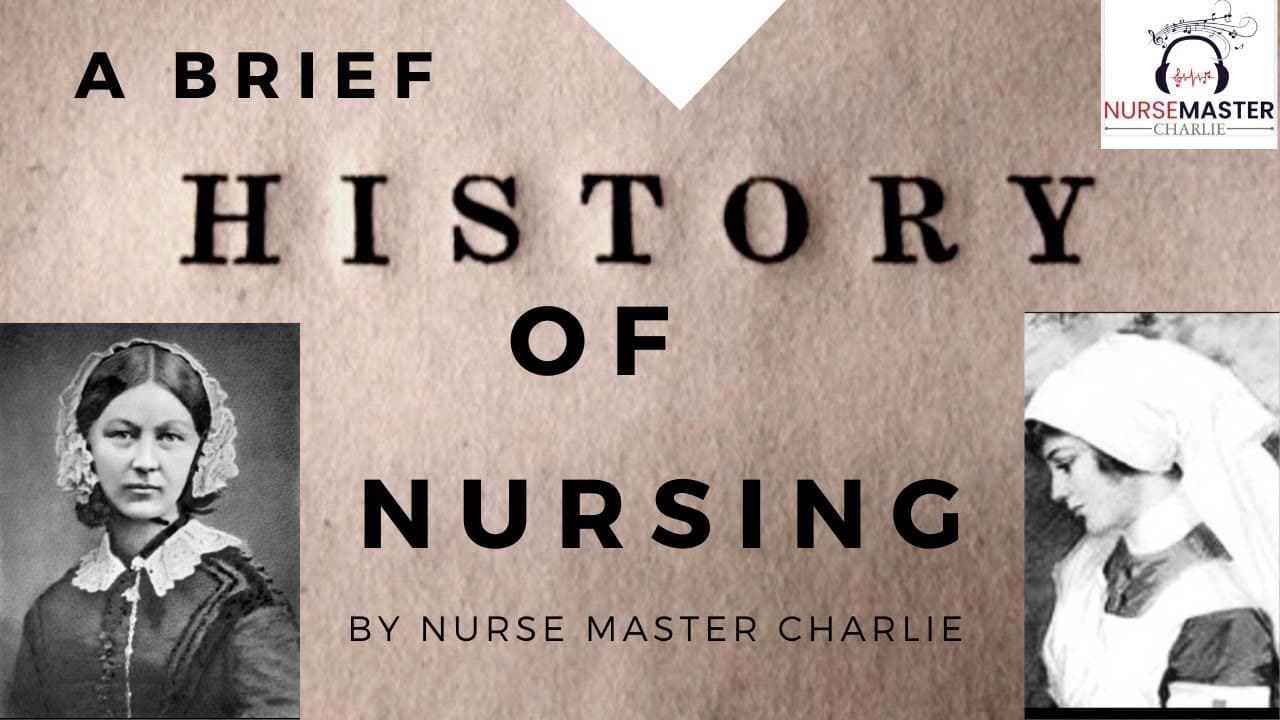
NURSING WAS NOT ALWAYS A RESPECTED PROFESSION! | A BRIEF HISTORY OF NURSING
TL;DR
Nursing has evolved over time, beginning with mothers caring for children and transitioning to formal training and education. Key figures, such as Florence Nightingale, have shaped the profession into the respected field it is today.
Transcript
nursing is the most respected profession in the world and many nurses have paved the way through history to make nursing the honorable and most respected profession in the world but did you know it was not always like this hi there welcome to my nursing channel my name is nursemaster charlie today i'm going to be sharing about a brief history of nu... Read More
Key Insights
- 🤑 Nursing has a rich history, starting with informal caregiving by mothers and women.
- 🤱 The establishment of formal nursing training facilities, such as the Deaconess Home and Hospital, marked a significant shift in nursing education.
- 👨🔬 Florence Nightingale's contributions to nursing education and research revolutionized the field.
- 👨⚕️ The development of nursing organizations and collective bargaining improved the working conditions and salaries for nurses.
- 👨⚕️ World Wars created an increased demand for nurses, while societal expectations affected the availability of trained nurses.
- 🤱 Mildred Montag's development of the Associate Degree in Nursing (ADN) program expanded access to nursing career opportunities.
- 🤱 Nursing education continues to evolve, with an emphasis on acquiring higher degrees and specialized nursing roles.
Install to Summarize YouTube Videos and Get Transcripts
Explore YouTube Video Summarizer or Get YouTube Transcript Extractor
Questions & Answers
Q: How did nursing care evolve over history?
Nursing care started with mothers and women providing care for infants and children. It later extended to caring for the sick, often done by family members, friends, or healers in different cultures or societies. In the early middle ages, religious monks and nuns played a significant role in caregiving.
Q: Who was Florence Nightingale and what were her contributions to nursing?
Florence Nightingale was a philanthropist and highly educated individual who emphasized the importance of nursing education and elevating the nursing profession. She promoted collegial relationships with physicians, used statistics and research to improve care, and established the Nightingale Training School for Nurses.
Q: How did nursing education develop in the United States?
The United States initially had a limited number of nursing schools, but these numbers grew rapidly by the late 1800s. Public health nursing and school nursing emerged as new areas of focus. Nursing organizations like the American Nurses Association and the National League for Nursing were established to standardize nursing education and formalize licensing.
Q: What impact did women like Lillian Wald and Clara Barton have on nursing?
Lillian Wald contributed to the development of public health and school nursing, while Clara Barton played a crucial role in forming the American Red Cross. Both women were instrumental in advancing the nursing profession and advocating for better healthcare.
Key Insights:
- Nursing has a rich history, starting with informal caregiving by mothers and women.
- The establishment of formal nursing training facilities, such as the Deaconess Home and Hospital, marked a significant shift in nursing education.
- Florence Nightingale's contributions to nursing education and research revolutionized the field.
- The development of nursing organizations and collective bargaining improved the working conditions and salaries for nurses.
- World Wars created an increased demand for nurses, while societal expectations affected the availability of trained nurses.
- Mildred Montag's development of the Associate Degree in Nursing (ADN) program expanded access to nursing career opportunities.
- Nursing education continues to evolve, with an emphasis on acquiring higher degrees and specialized nursing roles.
- Nurses have the power to shape the future of nursing and make significant contributions to healthcare.
Summary & Key Takeaways
-
Nursing has a long history, with references dating back to biblical scriptures and the role of wet nurses.
-
Early nursing care was mostly provided by mothers or women, but eventually shifted to become the responsibility of those with experience in caring for the sick.
-
The establishment of nursing training facilities, such as the Deaconess Home and Hospital in Germany, laid the foundation for modern nursing, with Florence Nightingale making significant contributions.
Read in Other Languages (beta)
Share This Summary 📚
Summarize YouTube Videos and Get Video Transcripts with 1-Click
Try YouTube Summary with ChatGPT & Claude or YouTube Transcript Generator