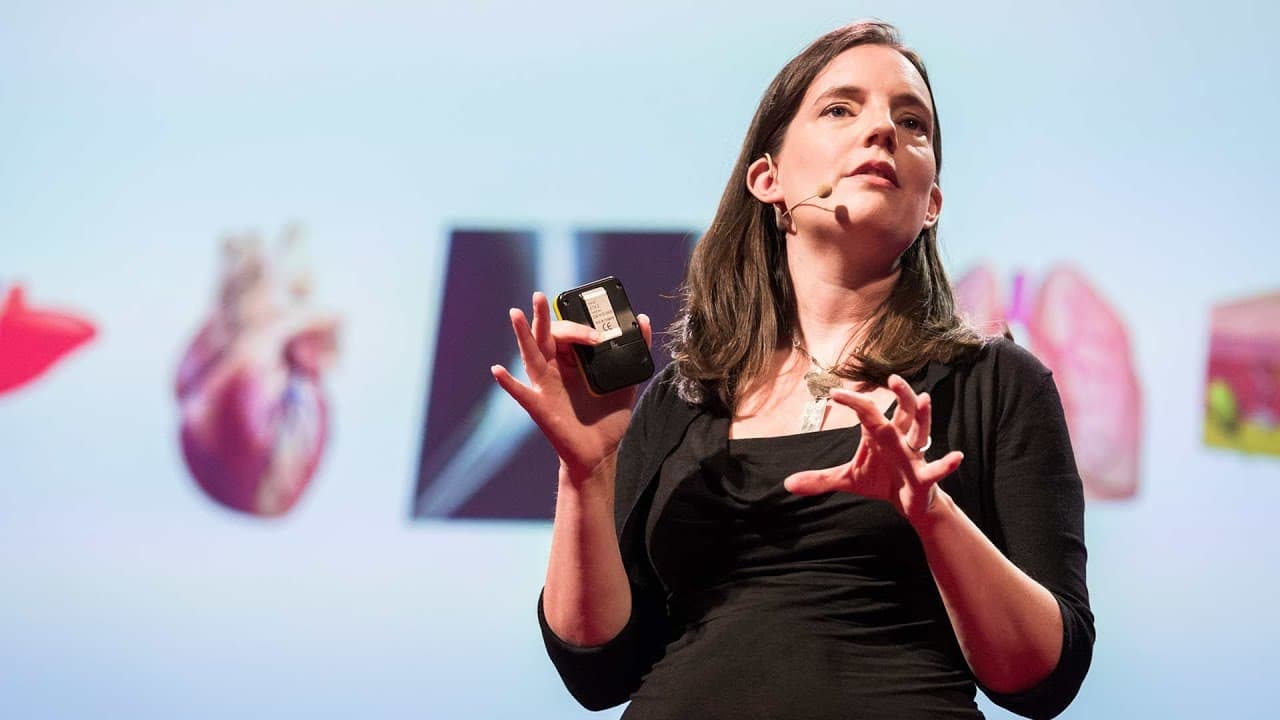
Molly Stevens: A new way to grow bone
TL;DR
This content explores the use of biomaterials in regenerative medicine to improve health and repair damaged tissues.
Transcript
As humans, it's in our nature to want to improve our health and minimize our suffering. Whatever life throws at us, whether it's cancer, diabetes, heart disease, or even broken bones, we want to try and get better. Now I'm head of a biomaterials lab, and I'm really fascinated by the way that humans have used materials in really creative ways in th... Read More
Key Insights
- 💀 The use of materials in the body for medical purposes has a long history, from the Mayans using blue nacre shells as artificial tooth replacements to Sir Harold Ridley using plastic shards from Spitfire canopies for intraocular lenses.
- 💉 In regenerative medicine, there is a shift towards using bioactive materials that interact with the body and eventually dissolve, rather than bioinert materials.
- 🔬 The tissue-engineering approach in regenerative medicine involves growing cells on materials, but the success of this approach depends on providing the right environment for stem cells to differentiate into the desired tissue.
- 🦴 Different tissues have varying abilities to regenerate, with liver being highly regenerative while cartilage is difficult to regenerate.
- 🔬 The in vivo bioreactor approach involves creating an artificial cavity near stem cells using a gel, which leads to the proliferation of stem cells and the formation of new tissue, such as bone or cartilage.
- 💡 There is a need for other scaffold-based approaches in addition to the in vivo bioreactor approach, requiring a multi-disciplinary team to design materials that provide enough information to guide cell behavior.
- 🧪 Understanding the structure of tissues in the body, such as the organized nano-scale fibers and hybrid organic-inorganic matrix found in bone, can inform the development of materials with desired properties.
- 🩸 Materials for cardiovascular disease treatment need to be conductive, as cells can respond well and conduct signals on such materials, potentially aiding in heart tissue regeneration.
Install to Summarize YouTube Videos and Get Transcripts
Explore YouTube Video Summarizer or Get YouTube Transcript Extractor
Questions & Answers
Q: What is the significance of the blue nacre shell used by the Mayans as an artificial tooth replacement?
The blue nacre shell was not only hard and durable, but it also had properties that allowed it to integrate into the jawbone. Advanced imaging technologies have revealed that the specific design and chemistry of the material contributed to this integration. It can be considered as the first use of "bluetooth" technology in terms of its ability to interact with the body.
Q: How did Sir Harold Ridley's observation during World War II lead to a medical breakthrough?
Sir Harold Ridley, an ophthalmologist, noticed that pilots who had small shards of plastic from the canopy of Spitfires lodged in their eyes did not experience any inflammatory response. This discovery led him to propose the use of the plastic material, PMMA, as intraocular lenses. Today, millions of people benefit from this material in preventing cataracts.
Q: How has the approach to materials in regenerative medicine changed?
In the past, materials used in the body were often chosen for their bioinert properties, meaning they didn't cause adverse responses and served a mechanical function. However, in regenerative medicine, researchers now actively seek materials that are bioactive and can interact with the body. These materials should be able to fulfill their function in the body and eventually dissolve over time.
Q: How has the field of tissue engineering evolved in terms of understanding stem cells?
Stem cells have the potential to develop into various types of tissue, so it is crucial to provide them with the right environment to become the desired specialized tissue. Tissue engineering research worldwide covers a wide range of tissues, each with different regenerative abilities and structures. Therefore, the choice of materials for regeneration needs to be carefully considered based on factors such as biochemistry, mechanics, and underlying patient conditions.
Q: What limitations does the iliac crest harvest approach have in bone repair?
The iliac crest harvest, a procedure where bone is taken from the iliac crest and transplanted elsewhere in the body to repair fractures, has limitations. There is a limited amount of bone that can be harvested, and patients may experience significant pain at the donor site even years after the operation. This calls for alternative approaches to bone repair that can generate bone within the body and avoid these painful complications.
Q: What is the in vivo bioreactor approach to bone regeneration?
The in vivo bioreactor approach involves creating an artificial cavity next to the layer of stem cells on the outside of long bones called the periosteum. By injecting a liquid that turns into a gel underneath the periosteum, the stem cells can proliferate and form new tissue. This approach allows the generation of large amounts of bone within the body, which can be harvested and used elsewhere without causing significant after-pain like the iliac crest harvest method.
Q: What factors are considered when designing scaffold-based approaches in tissue engineering?
Designing scaffold-based approaches in tissue engineering requires a multidisciplinary team including chemists, cell biologists, surgeons, and physicists. The challenge is to create materials that provide enough information to guide cell behavior but are not overly complex to hinder clinical application. Understanding the structure of the tissues in the body, such as bone, is crucial. Researchers aim to develop materials with hybrid structures mimicking the organic-inorganic nature of tissues and explore the use of scaffolds with tailored dimensions to provide more accurate cellular guidance.
Q: How can materials contribute to cardiovascular disease treatment, specifically for heart tissue regeneration?
Stem cell trials for cardiovascular disease have shown that implanted cells often do not survive, hindering the desired tissue regeneration. Researchers are exploring the use of materials to enhance cell delivery and survival. These materials should provide not only chemistry, mechanics, and topography but also conductivity for effective cell signaling. Exciting developments include materials on which cardiac cells can beat synchronously, potentially leading to advancements in the treatment of heart tissue damage caused by heart attacks.
Summary & Key Takeaways
-
Humans have been using materials in creative ways in the body for a long time, such as the Mayans using a blue nacre shell as a tooth replacement.
-
In regenerative medicine, the focus has shifted towards bioactive materials that can interact with the body and dissolve over time.
-
The speaker's lab has developed a simplified tissue-engineering approach called the in vivo bioreactor, which uses the body to generate large amounts of new bone or cartilage. They are also exploring materials for cardiovascular disease treatment.
Read in Other Languages (beta)
Share This Summary 📚
Summarize YouTube Videos and Get Video Transcripts with 1-Click
Try YouTube Summary with ChatGPT & Claude or YouTube Transcript Generator
Explore More Summaries from TED 📚



Summarize YouTube Videos and Get Video Transcripts with 1-Click
Try YouTube Summary with ChatGPT & Claude or YouTube Transcript Generator