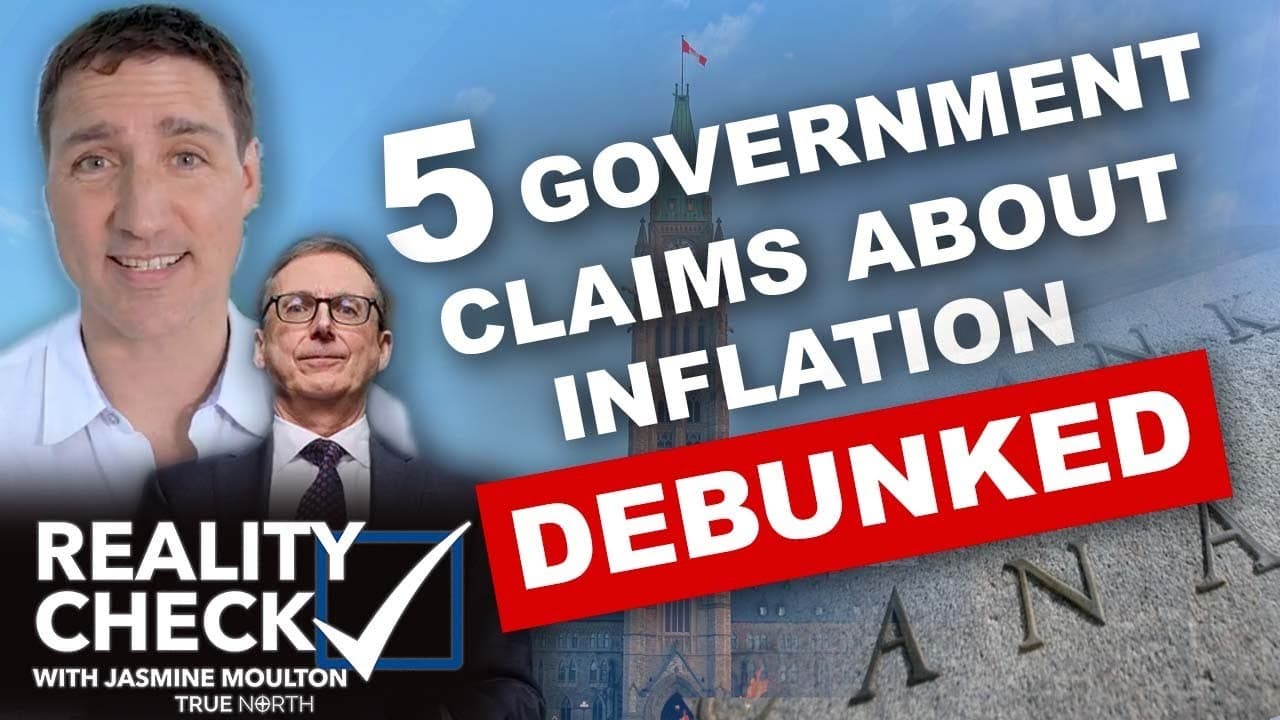
5 government claims about inflation DEBUNKED
TL;DR
Inflation in Canada is high due to global factors, government spending, and economic policies.
Transcript
i'm jasmine moulton and this is reality tech the inflation rate in canada is currently nearing eight percent and this is the highest that has been in about four decades and while politicians and government officials are talking a lot about explanations for this increase in the inflation rate none of them seem to be pointing to themselves or their o... Read More
Key Insights
- ✋ Inflation in Canada is currently at its highest in four decades, influenced by both global events and domestic policies.
- 🧑🏭 Politicians often attribute inflation to external factors while neglecting how their policies may contribute to the problem.
- 🇨🇦 Canada has ample natural resources to counteract inflationary pressures but has struggled with internal distribution and export capabilities.
- 🤨 The Bank of Canada's monetary policies during the pandemic have raised questions about their effectiveness in managing inflation.
- 😑 A significant portion of Canadians expressed frustration with the government's handling of inflation and economic stability.
- 🚕 Critics highlight that the carbon tax exacerbates inflation, making essentials more expensive in an already strained economy.
- 🇨🇦 There is a call for greater accountability from both the Bank of Canada and political leaders regarding their roles in inflation.
Install to Summarize YouTube Videos and Get Transcripts
Explore YouTube Video Summarizer or Get YouTube Transcript Extractor
Questions & Answers
Q: What factors are contributing to the rise in inflation rates in Canada?
The rise in inflation rates in Canada can be attributed to several global factors, including the lingering effects of the COVID-19 pandemic and geopolitical issues such as Russia's invasion of Ukraine. These events have disrupted supply chains and pushed up prices for essential commodities like oil and wheat. Additionally, domestic policies such as carbon taxes have resulted in increased costs for food and energy, compounding the issue.
Q: How have Canadian government policies been linked to inflation?
Government policies, specifically the implementation of a carbon tax, have been linked to increasing inflation. Critics argue that this tax raises the costs of essential goods and services, which contributes to higher inflation rates. Furthermore, the government's substantial pandemic spending, which far exceeded that of its G7 peers, has led to increased national debt and financial strain.
Q: In what ways has the Bank of Canada been criticized regarding inflation management?
The Bank of Canada has faced criticism for its handling of inflation during the pandemic. Observers point out that despite its mandate to target inflation at around two percent, the actual inflation rate has skyrocketed. The bank's decision to create a significant amount of new money to purchase government bonds has raised concerns about the connection between its actions and the rising cost of living.
Q: What myths regarding inflation in Canada do political leaders propagate?
Political leaders often propagate myths surrounding inflation, claiming it is a global problem. However, critics argue that this avoids accountability for domestic policies that worsen inflation. Additionally, some leaders suggest that external conflicts, like the war in Ukraine, are primarily to blame for inflation in Canada, ignoring the country's significant energy resources and potential for economic output.
Q: What is the response to the notion that Canada cannot be blamed for high inflation?
The response to the idea that Canada cannot be blamed for high inflation is that while global factors play a role, significant domestic policies and spending practices also contribute. Critics argue that government inaction regarding its carbon tax and inefficient spending during the pandemic shows a lack of accountability and transparency in combating inflation.
Q: How does public sentiment reflect confidence in the Bank of Canada?
Public sentiment regarding the Bank of Canada reflects a growing lack of confidence, with a recent poll indicating that 41% of Canadians doubt the bank's ability to control inflation. Even officials within the bank acknowledge the frustrations of Canadians and the importance of accountability in addressing the economic challenges faced by the country.
Q: Why do critics claim the government has wasted funds during the pandemic?
Critics claim the government has wasted funds during the pandemic due to poorly targeted financial assistance programs. Reports indicated significant sums allocated to individuals and groups who did not necessarily require financial support, such as those with high household incomes. This mismanagement has compounded fiscal issues and undermined targeted relief efforts.
Summary & Key Takeaways
-
Canada is experiencing an inflation rate nearing eight percent, the highest in nearly four decades, influenced by global crises like the COVID-19 pandemic and the invasion of Ukraine.
-
Local government policies, such as carbon taxes and excessive government spending, have been criticized for exacerbating inflationary pressures instead of being solely attributed to external factors.
-
The Bank of Canada's role and actions during the pandemic are scrutinized, with questions about its commitment to managing inflation effectively, particularly regarding increased money supply without transparency.
Read in Other Languages (beta)
Share This Summary 📚
Summarize YouTube Videos and Get Video Transcripts with 1-Click
Try YouTube Summary with ChatGPT & Claude or YouTube Transcript Generator
Explore More Summaries from True North 📚






Summarize YouTube Videos and Get Video Transcripts with 1-Click
Try YouTube Summary with ChatGPT & Claude or YouTube Transcript Generator