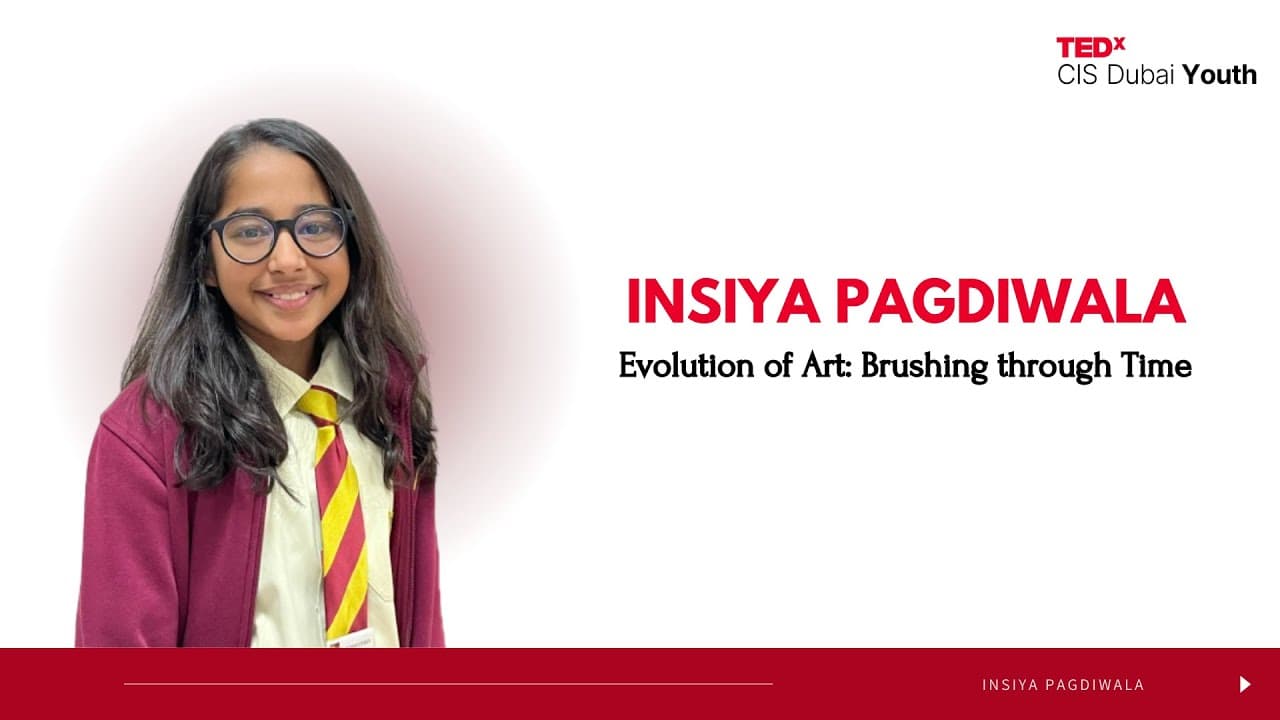
Evolution of Art: Brushing through Time | Insiya Pagdiwala | TEDxCIS Dubai Youth
TL;DR
Art has evolved throughout history, from cave paintings to modern digital creations, and continues to challenge norms and reflect the ever-changing human experience.
Transcript
ladies and gentlemen today I'm excited to take you on a journey through the fascinating world of art now I know you might be thinking what's the big deal about art well let me tell you it's a super cool adventure that started a long long time ago imagine going back in time way before our parents and even our grandparents were born people didn't hav... Read More
Key Insights
- 🥰 Art has evolved from cave paintings to modern digital creations, reflecting the progress of human civilization.
- 🥰 Different periods in art history brought unique themes, styles, and techniques.
- 🥰 Modern art challenges norms, embraces experimentation, and can be misunderstood due to its unconventional nature.
- 🥰 The art market tends to favor traditional art, making it easier to sell than modern art.
- 🥰 The education system often overlooks modern art, limiting students' understanding and appreciation.
- 🪩 Art serves as a mirror to our hopes, fears, dreams, and aspirations, and reflects the ever-changing human experience.
- 🥰 Technology has revolutionized art, allowing for innovative digital creations.
Install to Summarize YouTube Videos and Get Transcripts
Explore YouTube Video Summarizer or Get YouTube Transcript Extractor
Questions & Answers
Q: How did art evolve from cave paintings to modern digital creations?
Art evolved as a form of communication and storytelling, with cave paintings being some of the earliest known examples. Over time, art became more sophisticated, incorporating religious themes, naturalism, and experimentation with new techniques and materials. Today, art embraces diverse influences and uses technology to create digital masterpieces.
Q: Why is modern art often misunderstood or overlooked?
Modern art can be challenging for some people because it moves away from traditional ideas and embraces unconventional forms and colors. This unfamiliarity can make it difficult for viewers to understand the artist's intended message. Additionally, the art market tends to favor traditional art, making it easier to sell, while modern art faces challenges in finding buyers.
Q: How does the education system contribute to the bias against modern art?
The education system often focuses more on historical art, leaving little room for the study of modern art movements. This oversight means that students miss out on understanding innovative ideas and techniques that define modern art. The lack of exposure leads to a limited appreciation and understanding of modern art.
Q: How does art reflect the ever-changing human experience?
Art serves as a mirror to our hopes, fears, dreams, and aspirations. It reflects the complexities of the modern world, challenges traditional ideas, and invites us to question and explore new perspectives. Art has the power to inspire, uplift, challenge, heal, and connect us in ways that words cannot.
Summary & Key Takeaways
-
Art started as a form of communication and storytelling, evolving over time to express beliefs and emotions.
-
Different periods, such as the Middle Ages and the 20th century, brought unique themes and styles to the art world.
-
Modern art, often overlooked or misunderstood, challenges norms and pushes boundaries through experimentation and abstraction.
Read in Other Languages (beta)
Share This Summary 📚
Summarize YouTube Videos and Get Video Transcripts with 1-Click
Try YouTube Summary with ChatGPT & Claude or YouTube Transcript Generator
Explore More Summaries from TEDx Talks 📚


Summarize YouTube Videos and Get Video Transcripts with 1-Click
Try YouTube Summary with ChatGPT & Claude or YouTube Transcript Generator