How Xiaomi's SUV Outpaced Tesla in China
TL;DR
Xiaomi's new SUV received over 289,000 pre-orders within an hour, surpassing expectations and marking a significant entry into the EV market. The company's strategy of integrating a digital ecosystem into its vehicles resonates well in China's digital economy. This approach positions Xiaomi as a formidable competitor against established brands like Tesla, BYD, and Huawei.
Transcript
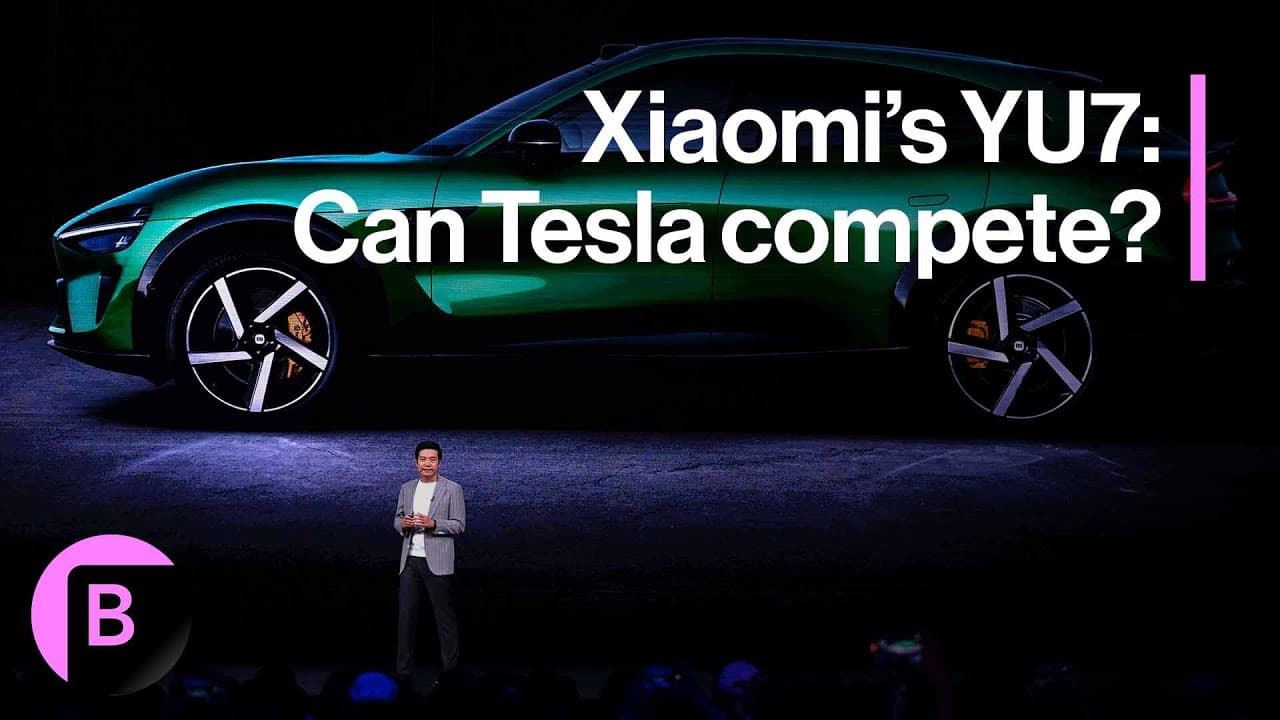
And Xiaomi shares have touched a record high after strong initial orders for its new $35,000 SUV intended to compete with Tesla's Model Y in China. The company says it got over 289,000 pre-orders for the YU7 within an hour, and that exceeded analyst's expectations. The new model is going to be a test of demand for Xiaomi cars after a fatal crash, w... Read More
Key Insights
- Xiaomi's new SUV received over 289,000 pre-orders within an hour, indicating strong market demand.
- Xiaomi is not just an EV company but integrates a digital ecosystem into its vehicles.
- The SUV's success is part of Xiaomi's strategy to treat cars as smart terminals, similar to smartphones.
- Xiaomi's approach is likely to inspire imitators in the competitive Chinese market.
- BYD and Huawei are Xiaomi's main competitors in China's EV market.
- Tesla's sales in China are declining due to an aged model lineup and lack of a localized digital ecosystem.
- China's EV market is consolidating, with ten companies generating 80% of sales.
- Chinese EV makers are expanding globally, focusing on markets in the global South and emerging economies.
Install to Summarize YouTube Videos and Get Transcripts
Explore YouTube Video Summarizer or Get YouTube Transcript Extractor
Questions & Answers
Q: How did Xiaomi's new SUV perform in initial orders?
Xiaomi's new SUV received an impressive 289,000 pre-orders within just one hour of its launch. This strong performance exceeded analysts' expectations and marked a significant entry for Xiaomi into the electric vehicle market. The high demand highlights the potential for Xiaomi's integrated digital ecosystem approach to resonate with consumers in China.
Q: What makes Xiaomi's approach to the EV market unique?
Xiaomi differentiates itself in the EV market by integrating a digital ecosystem into its vehicles, treating cars as smart terminals similar to smartphones. This approach leverages Xiaomi's existing consumer electronics brand and resonates well in China's digital economy. By focusing on digital integration, Xiaomi aims to create a unique value proposition that sets it apart from traditional hardware-focused competitors.
Q: Who are Xiaomi's main competitors in the Chinese EV market?
In the Chinese EV market, Xiaomi faces competition primarily from BYD and Huawei. BYD is known for its scale and ability to price aggressively, while Huawei offers a comprehensive hardware and software integrated solution. Both companies are well-established in the market, but Xiaomi's innovative digital ecosystem approach presents a new challenge for them.
Q: Why are Tesla's sales declining in China?
Tesla's sales in China are declining due to several factors. The company's model lineup has aged, with the Model 3 and Model Y launched in 2020 and 2021, respectively. Additionally, Tesla lacks a localized digital ecosystem that appeals to Chinese consumers. As a result, Tesla faces increased competition from companies like Xiaomi, which offer more innovative and integrated digital solutions.
Q: How is the Chinese EV market consolidating?
The Chinese EV market is experiencing consolidation, with ten companies generating 80% of new energy vehicle sales. This concentration is driven by the need for scale and competitive pricing. As the market matures, only companies that can differentiate themselves through technology and digital integration, like Xiaomi, are likely to survive and thrive.
Q: What are Xiaomi's global expansion plans for its EVs?
Xiaomi plans to expand its EV presence globally by focusing on emerging markets where affordability is key. The company aims to capitalize on its strong brand and digital ecosystem to penetrate markets in the global South, including regions like Central Asia, the Middle East, and Latin America. This strategy involves offering affordable electrified mobility solutions tailored to local needs.
Q: What is the significance of Xiaomi's digital ecosystem in its EV strategy?
Xiaomi's digital ecosystem is central to its EV strategy, as it transforms vehicles into smart terminals that integrate seamlessly with other Xiaomi devices. This approach leverages Xiaomi's existing consumer electronics brand, creating a unique value proposition that appeals to tech-savvy consumers. By focusing on digital integration, Xiaomi aims to disrupt the traditional automotive market and establish a strong foothold in the EV sector.
Q: How are Chinese EV makers addressing global market barriers?
Chinese EV makers are addressing global market barriers by targeting regions with fewer trade restrictions and high demand for affordable electric vehicles. Companies like Xiaomi are focusing on emerging markets such as Central Asia, the Middle East, and Latin America. Additionally, Chinese manufacturers are establishing localized production facilities in regions like Eastern Europe to bypass tariffs and cater to local consumer preferences.
Summary & Key Takeaways
-
Xiaomi's new SUV, priced at $35,000, received over 289,000 pre-orders in an hour, exceeding expectations and boosting Xiaomi's shares. The SUV's success is part of Xiaomi's strategy to integrate a digital ecosystem into its vehicles, treating cars as smart terminals. This approach positions Xiaomi as a strong competitor against brands like Tesla, BYD, and Huawei.
-
Xiaomi's entry into the EV market is marked by its strategy of creating a fully integrated digital ecosystem, resonating well in China's digital economy. The company aims to capitalize on its existing consumer electronics brand and expand globally, focusing on emerging markets where affordability is crucial.
-
The Chinese EV market is becoming more concentrated, with a few key players dominating sales. Xiaomi's innovative approach and strong initial orders for its SUV highlight its potential to disrupt the market. Competitors like BYD and Huawei must adapt to Xiaomi's integrated digital strategy to maintain their positions.
Read in Other Languages (beta)
Share This Summary 📚
Summarize YouTube Videos and Get Video Transcripts with 1-Click
Try YouTube Summary with ChatGPT & Claude or YouTube Transcript Generator
Explore More Summaries from Bloomberg Television 📚






Summarize YouTube Videos and Get Video Transcripts with 1-Click
Try YouTube Summary with ChatGPT & Claude or YouTube Transcript Generator