Nucleus | Cell | Infinity Learn
TL;DR
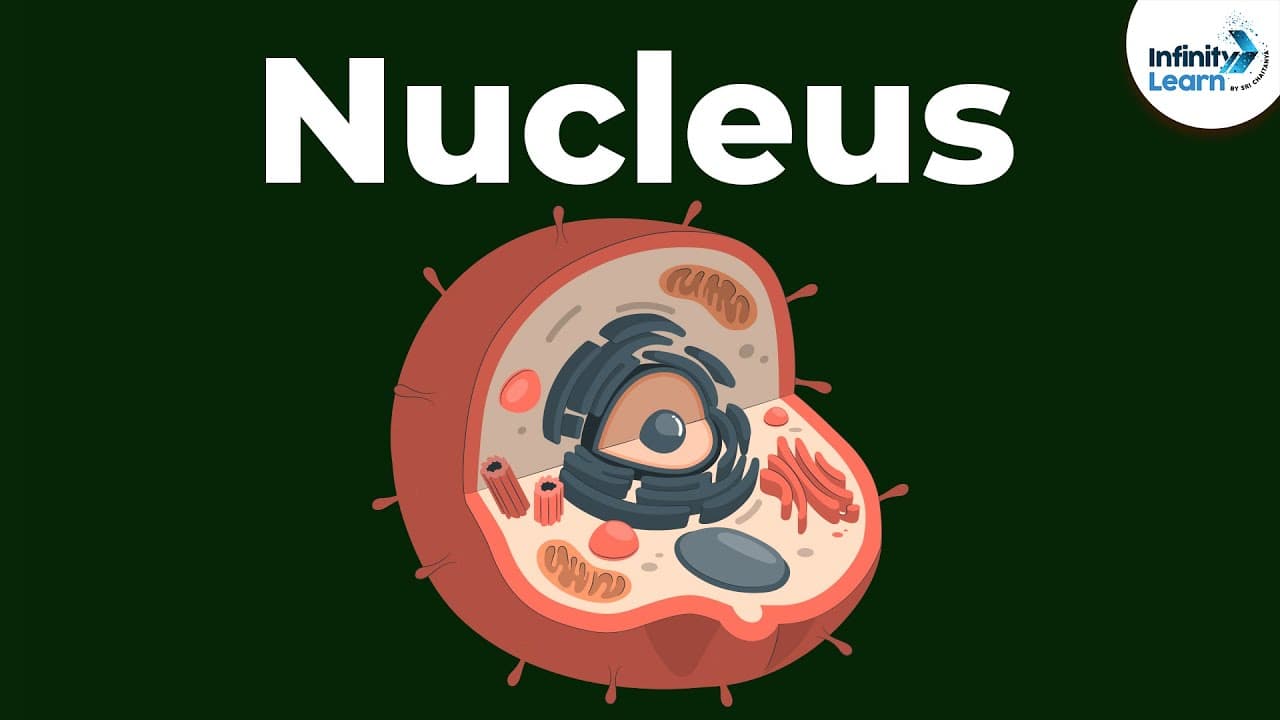
The nucleus is the controlling unit of the cell, governing the functions of other organelles with its genetic material and the production of specific proteins.
Transcript
Teamwork leads to greater efficiency. Whatever be the job, a complete set of people in co-ordination can make it possible. But a team is usually considered incomplete without a leader. A leader is the one who not only guides, but even regulates or controls the working of other team members! The same analogy can be used to study the cellular organel... Read More
Key Insights
- 🧑🏭 The nucleus acts as the leader and controlling unit of the cell, regulating the functions of other organelles.
- 🏪 Chromatin fibers and chromosomes are responsible for organizing and storing the genetic material within the nucleus.
- 👨💻 Genes, composed of DNA, are the functional units that determine heredity and code for specific proteins.
- 💁 Proteins produced by genes help regulate various cellular functions, including information transfer and structural building.
- 😣 The nucleus has its own membrane and nucleoplasm, separating its contents from the rest of the cytoplasm.
Install to Summarize YouTube Videos and Get Transcripts
Explore YouTube Video Summarizer or Get YouTube Transcript Extractor
Questions & Answers
Q: Why is the nucleus considered the major organelle?
The nucleus contains the genetic material, DNA, which is responsible for regulating the functions of other organelles through the production of specific proteins.
Q: What are chromosomes and chromatin?
Chromatin refers to the extended form of DNA when the cell is not dividing, while chromosomes are the more condensed and organized structures formed during cell division.
Q: How do genes contribute to heredity?
Genes, which are made up of DNA molecules, determine the traits and characteristics inherited from parents to offspring.
Q: How does the nucleus regulate cellular functions?
Genes within the nucleus code for specific proteins that perform various functions, such as passing information, communication, and building structures, which help regulate the activities of other organelles.
Summary & Key Takeaways
-
The nucleus is considered the major organelle as it contains the genetic material of the cell.
-
Chromatin fibers, composed of DNA, enclose and organize the genetic material within the nucleus, forming chromosomes during cell division.
-
Genes are functional segments of DNA that code for specific proteins, which regulate various cellular functions.
Read in Other Languages (beta)
Share This Summary 📚
Summarize YouTube Videos and Get Video Transcripts with 1-Click
Try YouTube Summary with ChatGPT & Claude or YouTube Transcript Generator
Explore More Summaries from Infinity Learn NEET 📚
Summarize YouTube Videos and Get Video Transcripts with 1-Click
Try YouTube Summary with ChatGPT & Claude or YouTube Transcript Generator