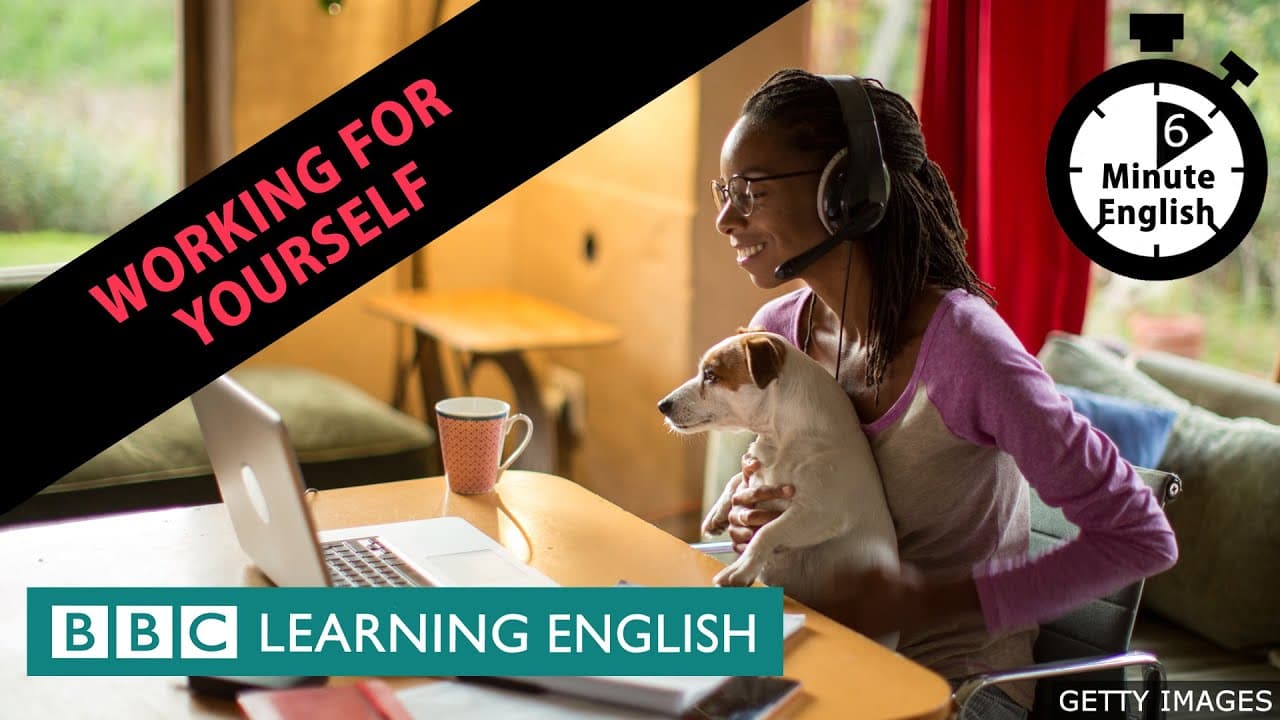
Working for yourself - 6 Minute English
TL;DR
Exploring freelancing's pros and cons for financial and creative freedom.
Transcript
Hello. This is 6 Minute English from BBC Learning English. I’m Georgina. And I’m Rob. Rob, what’s the best job you’ve ever had? Err well, this one, of course! It’s very creative, with lots of variety. OK, any other reasons? Well yes – it’s a permanent job - a staff job - with regular income and a pension. Yes, these things can be important, but hav... Read More
Key Insights
- Freelancing offers the flexibility to work creatively and manage one's own schedule, which can be beneficial for mental health.
- The shift from traditional employment to freelancing is often driven by the need for creative fulfilment and financial freedom.
- Freelancing can be risky and frightening, as individuals are solely responsible for their own success and financial stability.
- Many people have transitioned to freelancing due to economic pressures, such as the coronavirus pandemic, which forced them to adapt.
- Self-employment can lead to self-sabotage, where doubts and fears hinder personal achievements and progress.
- Carla Barker and Fiona Thomas share personal experiences of leaving full-time jobs for the freedom and challenges of freelancing.
- Freelancers like Fiona Thomas find that self-employment allows them to better accommodate personal needs, such as mental health management.
- The term 'drummer' historically referred to a travelling salesman, highlighting the evolving nature of job titles and roles.
Install to Summarize YouTube Videos and Get Transcripts
Explore YouTube Video Summarizer or Get YouTube Transcript Extractor
Questions & Answers
Q: What are the main benefits of freelancing mentioned in the content?
The main benefits of freelancing include creative fulfilment, flexibility in managing work schedules, and financial freedom. Freelancers can tailor their work to their personal needs, such as accommodating mental health conditions, and have the potential to increase their income independently without relying on traditional promotions or pay raises.
Q: What challenges do freelancers face according to the discussion?
Freelancers face challenges such as financial instability, as they are solely responsible for their income. The fear of failure and self-sabotage can hinder their progress. Additionally, the transition from a stable, full-time job to freelancing can be daunting, requiring individuals to overcome doubts and fears to achieve success.
Q: How did the coronavirus pandemic influence freelancing trends?
The coronavirus pandemic forced many individuals into freelancing as traditional job opportunities dwindled. Economic pressures and the need for flexible work arrangements pushed people to adapt by offering their skills independently. This shift highlighted the importance of agility and adaptability in the modern job market.
Q: What historical context is provided about the term 'drummer'?
Historically, the term 'drummer' referred to a travelling salesman who was responsible for 'drumming up' business, or increasing sales and support for a company. This highlights how job titles and roles have evolved over time, reflecting changes in the economy and society's needs.
Q: What motivated Fiona Thomas to become self-employed?
Fiona Thomas was motivated to become self-employed due to her desire for creative fulfilment and the need to manage her mental health better. Working in a rigid schedule exacerbated her depression and anxiety, so freelancing offered her the flexibility and control she needed to improve her well-being and financial situation.
Q: What does the term 'self-sabotage' mean in the context of freelancing?
In the context of freelancing, 'self-sabotage' refers to the doubts and fears that freelancers may experience, which can stop them from achieving their goals. This psychological barrier can prevent individuals from taking necessary risks or making decisions that could lead to success in their self-employment journey.
Q: How does freelancing provide financial freedom?
Freelancing provides financial freedom by allowing individuals to control how much they earn and how they use their money. Unlike traditional employment, where income is often fixed and dependent on promotions or raises, freelancers can increase their earnings through new clients, projects, and opportunities, offering greater financial autonomy.
Q: What personal experiences were shared by Carla Barker regarding freelancing?
Carla Barker shared her experience of leaving a stable, full-time job to start her own business. She described the transition as petrifying and super-scary due to the responsibility of being solely accountable for her success. Despite initial fears and self-doubt, she persisted, illustrating the personal and professional growth achievable through freelancing.
Summary & Key Takeaways
-
Freelancing provides creative and financial freedom but comes with risks and responsibilities. Many opt for it due to changing job markets and personal needs. Carla Barker and Fiona Thomas share insights on overcoming fears and achieving fulfilment through self-employment.
-
The programme discusses the benefits and challenges of freelancing, emphasizing the need for adaptability in today's job market. It highlights how freelancing can offer flexibility and fulfilment, especially for those with mental health concerns.
-
Rob and Georgina explore the historical context of job titles, like 'drummer,' and discuss how freelancing allows individuals to sell their skills to various businesses. The episode underscores the importance of overcoming self-doubt to succeed independently.
Read in Other Languages (beta)
Share This Summary 📚
Summarize YouTube Videos and Get Video Transcripts with 1-Click
Try YouTube Summary with ChatGPT & Claude or YouTube Transcript Generator
Explore More Summaries from BBC Learning English 📚
Summarize YouTube Videos and Get Video Transcripts with 1-Click
Try YouTube Summary with ChatGPT & Claude or YouTube Transcript Generator