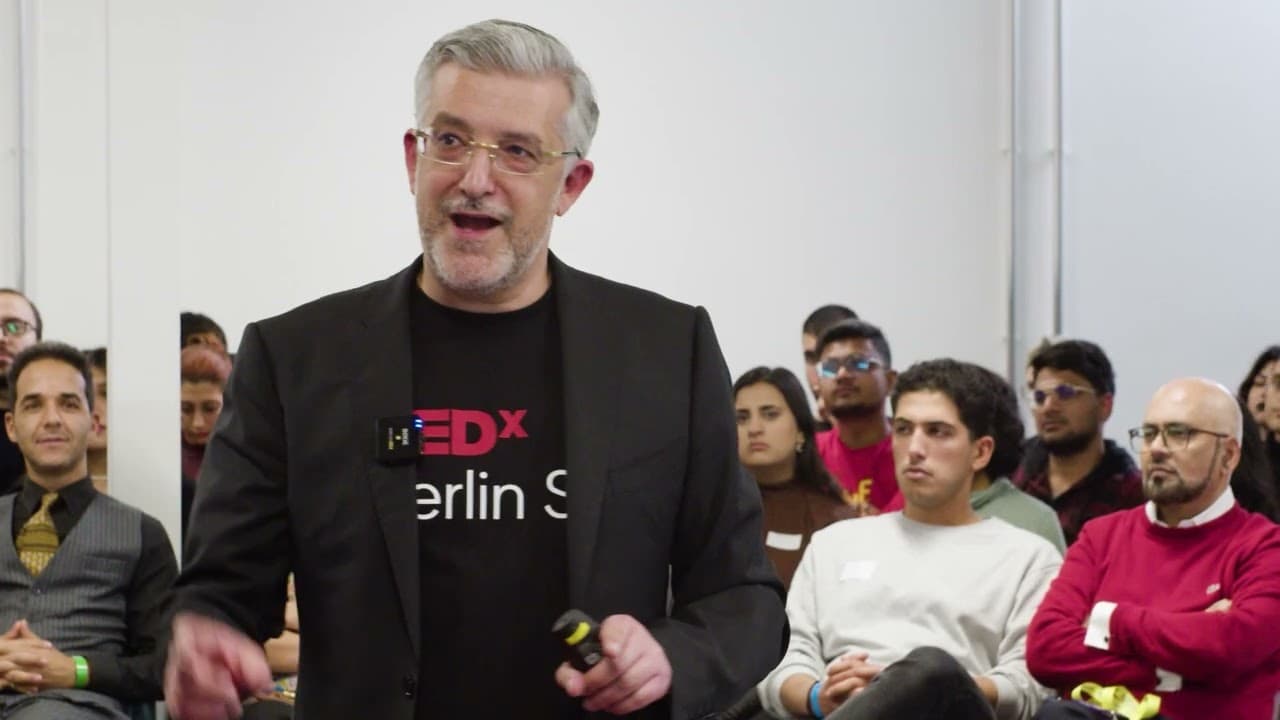
How can we integrate a Virtual Campus into higher education | Kyriakos Kouveliotis | TEDxBerlin SBI
TL;DR
Exploring the benefits and challenges of virtual campuses, metaverse technology, and the integration of artificial intelligence in education.
Transcript
dear guests our first Speaker tonight Professor Dr kurat kottis has a PHD in European integration and international relations awarded by newcast University he also holds an MA in diplomacy awarded by Lancaster University in the UK and a ba in English literature and Linguistics in linguistics in the last 20 years he has taught in many universities a... Read More
Key Insights
- ❓ The metaverse blends virtual and augmented reality, creating immersive educational experiences.
- 🌐 Virtual campuses offer global access, multicultural interactions, and cost-effective education.
- 🧑🎓 Web 3.0 technology enhances the virtual learning environment for students and educators.
- 🎓 Challenges of virtual education include connectivity issues, isolation, and distractions.
- 🎓 The future of education involves integrating diverse experiences and technologies to create a flexible and accessible learning environment.
- 🤵 Virtual campuses replicate physical campus elements like classrooms, meeting rooms, and exhibitions.
- 🖐️ Artificial intelligence plays a significant role in virtual education, enhancing learning experiences and interactions.
Install to Summarize YouTube Videos and Get Transcripts
Explore YouTube Video Summarizer or Get YouTube Transcript Extractor
Questions & Answers
Q: What is the metaverse and how does it impact education?
The metaverse is a virtual reality space where users interact with computer-generated environments. It enhances education by offering immersive experiences and global connectivity for learning.
Q: How do virtual campuses replicate physical ones?
Virtual campuses feature classrooms, meeting rooms, and exhibitions virtually. They allow for synchronous discussions, interactions with professors globally, and the presentation of student work in a digital environment.
Q: What are the benefits of virtual education?
Virtual education offers access from anywhere, enhances multicultural interactions, strengthens digital skills, and provides flexibility in learning experiences while reducing costs and improving time management.
Q: What challenges do virtual campuses face?
Virtual campuses can have connectivity issues, isolation, and distractions. Overcoming these challenges requires creating interactive and engaging virtual environments for effective learning.
Summary & Key Takeaways
-
Professor Dr. Kurat Kottis introduces the concept of the metaverse, virtual campuses, and web 3.0 technology in education.
-
The virtual campus mimics a physical campus with classrooms, meeting rooms, exhibitions, and interactions via avatars.
-
The benefits include global access, multicultural interactions, digital skill enhancement, and cost reduction, while facing challenges like connectivity issues and isolation.
Read in Other Languages (beta)
Share This Summary 📚
Summarize YouTube Videos and Get Video Transcripts with 1-Click
Try YouTube Summary with ChatGPT & Claude or YouTube Transcript Generator
Explore More Summaries from TEDx Talks 📚





Summarize YouTube Videos and Get Video Transcripts with 1-Click
Try YouTube Summary with ChatGPT & Claude or YouTube Transcript Generator