How to learn to draw — and why you should.
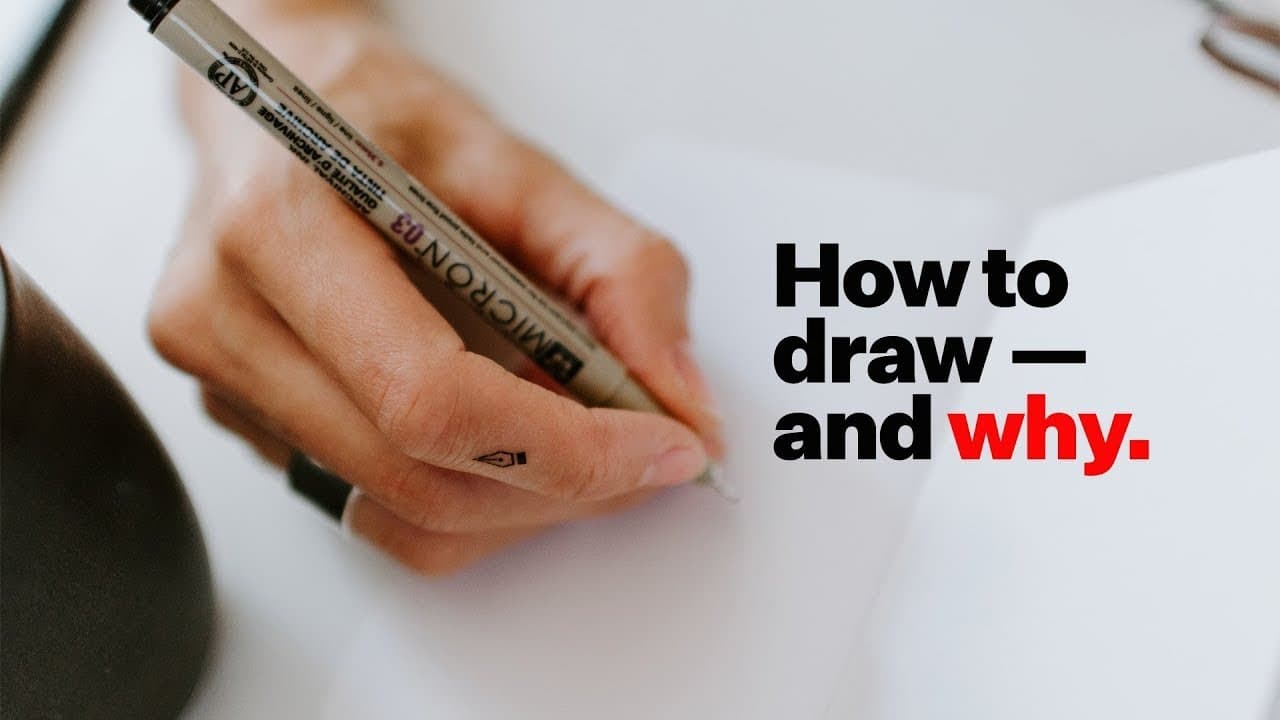
TL;DR
It is possible to learn how to draw, even without prior experience or talent. Drawing can offer numerous benefits, such as reducing stress and enhancing creativity.
Transcript
i started to draw when i was in my late 30s i didn't go to art school i just bought a couple of instructional books and i started out and it was kind of a disaster the first drawing i did was pretty bad so was the second and it seemed like i just had no ability to draw at all and i almost gave up maybe this has happened to you and you're despairing... Read More
Key Insights
- ❓ Learning to draw is a skill that can be acquired through practice and perseverance, regardless of prior experience or talent.
- 🧠 Drawing consistently can rewire the brain's neural connections, making drawing more intuitive and natural.
- 🏛️ Incorporating drawing into everyday life by carrying a sketchbook and drawing ordinary objects can help develop drawing skills and build a drawing habit.
- 🌍 Drawing can offer numerous benefits, including reducing stress, enhancing creativity, and enabling a deeper connection with the surrounding world.
- ❓ The belief in one's ability to learn and improve is crucial for progress in drawing, rather than striving for perfection from the start.
- 🆘 Subject matter in drawing can be diverse, and drawing a variety of objects helps develop confidence in drawing anything.
- 🤗 Basic supplies, such as an inexpensive sketchbook and a pen made for drawing, are sufficient to start the drawing journey.
- 🫥 Focus on the process of making lines and commit to what you observe, rather than relying on erasing mistakes.
- 🤩 Consistency and integrating drawing into daily routines are key to building drawing skills and confidence.
Install to Summarize YouTube Videos and Get Transcripts
Explore YouTube Video Summarizer or Get YouTube Transcript Extractor
Questions & Answers
Q: How important is motivation when learning to draw?
Motivation plays a crucial role in learning to draw. Having a clear goal and understanding the deeper reasons for wanting to draw can help overcome initial struggles and keep you motivated throughout the learning process.
Q: Do you need talent to learn how to draw?
No, talent is not a prerequisite for learning to draw. While some individuals may have a natural inclination toward art, drawing is primarily a skill that can be developed with practice and perseverance.
Q: Can practicing drawing reduce stress?
Yes, drawing can be a therapeutic activity that helps reduce stress. Engaging in the creative process and focusing on the present moment can have a calming effect on the mind, promoting relaxation and well-being.
Q: What are some effective ways to incorporate drawing into everyday life?
Carrying a sketchbook and drawing ordinary objects or scenes during spare moments, such as waiting for a bus or sitting in a waiting room, can help incorporate drawing into everyday life. Drawing relevant and interesting subjects keeps the practice engaging and diverse.
Key Insights:
- Learning to draw is a skill that can be acquired through practice and perseverance, regardless of prior experience or talent.
- Drawing consistently can rewire the brain's neural connections, making drawing more intuitive and natural.
- Incorporating drawing into everyday life by carrying a sketchbook and drawing ordinary objects can help develop drawing skills and build a drawing habit.
- Drawing can offer numerous benefits, including reducing stress, enhancing creativity, and enabling a deeper connection with the surrounding world.
- The belief in one's ability to learn and improve is crucial for progress in drawing, rather than striving for perfection from the start.
- Subject matter in drawing can be diverse, and drawing a variety of objects helps develop confidence in drawing anything.
- Basic supplies, such as an inexpensive sketchbook and a pen made for drawing, are sufficient to start the drawing journey.
- Focus on the process of making lines and commit to what you observe, rather than relying on erasing mistakes.
- Consistency and integrating drawing into daily routines are key to building drawing skills and confidence.
- Being kind to oneself and celebrating the progress made in drawing is important for maintaining motivation and enjoying the journey of learning.
Summary & Key Takeaways
-
The author shares their personal experience of learning to draw later in life without formal art education, emphasizing that anyone can learn to draw with practice.
-
Drawing consistently can reconfigure the brain's neuromuscular network, making drawing more natural and expressive over time.
-
Incorporating drawing into everyday life, even sketching ordinary objects, can help develop drawing skills and build a drawing habit.
Read in Other Languages (beta)
Share This Summary 📚
Summarize YouTube Videos and Get Video Transcripts with 1-Click
Try YouTube Summary with ChatGPT & Claude or YouTube Transcript Generator
Explore More Summaries from Sketchbook Skool 📚


Summarize YouTube Videos and Get Video Transcripts with 1-Click
Try YouTube Summary with ChatGPT & Claude or YouTube Transcript Generator