How to Make a Lightweight Concrete Table
TL;DR
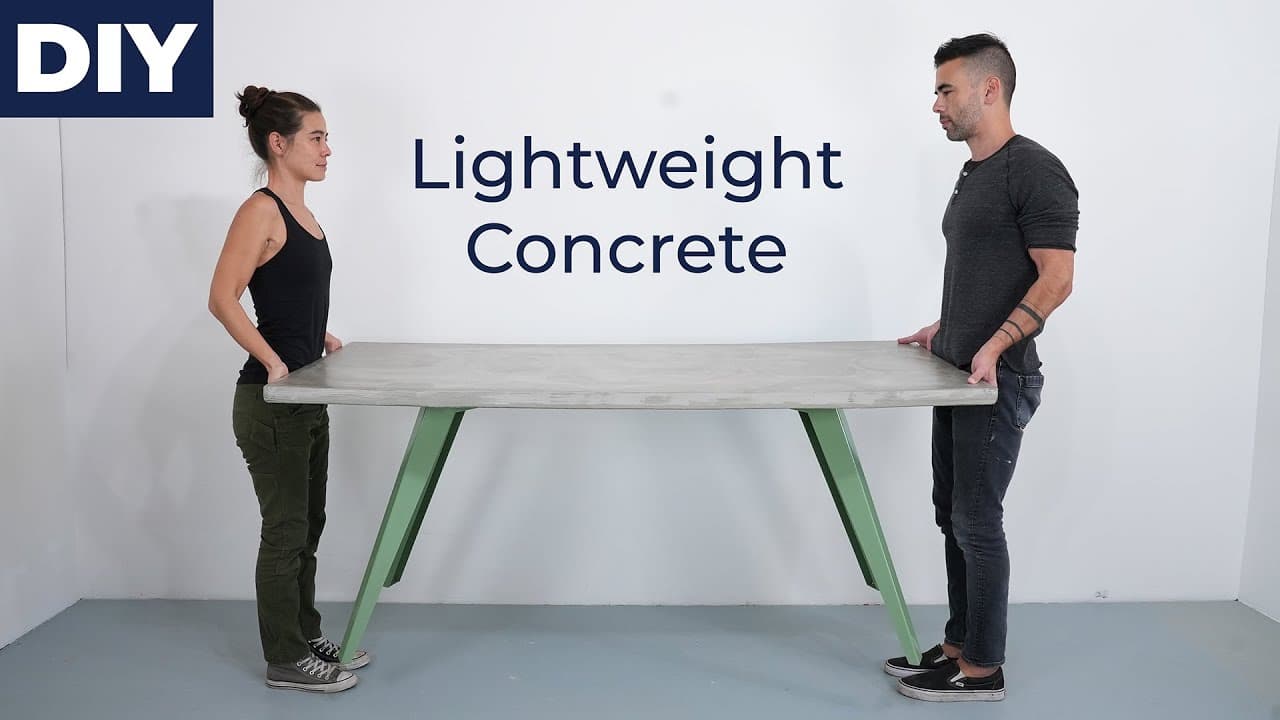
Learn how to create a lightweight concrete table using a solid core door, spider legs, and concrete resurfacer.
Transcript
today we're going to make a concrete table that's lightweight we're going to start with a solid core door i got one that was 30 inches wide and i'm going to trim down the length just a little bit using my circular saw and my straight edge cutting guide from craig i'm going to use spider legs from semi exact in casual turtle this is my signature col... Read More
Key Insights
- 💯 Solid core doors can be repurposed to create unique furniture pieces.
- 🦿 Spider legs provide a sturdy and stylish base for the table.
- 🍘 Fiber tape helps reinforce the concrete to prevent cracking.
- 👻 Experimenting with different pigments allows for creative design possibilities.
- 👻 Allowing the concrete to cure slowly and adding moisture helps prevent cracking.
- 🍘 Crack repair products can be used to fix any small cracks in the concrete.
- 💦 Sealing the concrete with a water-based polyurethane adds durability and a finished look.
Install to Summarize YouTube Videos and Get Transcripts
Explore YouTube Video Summarizer or Get YouTube Transcript Extractor
Questions & Answers
Q: What materials are needed to make a lightweight concrete table?
To make a lightweight concrete table, you will need a solid core door, spider legs, fiber tape, concrete bonding adhesive, and self-leveling floor resurfacer.
Q: How is the fiber tape used to reinforce the concrete?
The fiber tape is applied along the edges of the door and attached with plastic boards to create a perimeter form. This helps reinforce the concrete and prevent cracking.
Q: What is the purpose of the concrete bonding adhesive?
The concrete bonding adhesive is used to ensure the concrete adheres well to the door and fiber tape, providing a strong bond and preventing delamination.
Q: How is the concrete poured and leveled?
The self-leveling floor resurfacer is mixed with water and poured directly onto the surface. Its thin consistency allows it to self-level, creating a smooth and even tabletop.
Key Insights:
- Solid core doors can be repurposed to create unique furniture pieces.
- Spider legs provide a sturdy and stylish base for the table.
- Fiber tape helps reinforce the concrete to prevent cracking.
- Experimenting with different pigments allows for creative design possibilities.
- Allowing the concrete to cure slowly and adding moisture helps prevent cracking.
- Crack repair products can be used to fix any small cracks in the concrete.
- Sealing the concrete with a water-based polyurethane adds durability and a finished look.
- The lightweight concrete table has a rustic appearance and is suitable for outdoor use.
Summary & Key Takeaways
-
The video demonstrates the process of creating a lightweight concrete table using a solid core door, spider legs, and concrete resurfacer.
-
The table is initially built using a solid core door that is trimmed and attached with spider legs.
-
Fiber tape is applied to the door edges to reinforce the concrete, which is then poured and self-levels to create a unique design.
Read in Other Languages (beta)
Share This Summary 📚
Summarize YouTube Videos and Get Video Transcripts with 1-Click
Try YouTube Summary with ChatGPT & Claude or YouTube Transcript Generator
Explore More Summaries from HomeMadeModern 📚

Summarize YouTube Videos and Get Video Transcripts with 1-Click
Try YouTube Summary with ChatGPT & Claude or YouTube Transcript Generator