The 2018 Nobel Prize in Chemistry - Periodic Table of Videos
TL;DR
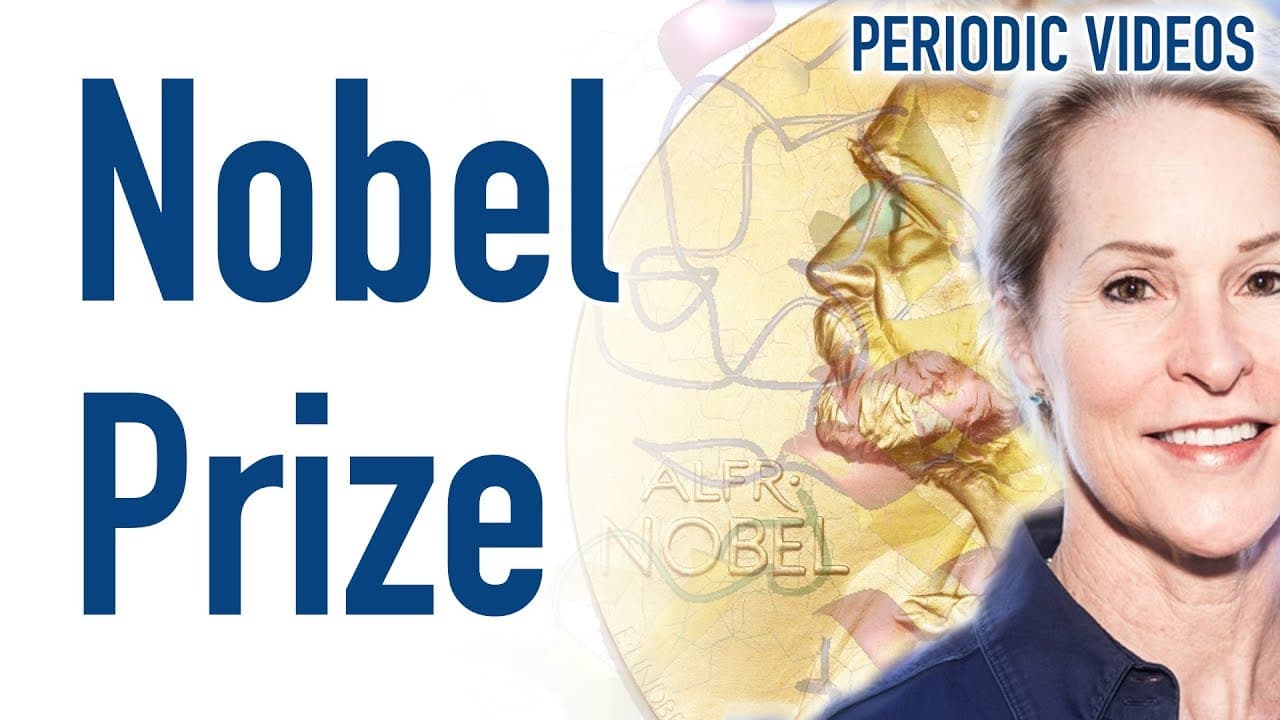
The Nobel Prize in Chemistry was awarded for enzyme engineering and phage display technique advancements.
Transcript
this is nobel prize in chemistry has as usual been given to three people but one person has won half the Nobel Prize and the other two said the other half the Nobel Prize is based upon the idea of exploiting evolution in bacteria in other biological systems to make chemicals to make pharmaceuticals that would be very difficult to make in other ways... Read More
Key Insights
- ❓ Enzyme engineering and phage display techniques were instrumental in pharmaceutical development.
- 👶 Frances Arnold's innovation in biocatalysis and enzyme manipulation broke new ground.
- ❓ George Smith and Sir Gregory Winter's phage display technique revolutionized antibody production.
- ❓ The Nobel Prize recipients' contributions have implications for future drug discovery and biotechnology.
- 🔬 Attention to diversity and inclusion in science was highlighted by Frances Arnold's achievement.
- 👨🔬 Nature serves as a powerful chemist, as demonstrated by the Nobel Prize recipients' research.
- ❓ The rapid evolution of bacteria and phages facilitated the success of enzyme engineering and antibody production.
Install to Summarize YouTube Videos and Get Transcripts
Explore YouTube Video Summarizer or Get YouTube Transcript Extractor
Questions & Answers
Q: How did Frances Arnold contribute to enzyme engineering?
Frances Arnold revolutionized enzyme engineering by utilizing mutagenesis to create modified enzymes for desired reactions, leading to major advancements in biocatalysis and biotechnology.
Q: What is the significance of phage display technique in biotechnology?
The phage display technique, developed by George Smith and Sir Gregory Winter, allows for the creation of billions of different antibodies for targeted therapies, revolutionizing the pharmaceutical industry.
Q: Why is Frances Arnold considered a pioneer in her field?
Frances Arnold's expertise in enzyme manipulation, particularly with cytochrome p450, has paved the way for innovative biocatalysis and enzyme engineering techniques, showcasing her pioneering contributions to the field.
Q: How did the Nobel Prize recipients' work impact the scientific community?
The Nobel Prize recipients' work not only advanced enzyme engineering and phage display techniques but also inspired greater diversity and inclusion in the scientific community, setting a precedent for future breakthroughs.
Summary & Key Takeaways
-
Frances Arnold won half of the Nobel Prize for enzyme engineering in Caltech.
-
George Smith and Sir Gregory Winter split the other half for phage display technique development.
-
The winners achieved groundbreaking advancements in enzyme engineering and biocatalysis and phage display techniques.
Read in Other Languages (beta)
Share This Summary 📚
Summarize YouTube Videos and Get Video Transcripts with 1-Click
Try YouTube Summary with ChatGPT & Claude or YouTube Transcript Generator
Explore More Summaries from Periodic Videos 📚


Summarize YouTube Videos and Get Video Transcripts with 1-Click
Try YouTube Summary with ChatGPT & Claude or YouTube Transcript Generator