What Is Split Phase Electricity and How Does It Work?
TL;DR
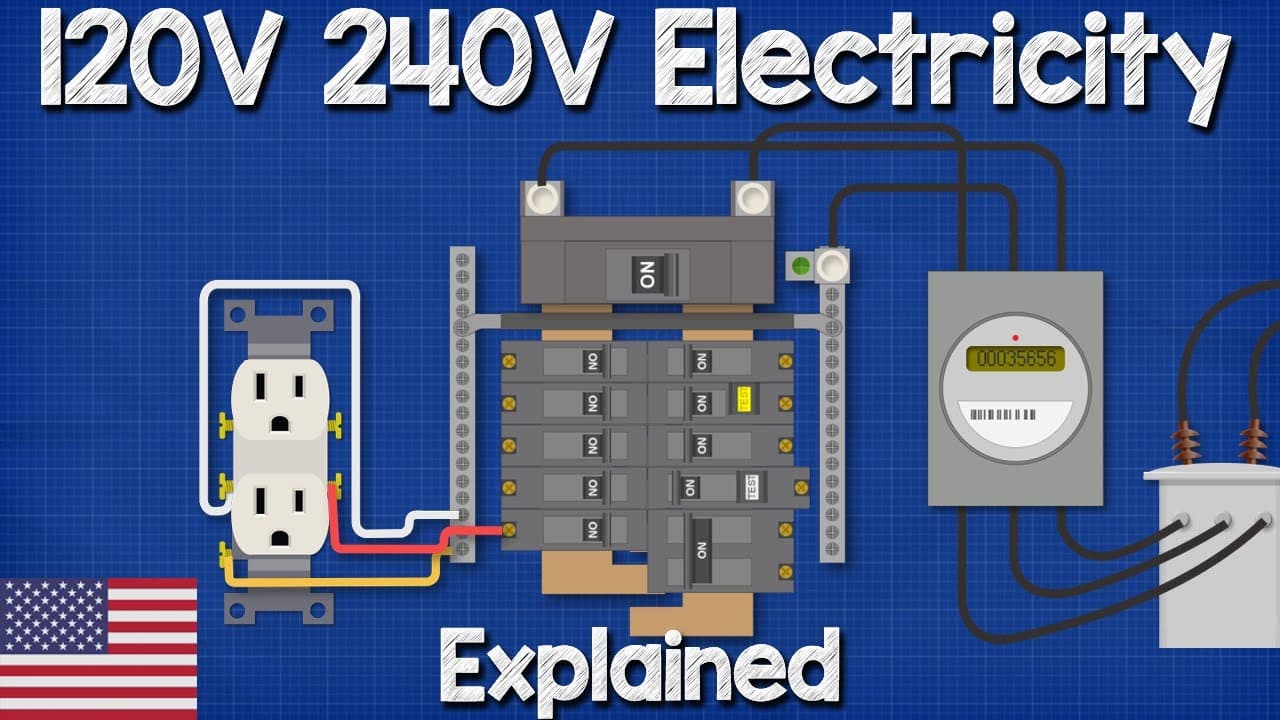
Split phase electricity in North America utilises two hot wires and one neutral wire to deliver both 120V and 240V. This system operates through transformers that step down voltage for safe residential use, while circuit breakers provide essential safety measures like overcurrent and ground fault protection.
Transcript
- Hey there guys. Paul here from theengineeringmindset.com. In this video we're going to be learning how three wire split phase electricity supplies work to get 120 and 240 volts. We'll look at how the electricity gets from the power station over to the property and then how it's connected around the property and each of the main components. Now, t... Read More
Key Insights
- ✊ Electricity is generated at a power station and transmitted through the grid.
- ⚡ Step-up and step-down transformers are used to adjust voltage levels.
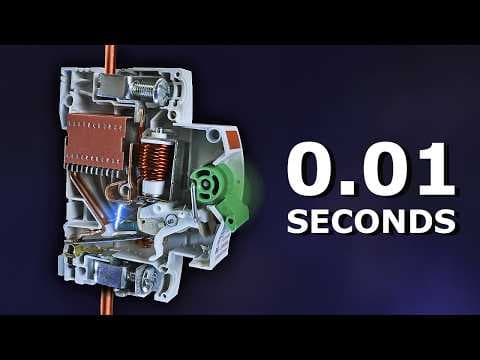
- 🍰 The main breaker and circuit breakers in the electrical panel provide overcurrent and short-circuit protection.
- 🛜 Ground wires and neutral wires ensure safe electrical flow and prevent electric shocks and fires.
- 🫠 GFCI and AFCI circuit breakers offer additional protection against ground faults and arc faults.
Install to Summarize YouTube Videos and Get Transcripts
Explore YouTube Video Summarizer or Get YouTube Transcript Extractor
Questions & Answers
Q: How does electricity reach the towns and cities from the power station?
Electricity is transmitted through the grid, which carries high-voltage electricity over long distances, and then it enters a step-down transformer in towns and cities to reduce the voltage.
Q: What is the purpose of a main breaker in the electrical panel?
The main breaker connects the two hot wires from the electricity meter and provides overcurrent protection to the property. It can be manually flipped to cut off power to the whole property.
Q: How does a circuit breaker protect the electrical circuits?
The circuit breaker has overload protection, which means it automatically trips if the current in the circuit exceeds its rating. It also has short-circuit protection, which trips when the hot and neutral wires come into direct contact.
Q: Why are ground wires necessary in electrical circuits?
Ground wires provide a safe path for fault current in case the hot wire touches the metal casing of an appliance. They prevent electric shocks by creating a low-resistance path back to the panel, where the breaker will trip.
Key Insights:
- Electricity is generated at a power station and transmitted through the grid.
- Step-up and step-down transformers are used to adjust voltage levels.
- The main breaker and circuit breakers in the electrical panel provide overcurrent and short-circuit protection.
- Ground wires and neutral wires ensure safe electrical flow and prevent electric shocks and fires.
- GFCI and AFCI circuit breakers offer additional protection against ground faults and arc faults.
- Grounding rods and bonding wires protect against static voltages and ensure safe electrical grounding.
Summary & Key Takeaways
-
Electricity is generated at a power station, where AC current is produced and then transmitted through a step-up transformer to increase voltage.
-
The high-voltage electricity is carried to towns and cities through the grid, and then step-down transformers decrease the voltage to a safer level.
-
Smaller transformers distribute the electricity locally, and on the property, an electricity meter measures the usage.
Read in Other Languages (beta)
Share This Summary 📚
Summarize YouTube Videos and Get Video Transcripts with 1-Click
Try YouTube Summary with ChatGPT & Claude or YouTube Transcript Generator
Explore More Summaries from The Engineering Mindset 📚

Summarize YouTube Videos and Get Video Transcripts with 1-Click
Try YouTube Summary with ChatGPT & Claude or YouTube Transcript Generator