How to Use RSI Indicator Effectively for Trading
TL;DR
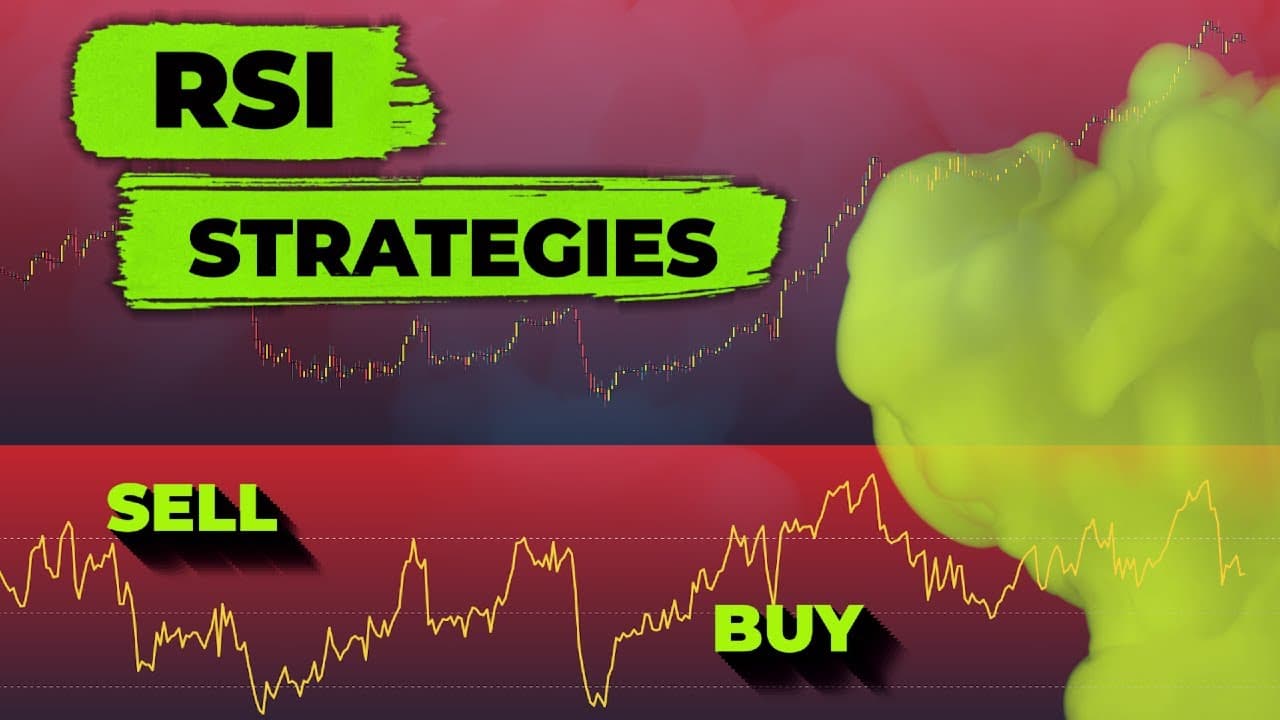
To effectively use the RSI indicator in trading, combine it with support and resistance levels for better accuracy, and look for divergences between RSI and price for confirmation. Relying solely on overbought or oversold levels can lead to false signals, as markets can remain in these zones during strong trends. Utilize RSI signals around the 50 level primarily in trending conditions.
Transcript
The relative strength index. Every time i read an article or see a video about it, there’s the same misconception every single time: it’s an overbought/oversold indicator, you buy when the RSI is oversold and sell when it’s overbought. No, this doesn’t work, not by itself. You will not make money using the RSI in this way. There’s a lot more about ... Read More
Key Insights
- 🤒 The RSI is more than just an overbought/oversold indicator; it should be used in combination with other factors for accurate trading signals.
- 🤒 Combining RSI with support and resistance levels increases the probability of successful trades.
- 🤒 Divergences between RSI and price should be confirmed by price action for better accuracy.
- 🤒 RSI signals around the 50 level work best during trending market conditions.
- 🤒 Adding a longer-term moving average to the RSI can help filter out false signals.
- 🫥 Drawing trend lines on the RSI should be done on higher time frames to minimize false signals.
- 🤒 The RSI settings can be adjusted based on personal preference and trading style.
Install to Summarize YouTube Videos and Get Transcripts
Explore YouTube Video Summarizer or Get YouTube Transcript Extractor
Questions & Answers
Q: Is it enough to trade solely based on the overbought/oversold levels of the RSI?
No, overbought or oversold levels on the RSI do not guarantee immediate reversals. They should be used in conjunction with other factors such as support and resistance levels for better accuracy.
Q: How can I effectively use RSI divergences in my trading strategy?
While RSI divergences can be useful, they should be confirmed by price action. Waiting for a trend line breakout can help validate divergences and improve the success rate of trades.
Q: When should I use the RSI for trading signals around the 50 level?
The RSI around the 50 level is most effective during trending market conditions. Using this technique in range-bound markets can result in false signals and choppy trades.
Q: What are the advantages and disadvantages of using the RSI?
The RSI is beneficial for identifying overbought and oversold areas, divergences, and trend confirmation. However, it is a lagging indicator and should be used alongside other tools for comprehensive analysis.
Summary & Key Takeaways
-
The Relative Strength Index (RSI) is a popular technical indicator that ranges from 0 to 100, indicating overbought or oversold conditions.
-
Relying solely on overbought/oversold levels can lead to false signals, as markets can remain in these areas for extended periods during strong trends.
-
Combining RSI with support and resistance levels can increase the probability of successful trades, and looking for divergences between RSI and price can provide additional confirmation.
Read in Other Languages (beta)
Share This Summary 📚
Summarize YouTube Videos and Get Video Transcripts with 1-Click
Try YouTube Summary with ChatGPT & Claude or YouTube Transcript Generator
Explore More Summaries from The Secret Mindset 📚





Summarize YouTube Videos and Get Video Transcripts with 1-Click
Try YouTube Summary with ChatGPT & Claude or YouTube Transcript Generator