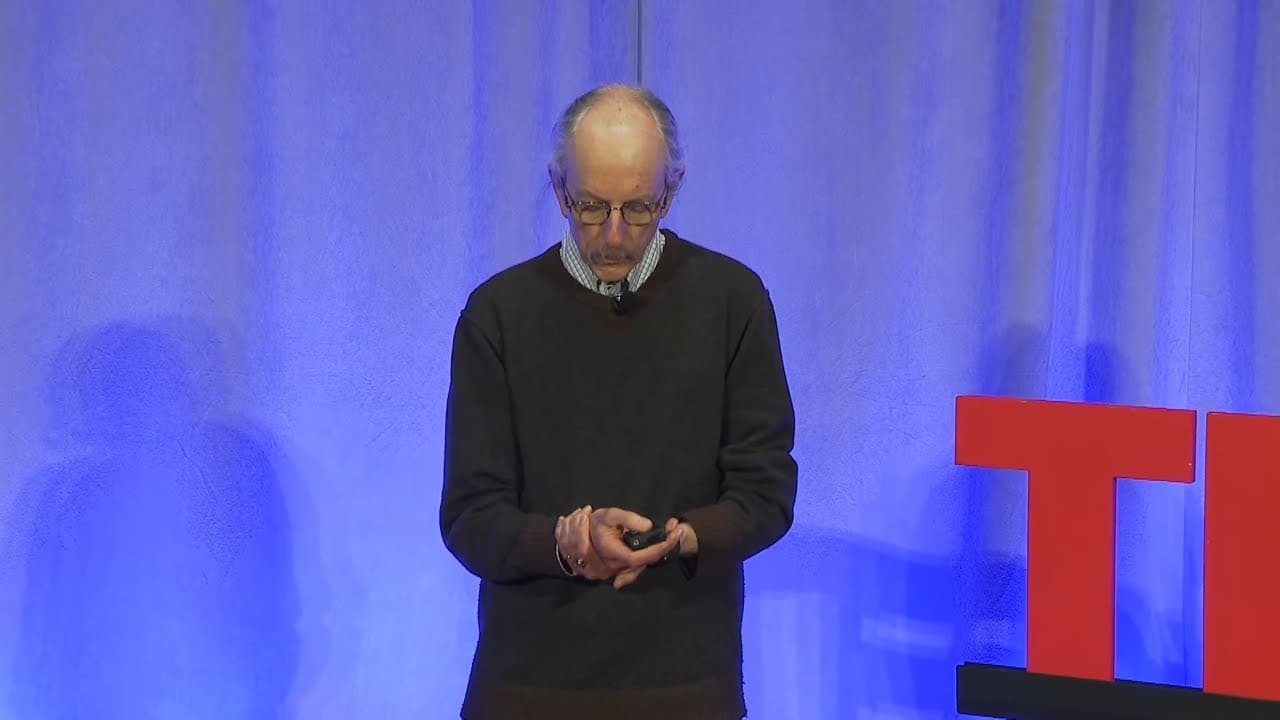
How a Cold War supercomputer reshaped air defense | Guy Fedorkow | TEDxMIT
TL;DR
This content discusses the restoration of a 1950s computer called Whirlwind and the importance of preserving software history for future generations.
Transcript
what I want to talk about is a piece of software that we are restoring from this machine that was built in uh in about 1950 here at MIT um the machine was done at the beginning of the Cold War and has um was the start of a long and very important thread of technology that ran through the Cold War as we will discuss um uh as we talk about this I thi... Read More
Key Insights
- 🖐️ MIT's Whirlwind computer played a significant role in Cold War technology and defense efforts.
- 🛟 The restoration of historical software like Whirlwind's is essential for preserving technological advancements and understanding their significance.
- 🤨 Software preservation raises challenges in terms of maintaining accessibility and ensuring future generations can study and learn from it.
- ♻️ Whirlwind's software development showcased various innovations, including the evolution of programming environments and debugging techniques.
- 💻 Understanding the compromises made in Whirlwind's software can provide insights into the complexity of early computer programming.
- ❓ The partnership between MIT and the Air Force exemplifies the collaborative nature of Cold War technology development.
- ✈️ The restoration and study of Whirlwind's software can shed light on the advancements and refinement of algorithms in air defense systems.
Install to Summarize YouTube Videos and Get Transcripts
Explore YouTube Video Summarizer or Get YouTube Transcript Extractor
Questions & Answers
Q: How did MIT's history of defense work lead to the development of Whirlwind?
MIT, with a long history of defense work, responded to the Cold War threat by developing a computer to enhance defense capabilities. The Air Force supported the project, leading to the creation of Whirlwind.
Q: What was the purpose of Whirlwind's software restoration?
The goal was to preserve and explore the history of Whirlwind. The Computer History Museum in California had tapes and MIT archives contained documents, providing valuable resources for studying the machine and its software development.
Q: How did Whirlwind's software function in real-time situations?
Whirlwind's software was designed to connect to radar stations and direct interceptors in real-time to respond to incoming attacks. The software computed headings to guide interceptors towards attackers, considering variables like changing targets' trajectories.
Q: What challenges did the developers face in debugging Whirlwind's software?
Debugging in real-time with limited resources was a daunting task. The program was complex, dense, and had to run without the ability to single-step debug. The developers had to rely on careful observation, tape playback, and extensive thinking to identify and fix errors.
Summary & Key Takeaways
-
The content focuses on the restoration of Whirlwind, a computer built in 1950 at MIT that played a crucial role in Cold War technology.
-
MIT's history of software development and the challenge of preserving historical software are highlighted.
-
Whirlwind was a 16-bit parallel computer, the fastest in the world at the time, with a high cost of $3 million.
Read in Other Languages (beta)
Share This Summary 📚
Summarize YouTube Videos and Get Video Transcripts with 1-Click
Try YouTube Summary with ChatGPT & Claude or YouTube Transcript Generator
Explore More Summaries from TEDx Talks 📚




Summarize YouTube Videos and Get Video Transcripts with 1-Click
Try YouTube Summary with ChatGPT & Claude or YouTube Transcript Generator