What Is Share Dilution and How Does It Affect Investors?
TL;DR
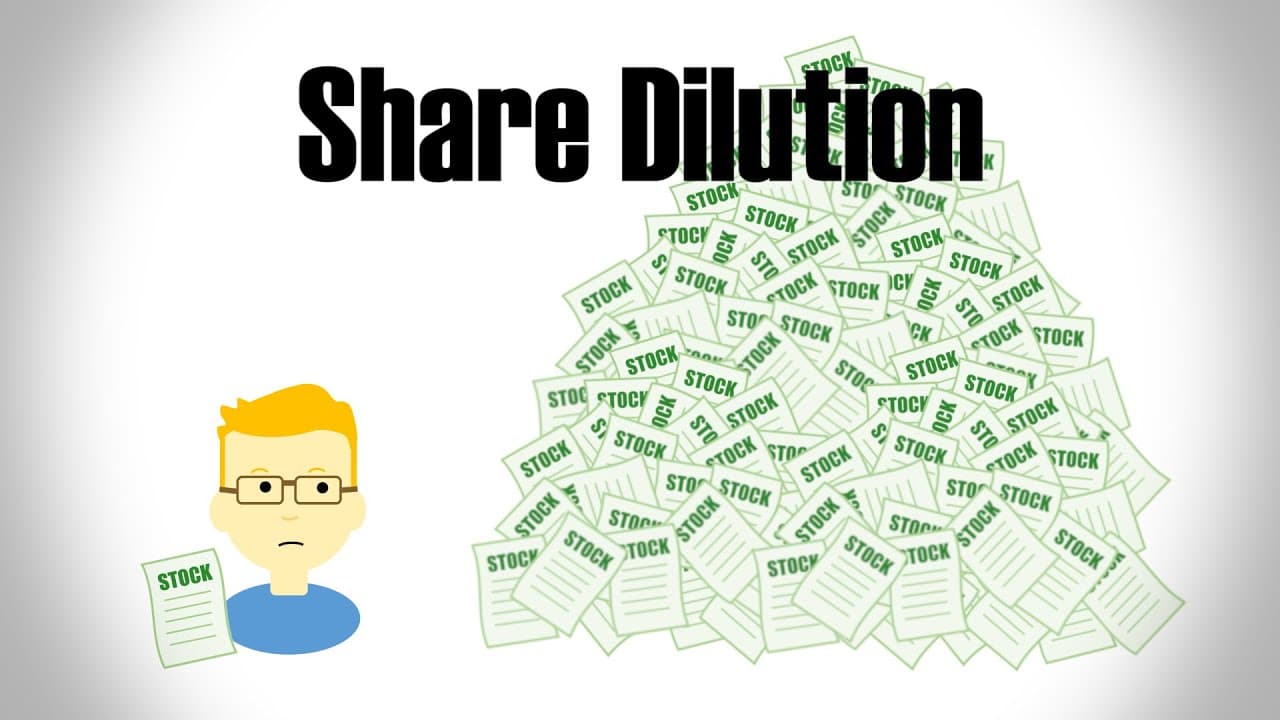
Share dilution occurs when a company issues more shares, reducing existing shareholders' ownership percentages and potentially their shares' value. While it often negatively impacts shareholder value if profits don't increase, it can be beneficial if the capital is used effectively to grow the company and improve returns.
Transcript
this video is sponsored by wall mine go to wall main comm saj plain bagel to create your free account in 2015 canopy growth canadian marijuana company end of the year with roughly 98 million shares outstanding that means that if you purchased a million shares you respectively would have owned one percent of the company's business fast-forward to th... Read More
Key Insights
- ❓ Share dilution occurs when a company issues additional shares, reducing the percentage ownership and value of existing shares.
- 🤨 Companies may issue shares to raise capital, fund projects or expansions, carry out mergers or acquisitions, or provide employee compensation.
- 💗 Share dilution can negatively impact shareholder value if profits don't grow to compensate for the higher number of shares.
- ✋ However, if the company achieves a high return on equity with the raised capital, the impact of share dilution may be offset.
- 🤨 Investors should scrutinize a company's plan for raised capital and assess if it will lead to improved operations.
- 🧑⚕️ Monitoring a company's share count and buyback activity can provide insights into its financial health.
- 🤨 Share dilution can be a means to a positive end if the company utilizes the raised capital effectively.
Install to Summarize YouTube Videos and Get Transcripts
Explore YouTube Video Summarizer or Get YouTube Transcript Extractor
Questions & Answers
Q: What is share dilution and why does it occur?
Share dilution occurs when a company issues additional shares, reducing the percentage ownership and value of existing shares. It can occur for various reasons such as raising capital, funding projects, mergers or acquisitions, or providing employee compensation.
Q: Why does share dilution negatively impact shareholder value?
Share dilution reduces the value of existing shares because more investors now lay claim to the company's profits. If profits don't grow to compensate for the higher number of shares, the stock price may fall, resulting in a loss for shareholders.
Q: Can share dilution benefit shareholders?
Share dilution can benefit shareholders if the money raised from the share issuance is used to improve the company's business and profitability. If the company achieves a high return on equity with the raised capital, the impact of share dilution may be offset, resulting in higher earnings per share.
Q: How can investors determine if share dilution is beneficial for a company?
Investors should scrutinize a company's plan for the raised capital and assess if it will lead to improved operations. If a company provides a strong argument for raising capital and has a strategy to achieve profitability, share dilution may be worth it. Monitoring a company's share count and any buyback activity can also provide insights.
Summary & Key Takeaways
-
Share dilution happens when a company increases its share count by issuing additional shares, reducing the percentage ownership and value of existing shares.
-
Companies may issue extra shares to raise capital, fund projects or expansions, carry out mergers or acquisitions, or provide employee compensation.
-
Share dilution can negatively impact shareholder value if the company is unable to improve operations with the raised capital, but it can also be offset if the company achieves a high return on equity.
Read in Other Languages (beta)
Share This Summary 📚
Summarize YouTube Videos and Get Video Transcripts with 1-Click
Try YouTube Summary with ChatGPT & Claude or YouTube Transcript Generator
Explore More Summaries from The Plain Bagel 📚






Summarize YouTube Videos and Get Video Transcripts with 1-Click
Try YouTube Summary with ChatGPT & Claude or YouTube Transcript Generator