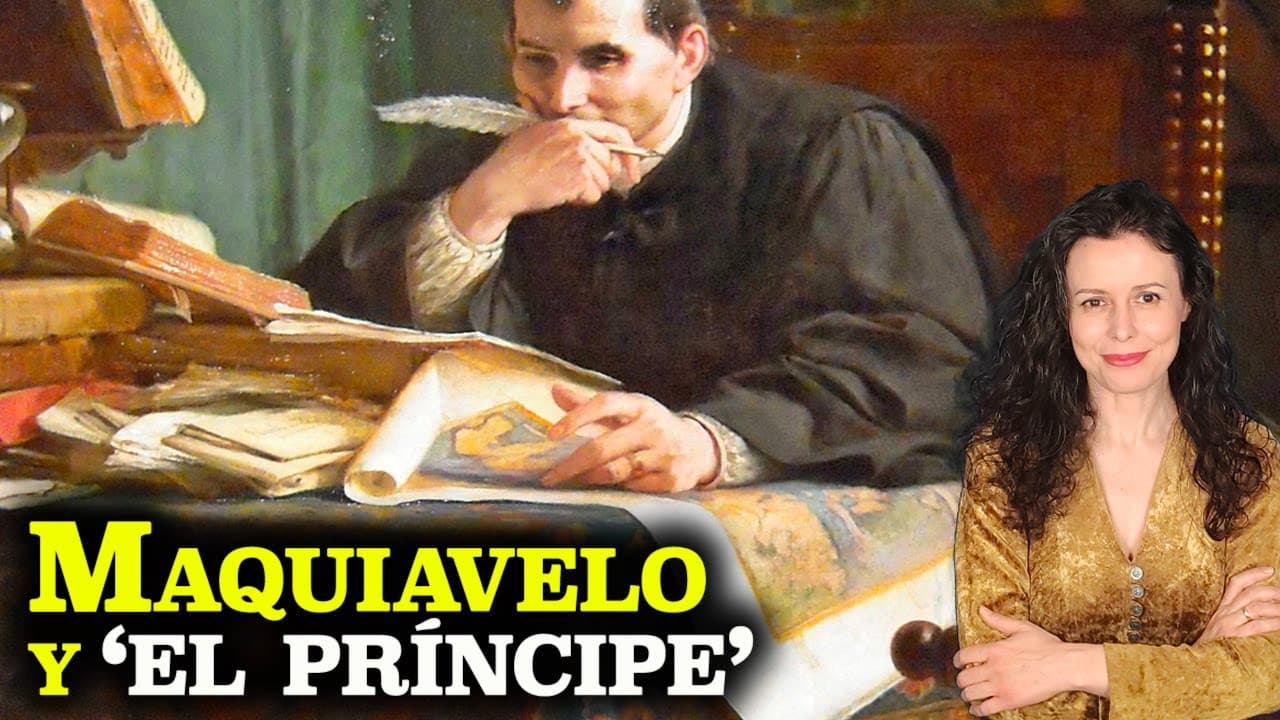
MAQUIAVELO y EL PRÍNCIPE | La HISTORIA REAL de Nicolás Maquiavelo y sus CONSEJOS para SER BUEN LÍDER
TL;DR
Explores Machiavelli's life, influence, and leadership advice from 'The Prince'.
Transcript
Welcome curious minds! Do you know the story of Machiavelli, one of the most influential political thinkers of all time? Nicolás Machiavelli is popularly remembered as a cruel and sinister adviser who put the interests of the State before any moral consideration. In fact, according to the dictionary, when we say that someone is Machiavellian, we me... Read More
Key Insights
- Machiavelli is often misunderstood as a cruel adviser, but his work 'The Prince' offers nuanced advice for rulers based on his experiences.
- Understanding Machiavelli's political thought requires knowledge of the tumultuous Italian Renaissance, where power dynamics were constantly shifting.
- Machiavelli's career began in Florence, where he witnessed political upheaval and power struggles, shaping his views on leadership and statecraft.
- César Borgia served as a model for Machiavelli’s ideal ruler, demonstrating cunning and ruthlessness in achieving political stability.
- Machiavelli believed that a leader should be feared but not hated, balancing strength with respect for subjects' property and honor.
- Florence’s reliance on mercenaries taught Machiavelli the importance of having a loyal, native army to secure state interests.
- Machiavelli's dismissal and later life in exile led him to write 'The Prince', reflecting his insights into power and governance.
- His advice emphasizes the importance of decisiveness, competent subordinates, and the balance between being feared and maintaining loyalty.
Install to Summarize YouTube Videos and Get Transcripts
Explore YouTube Video Summarizer or Get YouTube Transcript Extractor
Questions & Answers
Q: What was Machiavelli's role in Florence?
Machiavelli served as a diplomat and secretary in Florence, where he was deeply involved in political and military affairs. His role allowed him to observe and participate in the power struggles of the time, shaping his views on leadership and governance.
Q: How did Machiavelli's experiences influence 'The Prince'?
Machiavelli's experiences with political instability and power dynamics in Florence, as well as his interactions with leaders like César Borgia, heavily influenced 'The Prince'. He drew lessons on the importance of military strength, decisiveness, and the balance between fear and respect in leadership.
Q: What is the central theme of 'The Prince'?
'The Prince' centers on the idea that rulers must be pragmatic and strategic, often using morally ambiguous means to achieve and maintain power. Machiavelli argues that the stability and success of a state justify actions that might otherwise be considered unethical.
Q: Why is César Borgia significant to Machiavelli's work?
César Borgia is significant because he exemplified the qualities Machiavelli admired in a ruler: cunning, strength, and a willingness to use ruthless measures to maintain control. Borgia's actions provided a real-world example of the principles Machiavelli later outlined in 'The Prince'.
Q: What lessons did Machiavelli learn from the Florentine military failures?
Machiavelli learned that relying on mercenaries was a strategic weakness, as they lacked loyalty and commitment to Florence's goals. This realization led him to advocate for a native army, believing it essential for a state to have its own military forces to secure its interests.
Q: How did political changes in Florence affect Machiavelli's career?
Political changes, such as the return of the Medici family to power, led to Machiavelli's dismissal and imprisonment. These events forced him into retirement, where he wrote 'The Prince', reflecting on his insights into power and governance during his career.
Q: What is Machiavelli's view on being feared versus being loved as a leader?
Machiavelli believed it is safer for a leader to be feared than loved, as fear provides more control over subjects. However, he advised against being hated, suggesting that a ruler should respect subjects' property and honor to maintain loyalty and stability.
Q: What personal qualities did Machiavelli believe were important for a leader?
Machiavelli emphasized qualities such as decisiveness, strength, and the ability to judge character. He believed leaders should surround themselves with competent subordinates, reward hard work, and balance being feared with maintaining respect to effectively govern.
Summary & Key Takeaways
-
Nicolás Machiavelli, a key figure during the Italian Renaissance, is often remembered for his pragmatic approach to politics. His most famous work, 'The Prince', offers advice to rulers based on his extensive experience with power dynamics in Florence.
-
Machiavelli's life was marked by political instability, witnessing shifts in power that influenced his thoughts on leadership. His interactions with figures like César Borgia informed his belief in the necessity of a ruler being both feared and respected.
-
Despite his controversial reputation, Machiavelli's work provides valuable insights into effective statecraft. His emphasis on military strength, strategic alliances, and the importance of a ruler's image remain relevant in discussions of political leadership today.
Read in Other Languages (beta)
Share This Summary 📚
Summarize YouTube Videos and Get Video Transcripts with 1-Click
Try YouTube Summary with ChatGPT & Claude or YouTube Transcript Generator
Explore More Summaries from Raquel de la Morena 📚






Summarize YouTube Videos and Get Video Transcripts with 1-Click
Try YouTube Summary with ChatGPT & Claude or YouTube Transcript Generator