Do trees have memories? - 6 Minute English
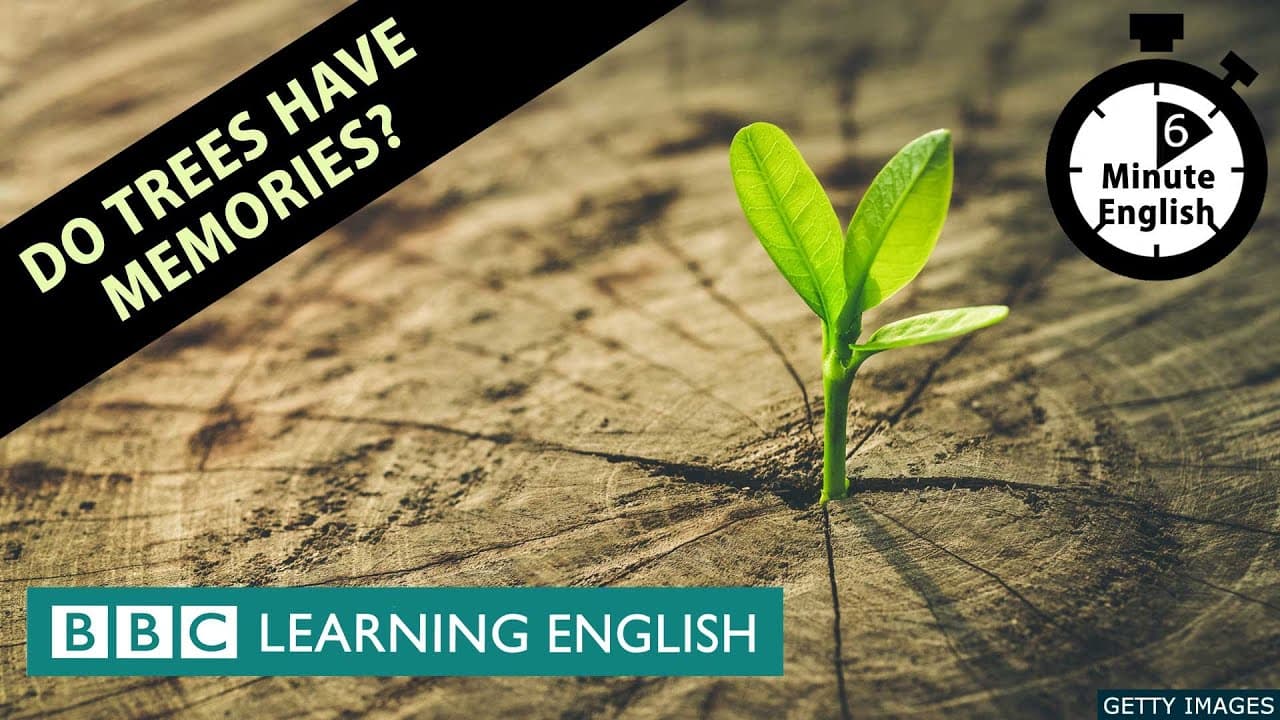
TL;DR
Trees may have 'memories' that help them resist stress.
Transcript
Hello. This is 6 Minute English from BBC Learning English. I'm Neil. And I'm Sam. Over the past 18 months, we've heard a lot about the human immune system - the cells in our bodies that fight diseases like coronavirus. We know that in humans the blood stream carries immune cells around our body. But what about trees and plants? They don't have bloo... Read More
Key Insights
- Trees and plants, unlike humans, lack blood but have a unique way of protecting themselves from diseases and predators through an efficient immune system.
- The immune system of plants is crucial as they are at the bottom of the food chain, making them targets for various organisms seeking their biochemical energy.
- Trees cannot escape from environmental stressors like droughts, so they develop mechanisms to remember and possibly adapt to these conditions.
- Tree rings serve as a form of memory, indicating periods of stress such as droughts, which may influence their future resilience.
- The Great Bristlecone Pine, one of the Earth's longest living trees, can live over 5,000 years, indicating the potential longevity of tree 'memories'.
- Dr. Estrella Luna-Diez hypothesizes that trees record stressful events in their rings, which could affect their growth and survival strategies.
- The concept of memory in trees is not literal but involves genetic and physiological responses to past environmental conditions.
- Understanding tree memory could provide insights into how plants adapt to climate change and other environmental challenges.
Install to Summarize YouTube Videos and Get Transcripts
Explore YouTube Video Summarizer or Get YouTube Transcript Extractor
Questions & Answers
Q: How do trees protect themselves without a bloodstream?
Trees protect themselves through an efficient immune system that allows them to resist diseases and attacks from organisms. Unlike humans, they do not have blood but rely on cellular and biochemical processes to fend off threats. This system is particularly important as trees cannot move away from stressful conditions.
Q: What makes trees vulnerable in the food chain?
Trees are at the bottom of the food chain, making them vulnerable to various organisms that seek to exploit their stored biochemical energy. This includes insect herbivores and microbial pathogens that take advantage of the trees' inability to move and defend themselves actively against such threats.
Q: What role do tree rings play in a tree's memory?
Tree rings serve as a record of a tree's growth history, potentially reflecting periods of environmental stress such as droughts. These rings can indicate how much a tree grew in a particular year, providing insights into the conditions it faced and how it adapted to them, effectively acting as a form of memory.
Q: What is Dr. Estrella Luna-Diez's hypothesis about tree memory?
Dr. Estrella Luna-Diez hypothesizes that trees remember stressful environmental events, such as droughts, through their rings. These memories could affect their growth and survival strategies, suggesting that trees adapt their physiology based on past experiences to better withstand future challenges.
Q: How might tree memory be beneficial in the context of climate change?
Understanding tree memory could provide valuable insights into how plants adapt to changing environmental conditions, such as climate change. By studying how trees remember and respond to past stressors, scientists can develop strategies to enhance plant resilience and improve conservation efforts in the face of global warming.
Q: What is the significance of the Great Bristlecone Pine's longevity?
The Great Bristlecone Pine, which can live over 5,000 years, exemplifies the potential longevity of tree 'memories.' Its long lifespan suggests that trees can endure and adapt to environmental changes over millennia, making them valuable subjects for studying plant resilience and adaptation strategies.
Q: Why is the concept of memory in trees not literal?
The concept of memory in trees is not literal because trees do not have brains or nervous systems like humans. Instead, their 'memory' involves genetic and physiological responses to past environmental conditions that influence their growth, development, and ability to cope with future stressors.
Q: How do opportunistic organisms affect trees?
Opportunistic organisms, such as insect herbivores and microbial pathogens, exploit trees for their stored biochemical energy. These organisms take advantage of the trees' inability to move and actively defend themselves, making it crucial for trees to have effective immune systems to resist such attacks and survive.
Summary & Key Takeaways
-
Trees and plants have unique immune systems that help them survive despite being unable to move away from stressors like droughts and pests. This program explores the concept of memory in trees, suggesting that they may record environmental stress in their growth rings.
-
The discussion highlights how trees, being at the bottom of the food chain, face constant threats from opportunistic organisms. Their ability to remember past stressors could be key to their survival and resilience against diseases and adverse conditions.
-
Dr. Estrella Luna-Diez's hypothesis suggests that tree rings may reflect the memory of environmental stress, influencing their growth and adaptation. This idea opens up possibilities for understanding plant responses to climate change and enhancing their resilience.
Read in Other Languages (beta)
Share This Summary 📚
Summarize YouTube Videos and Get Video Transcripts with 1-Click
Try YouTube Summary with ChatGPT & Claude or YouTube Transcript Generator
Explore More Summaries from BBC Learning English 📚

Summarize YouTube Videos and Get Video Transcripts with 1-Click
Try YouTube Summary with ChatGPT & Claude or YouTube Transcript Generator