What Lesson Does 'The Clever Thief' Teach About Trust?
TL;DR
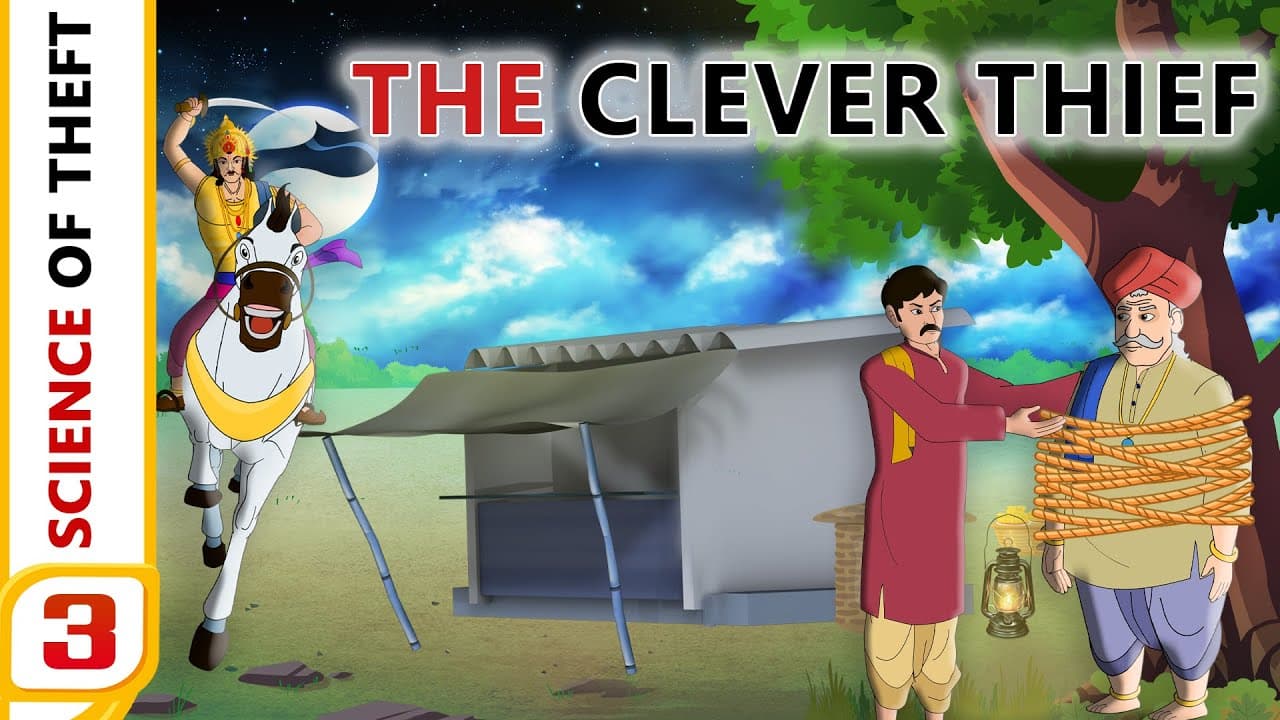
'The Clever Thief' demonstrates that blind trust can lead to vulnerability, as Krishnappa deceives a minister to expose the flaws in his faith. By stealing from the minister, he illustrates that awareness and critical thinking are essential in preventing theft. Ultimately, his actions serve as a powerful lesson to the kingdom about the risks inherent in human relationships.
Transcript
foreign are you there can you hear me you can't just keep watching all these Story videos if you keep watching all these Story videos how it's going to benefit us so please click the like and share button and when you see this Bell icon click that as well it will notify you when we upload a video have you done it yet great thank you for doing it so... Read More
Key Insights
- 🖐️ Krishnappa's intelligence and cunning play a pivotal role in manipulating the minister and achieving his goals.
- 🙈 Blind trust can lead to severe consequences, as seen through the minister’s experience.
- 🎓 Education about criminal behavior, as instilled by Krishnappa's grandfather, is a powerful tool for societal awareness.
- 🤔 The narrative emphasizes the necessity for leaders to adopt critical thinking to navigate potential threats effectively.
- 🛄 Krishnappa’s actions, although deceitful, aimed to provide a vital lesson about vulnerability in human nature and societal dynamics.
- 😀 The kingdom's response to Krishnappa’s theft reflects the challenges authorities face when dealing with cunning criminals.
- ❓ Trust and faith, while fundamental to human relationships, require continuous reassessment to prevent exploitation.
Install to Summarize YouTube Videos and Get Transcripts
Explore YouTube Video Summarizer or Get YouTube Transcript Extractor
Questions & Answers
Q: How does Krishnappa initially gain the minister's trust?
Krishnappa gains the minister's trust by presenting himself as an educated criminologist willing to help find the thief. He crafts a narrative about his pilgrimage and his concern for the recent thefts, which evokes the minister's desire for assistance, thereby positioning himself as a valuable ally.
Q: What is the significance of Krishnappa's grandfather's legacy?
Krishnappa’s grandfather, Ramaya, wrote "The Chronicles of Theory," educating others about theft. This legacy not only establishes Krishnappa's credibility but also illustrates the idea that knowledge, even about criminal acts, can be used as a tool for enlightening society regarding vulnerabilities and preventive measures against theft.
Q: Why does the minister fall victim to Krishnappa's scheme?
The minister's downfall occurs due to his misplaced trust and overconfidence in handling the situation. He underestimates Krishnappa’s cunningness and fails to remain vigilant, which ultimately leads to him being outsmarted and robbed of his jewelry in a twist of fate.
Q: What lesson does Krishnappa aim to teach the king through his actions?
Krishnappa aims to teach the king about the dangers of naivety and blind trust. By orchestrating the theft, he emphasizes that awareness and critical thinking are essential in governance and that an individual’s susceptibility to deception can come from their inherent beliefs in others' honesty.
Q: How does the king react upon realizing he has been deceived?
The king experiences a mix of frustration and humiliation when he discovers that he has been a victim of the clever thief. His anger is not only directed at Krishnappa but also at himself for being so easily fooled, underscoring the lesson about vigilance and caution.
Q: What actions does the king take after his encounter with Krishnappa?
After the encounter, the king reflects on the occurrences and acknowledges the valuable lesson learned. He considers Krishnappa's wisdom in addressing trust and deception within the realm, eventually inviting him to serve as a special advisor to strengthen the kingdom against similar threats in the future.
Q: What is the underlying message about human behavior in this story?
The story conveys that human behaviors such as trust, greed, and the tendency to overlook potential deceit can make individuals vulnerable. It suggests that education and awareness are crucial in combating crime and deception, highlighting the need to cultivate a wise and discerning mindset.
Summary & Key Takeaways
-
Krishnappa, posing as a criminologist, deceives the minister while devising a plan to catch a thief, showcasing his cunning nature.
-
The minister, entrusting Krishnappa, becomes a victim himself as Krishnappa steals from him, revealing the flaws in blind trust.
-
Ultimately, Krishnappa’s actions serve a greater purpose of educating the king and his kingdom about the importance of awareness in preventing theft.
Read in Other Languages (beta)
Share This Summary 📚
Summarize YouTube Videos and Get Video Transcripts with 1-Click
Try YouTube Summary with ChatGPT & Claude or YouTube Transcript Generator
Explore More Summaries from New Stories Book English - Stories in English - Moral Stories in English - English Storeis 📚





Summarize YouTube Videos and Get Video Transcripts with 1-Click
Try YouTube Summary with ChatGPT & Claude or YouTube Transcript Generator