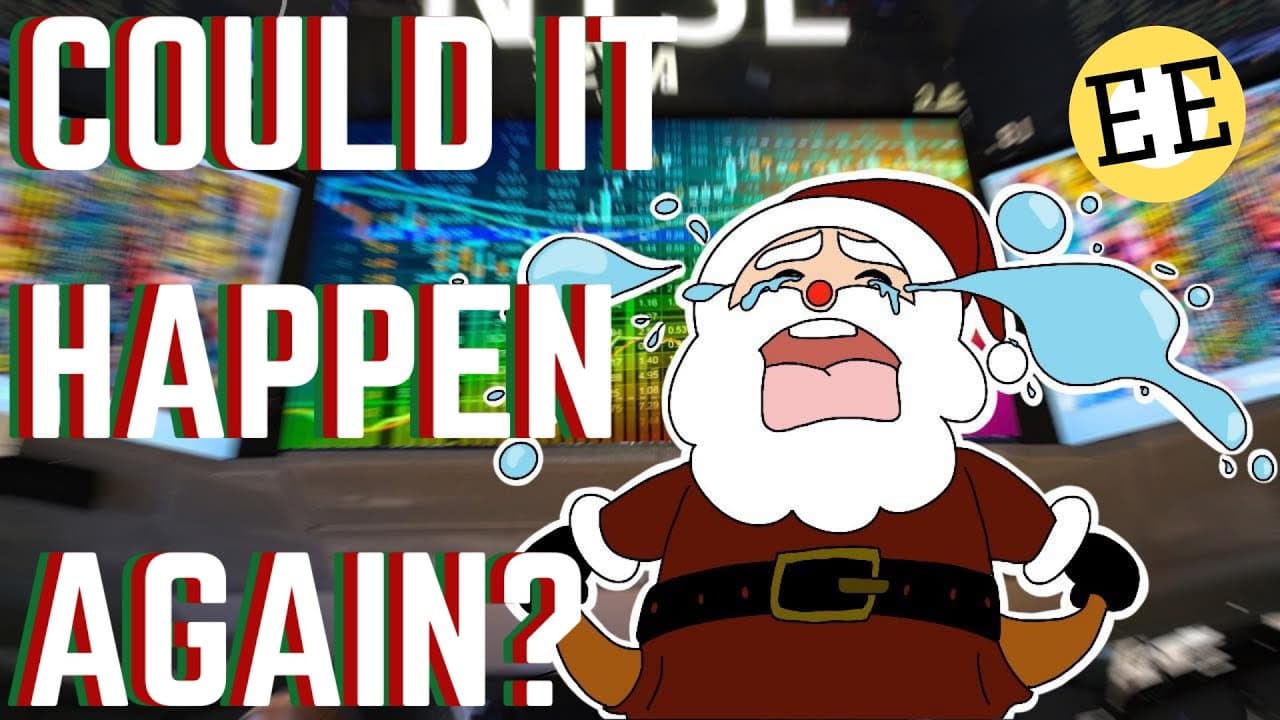
What Caused the 2018 Christmas Stock Market Crash?
TL;DR
The 2018 Christmas stock market crash was primarily driven by a crisis of confidence rather than fundamental financial issues. Despite fears of a recession, the market quickly rebounded in the new year. The crash highlighted the volatility of markets driven by speculation and technological advancements in trading.
Transcript
the Christmas crush of 2018 was a really important case study that up until now has been pretty much forgotten and even when it was happening probably didn't get as much attention as it should so what was the Christmas crash what caused it and why did everything pretty much go straight back to normal immediately after the new year now the first big... Read More
Key Insights
- The 2018 Christmas crash was not due to economic recession but a stock market decline.
- Global stock markets had seen unprecedented growth since the 2008 financial crisis.
- Technology companies played a significant role in market growth due to low variable costs and high scalability.
- High-frequency trading and retail investor accessibility increased market volatility.
- Speculation and anticipation of a recession contributed to market instability in December 2018.
- The crash was a result of panic selling rather than fundamental financial failures.
- Retail figures quickly restored confidence, leading to a market rebound in early 2019.
- The event underscored the speculative nature of modern markets and the role of investor sentiment.
Install to Summarize YouTube Videos and Get Transcripts
Explore YouTube Video Summarizer or Get YouTube Transcript Extractor
Questions & Answers
Q: What caused the 2018 Christmas stock market crash?
The 2018 Christmas stock market crash was primarily caused by a crisis of confidence among investors. Despite strong market performance over the previous decade, fears of an impending recession and concerns over speculative investments in technology companies led to panic selling. The crash was not driven by fundamental financial issues but by investor sentiment and market volatility.
Q: How did technology companies contribute to the stock market's growth?
Technology companies contributed significantly to the stock market's growth due to their high scalability and low variable costs. As these companies expanded, they attracted substantial investment, driving market growth. Their ability to grow rapidly and integrate technology into everyday life made them attractive to investors, despite some companies operating at a loss or without immediate profit plans.
Q: What role did high-frequency trading play in the 2018 crash?
High-frequency trading played a role in the 2018 crash by increasing market volatility. The accessibility of trading technology allowed for rapid buying and selling, often based on gut feelings rather than rigorous strategies. This contributed to the panic selling observed during the crash, as markets became more reactive to investor sentiment and less stable.
Q: Why did the market rebound quickly after the 2018 crash?
The market rebounded quickly after the 2018 crash due to the release of strong retail figures, which restored investor confidence. The crash was largely driven by speculative fears rather than underlying financial issues, so once positive economic indicators emerged, investors stopped panicking, leading to a swift recovery in the market.
Q: How does speculation affect stock market stability?
Speculation affects stock market stability by introducing uncertainty and volatility. When investors make decisions based on predictions or assumptions rather than solid financial indicators, market movements can become erratic. This was evident in the 2018 crash, where speculative fears of a recession led to panic selling despite the absence of fundamental economic problems.
Q: What is the difference between a stock market crash and an economic recession?
A stock market crash is a rapid decline in stock prices, often driven by investor sentiment and market volatility, whereas an economic recession is a prolonged period of negative economic growth, typically defined by two consecutive quarters of declining GDP. The 2018 Christmas crash was a stock market event, not an economic recession, as it was driven by speculation and not by fundamental economic decline.
Q: How have technological advancements changed stock trading?
Technological advancements have transformed stock trading by making it more accessible and faster. Platforms like Robinhood allow retail investors to trade easily, while high-frequency trading algorithms enable rapid transactions. These changes have increased market liquidity but also contributed to volatility, as trades can be executed based on immediate reactions rather than long-term strategies.
Q: What lessons were learned from the 2018 Christmas crash?
The 2018 Christmas crash taught investors about the impact of speculation and sentiment on market stability. It highlighted the importance of confidence in maintaining market equilibrium and demonstrated how rapidly markets can react to perceived threats. The event emphasized the need for investors to consider both technological influences and economic fundamentals when making investment decisions.
Summary & Key Takeaways
-
The 2018 Christmas stock market crash was a significant event driven by a crisis of confidence rather than fundamental financial issues. Despite fears of an impending recession, the market quickly rebounded in the new year, highlighting the speculative nature of modern markets.
-
Technological advancements in trading, such as high-frequency trading and increased accessibility for retail investors, contributed to market volatility. The crash revealed the influence of investor sentiment and speculation on market stability.
-
Technology companies, with their low variable costs and high scalability, played a crucial role in the stock market's growth over the past decade. However, their speculative nature also contributed to investor unease and market instability during the crash.
Read in Other Languages (beta)
Share This Summary 📚
Summarize YouTube Videos and Get Video Transcripts with 1-Click
Try YouTube Summary with ChatGPT & Claude or YouTube Transcript Generator
Explore More Summaries from Economics Explained 📚






Summarize YouTube Videos and Get Video Transcripts with 1-Click
Try YouTube Summary with ChatGPT & Claude or YouTube Transcript Generator