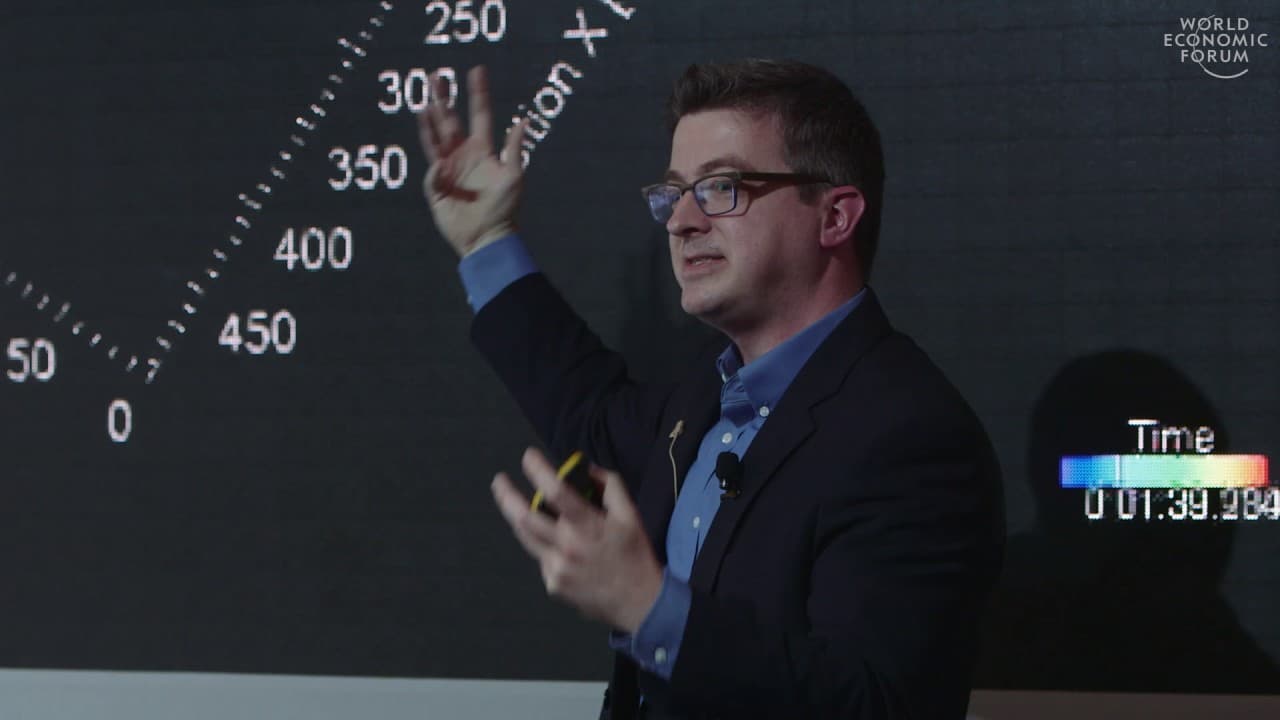
Towards an Artificial Brain | David Cox
TL;DR
Exploring the intersection of neuroscience and technology to construct artificial brains with potential implications for the future.
Transcript
quick audience participation how many of you raise your hands if you have one of these keep your hands up if you're if you're quite attached to it good I'm attached to mine as well so usually when we think about brains we think about the naturally occurring kind but what we're going to talk about today is as the prospect of building artificial brai... Read More
Key Insights
- 🧠 Neuroscience and computer science are driving the creation of artificial brains, exploring the brain's algorithms and hardware.
- 🤨 Advances in deep learning and neural networks are transforming industries, raising questions about the future of work and automation.
- 🧠 Research initiatives like Machine Intelligence from Cortical Networks aim to decode brain activity and enhance machine learning capabilities.
- 🤳 Ethical and societal implications of artificial intelligence, such as job displacement and self-driving vehicles, require interdisciplinary dialogue.
- 🧠 Historical analogies demonstrate how technology shapes our perception of the brain, influencing AI development.
- ❓ The fusion of neuroscience and technology offers vast opportunities but necessitates careful consideration of consequences.
- 💢 Deep learning advancements in computer vision and neural networks herald a new era of artificial intelligence.
Install to Summarize YouTube Videos and Get Transcripts
Explore YouTube Video Summarizer or Get YouTube Transcript Extractor
Questions & Answers
Q: How are neuroscience and technology intersecting to create artificial brains?
The fusion of neuroscience and computer science is driving the development of artificial brains. By leveraging advanced compute power and data, new technologies like deep learning and neural networks are rapidly advancing.
Q: What implications does the advancement of artificial brains have for society?
The rise of artificial brains may reshape industries, automate jobs, and revolutionize transportation with self-driving vehicles. This shift poses challenges and opportunities, requiring a multidisciplinary approach to address ethical and policy considerations.
Q: What current research initiatives are exploring the construction of artificial brains?
Projects like the Machine Intelligence from Cortical Networks aim to decode brain activity, map neural connections, and enhance machine learning algorithms. These efforts involve intricate experiments and cutting-edge technologies to unlock the brain's mysteries.
Q: How do historical perspectives on technology and the brain inform the current discourse on artificial intelligence?
Throughout history, technological advancements have shaped our understanding of the brain. The evolution from hydraulics to electronics mirrors the progress in AI, highlighting the intertwined relationship between technology and neuroscience.
Summary & Key Takeaways
-
Neuroscience and technology are converging, paving the way for the creation of artificial brains.
-
Historical analogies show how technology influences our understanding of the brain.
-
Advances in deep learning and neural networks are revolutionizing the field, raising ethical and societal implications.
Read in Other Languages (beta)
Share This Summary 📚
Summarize YouTube Videos and Get Video Transcripts with 1-Click
Try YouTube Summary with ChatGPT & Claude or YouTube Transcript Generator
Explore More Summaries from World Economic Forum 📚
Summarize YouTube Videos and Get Video Transcripts with 1-Click
Try YouTube Summary with ChatGPT & Claude or YouTube Transcript Generator