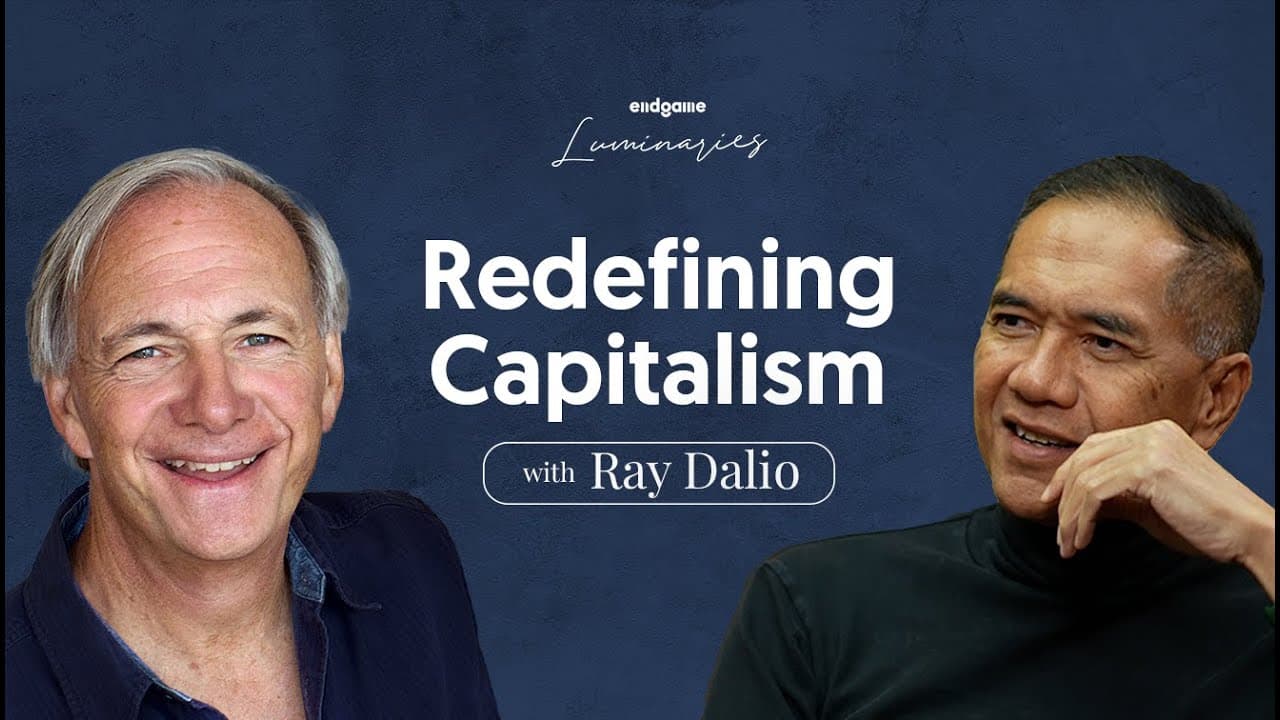
Ray Dalio on Global Economic Shifts and Future Challenges
TL;DR
Ray Dalio discusses the historical patterns of economic empires, emphasizing the cyclical nature of their rise and fall. He highlights the importance of financial prudence, societal productivity, and the need for systemic reform to address current global challenges such as wealth inequality and geopolitical tensions. Dalio also stresses the necessity of understanding historical cycles to better navigate future uncertainties.
Transcript
Welcome to this year’s special collaboration between Endgame and the Ubud Writers and Readers Festival. The theme of this year’s festival is 'Past, Present, and Future'. This year’s guest is American investor and author of “Principles for Dealing with the Changing World Order”, Ray Dalio. The aim of this discussion is to explore and reconcile the i... Read More
Key Insights
- Economic empires rise and fall in cycles, typically lasting about 250 years with transitional conflicts.
- Financial prudence involves spending less than one earns to ensure long-term security and independence.
- Wealth inequality and societal productivity are critical issues needing systemic reform for stability.
- Education and innovation are foundational to a nation's economic power and global competitiveness.
- Historical cycles show that internal and external conflicts often accompany the decline of dominant powers.
- Current global challenges include indebtedness, internal and external conflicts, and climate change.
- Ray Dalio emphasizes the importance of bipartisan cooperation to address systemic issues effectively.
- Emerging markets, particularly in Southeast Asia, present significant opportunities amidst global tensions.
Install to Summarize YouTube Videos and Get Transcripts
Explore YouTube Video Summarizer or Get YouTube Transcript Extractor
Questions & Answers
Q: How do economic empires rise and fall?
Economic empires typically rise and fall in cycles lasting about 250 years, with transitional periods of conflict. These cycles are driven by factors such as education, innovation, economic output, and military strength. As empires grow, wealth inequality often increases, leading to internal conflicts and eventual decline, often exacerbated by external challenges.
Q: What is the importance of financial prudence according to Ray Dalio?
Financial prudence is crucial for ensuring long-term security and independence. Ray Dalio emphasizes the need to spend less than one earns and to save for the future. This approach helps individuals and nations avoid dependency and vulnerability, allowing them to withstand economic challenges and maintain stability.
Q: How does Ray Dalio view the current global economic challenges?
Ray Dalio identifies several global economic challenges, including wealth inequality, indebtedness, and geopolitical tensions. He stresses the need for systemic reform and bipartisan cooperation to address these issues effectively. Dalio also highlights the importance of understanding historical cycles to navigate future uncertainties and avoid repeating past mistakes.
Q: What role do education and innovation play in a nation's economic power?
Education and innovation are foundational to a nation's economic power and global competitiveness. They drive technological development, increase productivity, and contribute to a country's overall strength. By investing in education and fostering innovation, nations can enhance their economic output and maintain a competitive edge in the global market.
Q: How do historical cycles affect the decline of dominant powers?
Historical cycles show that the decline of dominant powers is often accompanied by internal and external conflicts. As wealth inequality grows, internal tensions rise, leading to social unrest and potential revolutions. Externally, rising rival powers challenge the dominant nation, leading to geopolitical tensions and conflicts that further weaken the empire.
Q: What are the key global challenges identified by Ray Dalio?
Ray Dalio identifies key global challenges such as indebtedness, internal and external conflicts, climate change, and technological shifts. These challenges threaten global stability and require coordinated efforts to address. Dalio emphasizes the importance of understanding these challenges within the context of historical cycles to develop effective solutions.
Q: What opportunities exist in emerging markets according to Ray Dalio?
Emerging markets, particularly in Southeast Asia, present significant opportunities amidst global tensions. These regions are experiencing higher rates of capital formation and productivity growth. By remaining neutral in geopolitical conflicts and focusing on economic development, these markets can benefit from increased investment and business opportunities.
Q: How does Ray Dalio suggest addressing systemic economic issues?
Ray Dalio suggests addressing systemic economic issues through systemic reform and bipartisan cooperation. He advocates for a balanced approach that prioritizes financial prudence, societal productivity, and education. By fostering cooperation and understanding historical patterns, nations can develop effective strategies to tackle wealth inequality, geopolitical tensions, and other challenges.
Summary & Key Takeaways
-
Ray Dalio explores the cyclical nature of economic empires, highlighting the rise and fall patterns over centuries. He stresses the importance of financial prudence and societal productivity in navigating current global challenges. Dalio calls for systemic reform and bipartisan cooperation to address issues like wealth inequality and geopolitical tensions.
-
Dalio emphasizes the role of education and innovation in sustaining a nation's economic power. He discusses the historical cycles of empires, noting that internal and external conflicts often accompany their decline. The conversation touches on the need for understanding historical patterns to better prepare for future uncertainties.
-
The discussion covers global challenges such as indebtedness, climate change, and geopolitical tensions. Dalio highlights the opportunities in emerging markets, particularly in Southeast Asia, and stresses the need for systemic reform to ensure stability and prosperity. He advocates for a balanced approach to economic and social issues.
Read in Other Languages (beta)
Share This Summary 📚
Summarize YouTube Videos and Get Video Transcripts with 1-Click
Try YouTube Summary with ChatGPT & Claude or YouTube Transcript Generator
Explore More Summaries from Gita Wirjawan 📚



Summarize YouTube Videos and Get Video Transcripts with 1-Click
Try YouTube Summary with ChatGPT & Claude or YouTube Transcript Generator