Doctor Reacts To Holiday Movie Medical Scenes
TL;DR
Examining holiday-themed scenarios and debunking medical inaccuracies in classic cartoons.
Transcript
- It's time for a little holiday spirit and to fact check that holiday spirit. Let's check it out, beewoo. Was that a mint? (Buddy gulping) Or is that a cotton ball?
- [Cameraman] Cotton ball. I don't know what the negatives of eating cotton are, I don't think it's digestible. It's like probably just some kind of plant thing that just adds fiber an... Read More
Key Insights
- 😕 Classic cartoons often misinterpret health phenomena, which can confuse viewers about their bodies' functions.
- ❄️ The cold can trigger serious bodily responses, such as hypothermia, which highlight the need for proper education on winter safety.
- 🧑⚕️ Diagnosing health issues inaccurately in media can perpetuate misconceptions regarding serious conditions like weight gain and heart health.
- 😋 Non-food items pose distinct risks to children, emphasizing the need for adult supervision and education regarding safe practices.
- 😷 Core medical facts, such as how body temperature regulates and how heat loss occurs, are essential knowledge for health and safety.
- 🥶 Proper warming techniques in cold situations are crucial for preventing hypothermia and protecting vital functions.
- 🥺 Understanding the physiological basis for characters' experiences in cartoons could lead to broader discussions about health literacy.
Install to Summarize YouTube Videos and Get Transcripts
Explore YouTube Video Summarizer or Get YouTube Transcript Extractor
Questions & Answers
Q: Why should we avoid eating non-food items like cotton balls?
Eating inedible objects like cotton balls can lead to digestive issues. Cotton is not digestible and may simply pass through the body intact, but eating foreign objects can pose a choking hazard or cause intestinal blockages. Inedible items should never be consumed as they are not designed for human ingestion and can lead to serious health complications.
Q: What happens to the body in cold environments?
In very cold environments, the body's normal temperature, around 98.6°F, can drop significantly. If it falls below 95°F, the person can start experiencing hypothermia. Symptoms include shivering, confusion, and in severe cases, unconsciousness. It’s crucial to warm and dry someone quickly to prevent dangerous drops in body temperature and protect vital organ functions.
Q: What is the significance of a pulse during a medical check?
A pulse is vital for assessing heart health and systemic circulation. A strong, regular pulse indicates good cardiovascular health, while an irregular or weak pulse may signal underlying issues like arrhythmias or other medical conditions. Monitoring pulse during a check-up can help identify potential health risks early on.
Q: How can freezing a tongue to a metal pole be dangerous?
When a warm tongue touches a cold metal pole, heat transfers from the tongue to the pole rapidly, freezing moisture on the tongue's surface. This can cause the tongue to stick, requiring careful re-warming with room temperature water to prevent further injury. This highlights the dangers of high thermal conductivity in metals in cold climates.
Q: What medical conditions can cause unexpected weight fluctuations?
Sudden weight changes can signal hormonal imbalances, autoimmune disorders, or even cancer. Such changes should always warrant an investigation into underlying health issues. For example, unintentional weight gain may indicate heart failure, while unintentional weight loss can signal thyroid problems or malignancies.
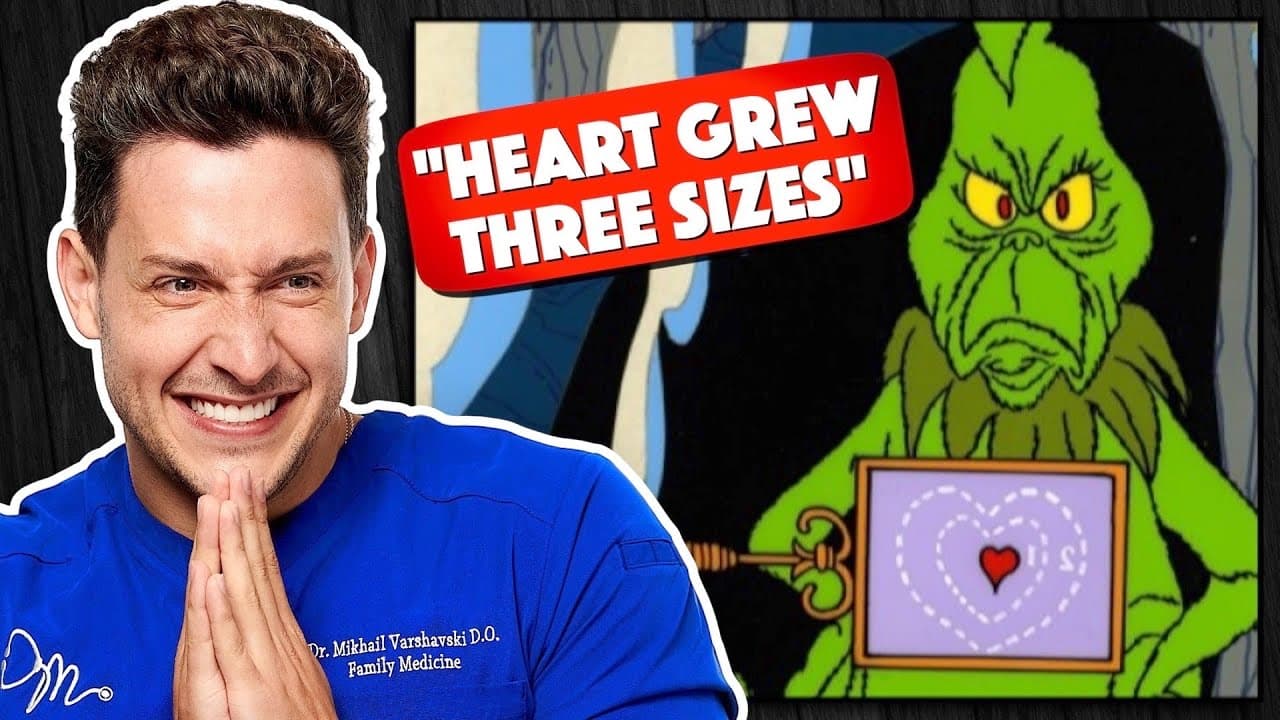
Q: Why is the depiction of the Grinch's heart growth medically inaccurate?
The depiction of the Grinch’s heart growing three sizes suggests a positive change when, in reality, a physically enlarged heart can indicate potential diseases like cardiomyopathy. A healthy heart does not typically grow larger without medical issues; in fact, such enlargement can lead to reduced heart function and increased health risks.
Summary & Key Takeaways
-
The content analyzes various holiday-themed scenarios from classic cartoons, scrutinizing their medical accuracy and potential misinformation.
-
It discusses the physiological responses depicted in children's animations, such as hypothermia symptoms and the dangers of consuming inedible objects like cotton balls.
-
The creator raises concerns about how these portrayals can mislead both children and adults regarding health, safety, and body responses during winter conditions.
Read in Other Languages (beta)
Share This Summary 📚
Summarize YouTube Videos and Get Video Transcripts with 1-Click
Try YouTube Summary with ChatGPT & Claude or YouTube Transcript Generator
Explore More Summaries from Doctor Mike 📚



Summarize YouTube Videos and Get Video Transcripts with 1-Click
Try YouTube Summary with ChatGPT & Claude or YouTube Transcript Generator