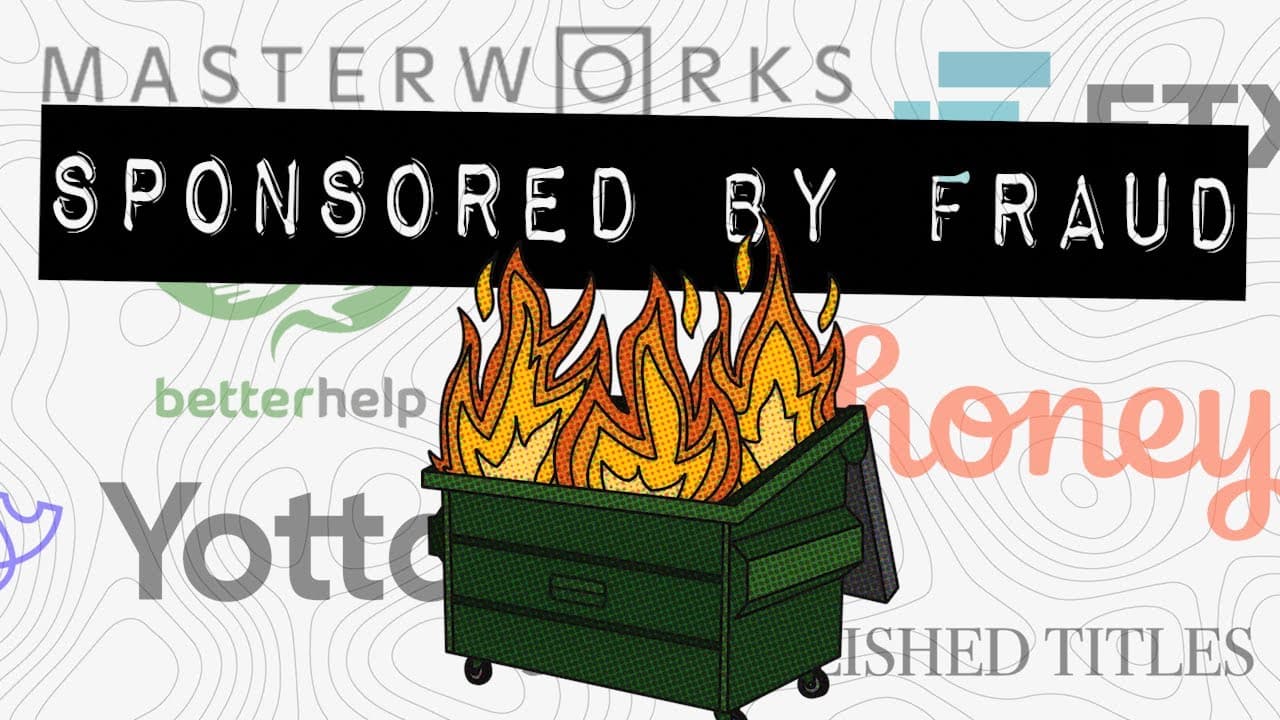
Why YouTube Sponsors Are (Almost) Always Terrible
TL;DR
YouTube sponsors are often terrible due to unreliable marketing practices.
Transcript
it's not just you YouTube sponsors are almost always terrible and they aren't going to get any better the online counseling service betterhelp is giving back nearly $8 million to customers this video in particular is sponsored by betterhelp and I'm grateful for that markets on edge one of the largest exchanges in th... Read More
Key Insights
- YouTube has evolved in under 20 years from basic home videos to high-quality productions, largely due to financial incentives.
- AdSense allowed creators to earn through native advertising, but direct sponsorships have become a significant revenue stream.
- Many YouTube sponsors are start-ups relying on aggressive marketing strategies known as blitz scaling to quickly capture market share.
- Blitz scaling involves spending more on advertising than revenue generated, aiming for rapid growth and market dominance.
- Influencers often promote dubious products due to financial pressures and short career spans, despite potential harm to their audiences.
- Parasocial relationships between creators and audiences lead to higher trust in influencer recommendations, even if scripted.
- Influencers face little to no repercussions for promoting bad products, and negative comments can even boost video engagement.
- Consumers share responsibility for the prevalence of bad sponsorships, as they often engage with controversial content.
Install to Summarize YouTube Videos and Get Transcripts
Explore YouTube Video Summarizer or Get YouTube Transcript Extractor
Questions & Answers
Q: Why are YouTube sponsors often problematic?
YouTube sponsors are often problematic because many are start-up companies engaging in aggressive marketing strategies known as blitz scaling. This approach prioritizes rapid growth over product quality, leading to unreliable products being promoted by influencers who face little accountability.
Q: What role does blitz scaling play in YouTube sponsorships?
Blitz scaling is a strategy where companies spend heavily on advertising to quickly gain market share, often spending more than they earn initially. This approach is common among YouTube sponsors, leading to rapid growth but often at the expense of product quality and consumer trust.
Q: How do influencers contribute to the problem of bad sponsorships?
Influencers contribute to the problem by promoting dubious products due to financial pressures and short career spans. They often rely on parasocial relationships with their audiences to build trust, even if the products they endorse are unreliable, facing little backlash for their endorsements.
Q: What is the impact of parasocial relationships on YouTube sponsorships?
Parasocial relationships lead audiences to trust influencer recommendations more than traditional ads. This trust is exploited by companies, allowing influencers to promote products with minimal scrutiny, even if they are unreliable, due to the perceived personal connection with their audience.
Q: Why do influencers face little backlash for promoting bad products?
Influencers face little backlash because negative comments can increase engagement, boosting their content's reach. Additionally, the lack of significant repercussions and the financial incentives to accept sponsorships encourage influencers to continue promoting questionable products despite potential harm.
Q: How has YouTube's financial model evolved over time?
YouTube's financial model has evolved from basic AdSense revenue-sharing to include direct sponsorships. Initially, only a select group of creators earned from native advertising, but now many rely on sponsorships, which often involve promoting unreliable products due to aggressive marketing strategies by sponsors.
Q: What responsibility do consumers have in the prevalence of bad sponsorships?
Consumers share responsibility by engaging with controversial content, which increases its reach. This engagement validates the effectiveness of dubious sponsorships, encouraging companies to continue using influencers to promote unreliable products, as the negative attention still benefits their marketing efforts.
Q: What challenges do influencers face in maintaining their careers?
Influencers face challenges like short career spans and financial pressures, leading them to accept lucrative sponsorships even if the products are unreliable. The competitive nature of content creation and the need for high production quality further push influencers to seek out these financial opportunities.
Summary & Key Takeaways
-
YouTube has transformed significantly, with financial incentives driving the evolution from basic videos to high-quality productions. AdSense and direct sponsorships now provide substantial revenue streams for creators, though the latter often involves unreliable products.
-
Blitz scaling, a strategy used by many start-up sponsors, involves aggressive marketing to rapidly gain market share. This approach focuses on growth over product quality, leading to many dubious products being promoted by influencers.
-
Influencers promote questionable products due to financial pressures and short career spans, often exploiting parasocial relationships with audiences. Despite potential harm, they face little backlash, and negative engagement can even boost their content's reach.
Read in Other Languages (beta)
Share This Summary 📚
Summarize YouTube Videos and Get Video Transcripts with 1-Click
Try YouTube Summary with ChatGPT & Claude or YouTube Transcript Generator
Explore More Summaries from Micro 📚


Summarize YouTube Videos and Get Video Transcripts with 1-Click
Try YouTube Summary with ChatGPT & Claude or YouTube Transcript Generator