Does Foreign Aid Increase Growth?
TL;DR
Foreign aid rarely leads to sustainable economic growth.
Transcript
today we're gonna be looking at a controversial question foreign aid does it increase growth I think the first thing which needs to be acknowledged is that we were much more optimistic about the role of foreign aid and growth in say the 1960s here is paul rosenstein-rodan you can find out more about him by the way in another video lecture in this s... Read More
Key Insights
- The big push theory suggests that significant investment can lead to self-sustaining growth, but this hasn't been the case with foreign aid.
- Countries receiving substantial foreign aid often fail to achieve economic growth, while those with less aid sometimes succeed.
- Corruption, ineffective institutions, and poor incentives are major barriers to the success of foreign aid.
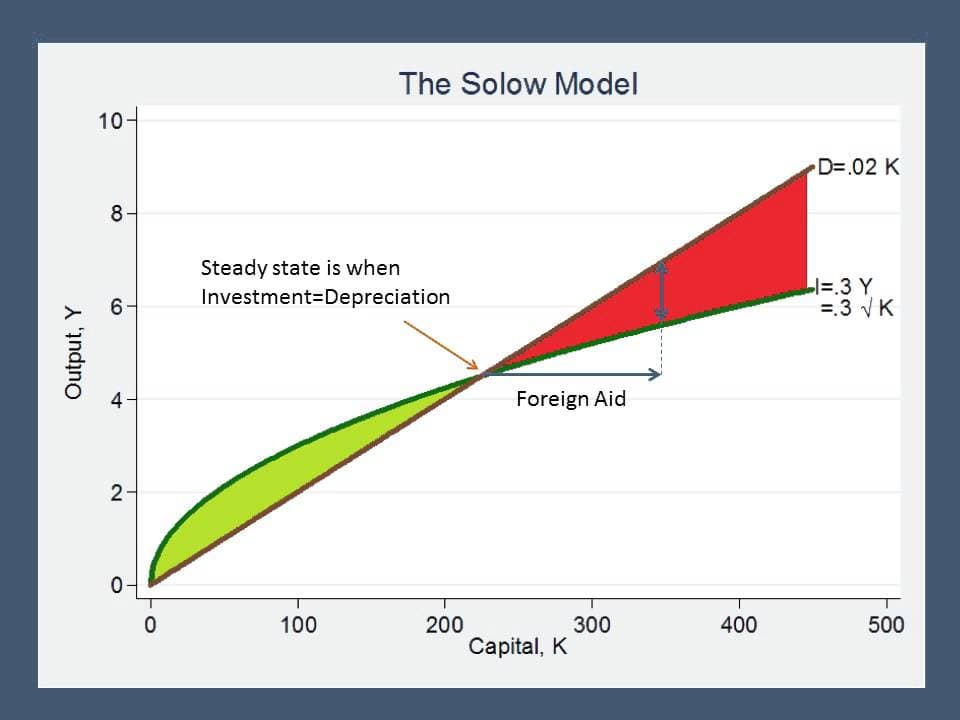
- The Solow model predicts that without fundamental economic changes, foreign aid only temporarily boosts capital stock, leading to eventual depreciation.
- Empirical studies show mixed results on foreign aid's impact on growth, with some suggesting aid works only with good policy.
- The Burnside and Dollar paper argued aid is effective with good policies, but later studies questioned the robustness of these findings.
- Recent studies highlight the complexity of measuring aid's impact due to factors like timing and reverse causality.
- Overall, non-aid factors play a more significant role in economic growth than foreign aid itself.
Install to Summarize YouTube Videos and Get Transcripts
Explore YouTube Video Summarizer or Get YouTube Transcript Extractor
Questions & Answers
Q: What is the big push theory regarding foreign aid?
The big push theory suggests that with a significant enough investment, a country can be launched into a path of self-sustaining economic growth. It likens this to getting an airplane off the ground, requiring a critical speed to become airborne. However, in practice, foreign aid has not consistently led to such outcomes.
Q: Why do countries receiving substantial foreign aid often fail to grow?
Countries receiving substantial foreign aid often fail to grow due to factors like corruption, ineffective institutions, and poor incentives. These issues prevent the proper utilization of aid, leading to temporary increases in capital stock that eventually depreciate without contributing to sustainable economic development.
Q: How does the Solow model view the impact of foreign aid?
The Solow model views foreign aid as a temporary boost to a country's capital stock. Without improvements in fundamental economic factors like technology and institutions, the increased capital from aid will depreciate over time, leading the country back to its steady-state economic level, thus failing to achieve long-term growth.
Q: What did the Burnside and Dollar paper conclude about foreign aid?
The Burnside and Dollar paper concluded that foreign aid could be effective when combined with good policy. They suggested that aid works when a country has reduced corruption and opened its borders, indicating that successful aid requires a conducive policy environment. However, this finding has been challenged by subsequent research.
Q: Why is it difficult to measure the impact of foreign aid on growth?
Measuring the impact of foreign aid on growth is difficult due to factors like timing and reverse causality. The effects of aid may take years to materialize, and aid is often given to countries in need, which are typically growing slowly. These complexities complicate the assessment of aid's true impact on economic growth.
Q: What have recent studies found about the effectiveness of foreign aid?
Recent studies have found that foreign aid has modest effects on economic growth, with non-aid factors playing a more significant role. These studies highlight the challenges in measuring aid's impact and suggest that while aid can have some positive effects, it is often insufficient to spark growth on its own.
Q: What role do non-aid factors play in economic growth?
Non-aid factors, such as governance, institutions, technology, and policy frameworks, play a crucial role in economic growth. These factors often have a more significant impact than foreign aid itself, as they determine how effectively resources are utilized and whether a country can achieve sustainable development.
Q: How has the perception of foreign aid changed since the 1960s?
Since the 1960s, the perception of foreign aid has become more skeptical. Initially, there was optimism about aid's potential to drive growth, but empirical evidence has shown mixed results. Many now believe that aid alone is insufficient without addressing underlying economic and institutional issues in recipient countries.
Summary & Key Takeaways
-
Foreign aid has been debated as a means to stimulate economic growth, with theories like the big push suggesting it could lead to self-sustaining development. However, empirical evidence often shows that aid fails to result in long-term growth, particularly in countries with poor governance and institutions.
-
The Solow model suggests that without changes in fundamental economic factors, foreign aid merely increases capital stock temporarily, leading to depreciation over time. This model aligns with observations that aid-receiving countries often revert to their steady-state economic levels.
-
While some studies, like Burnside and Dollar's, suggest aid is effective with good policy, subsequent research has challenged these findings. Recent literature indicates that non-aid factors are more crucial to economic growth, and aid's impact is modest and complex to measure due to issues like timing and reverse causality.
Read in Other Languages (beta)
Share This Summary 📚
Summarize YouTube Videos and Get Video Transcripts with 1-Click
Try YouTube Summary with ChatGPT & Claude or YouTube Transcript Generator
Explore More Summaries from Marginal Revolution University 📚

Summarize YouTube Videos and Get Video Transcripts with 1-Click
Try YouTube Summary with ChatGPT & Claude or YouTube Transcript Generator