Why Is Ibrahim Traoré Influencing U.S. Protests?
TL;DR
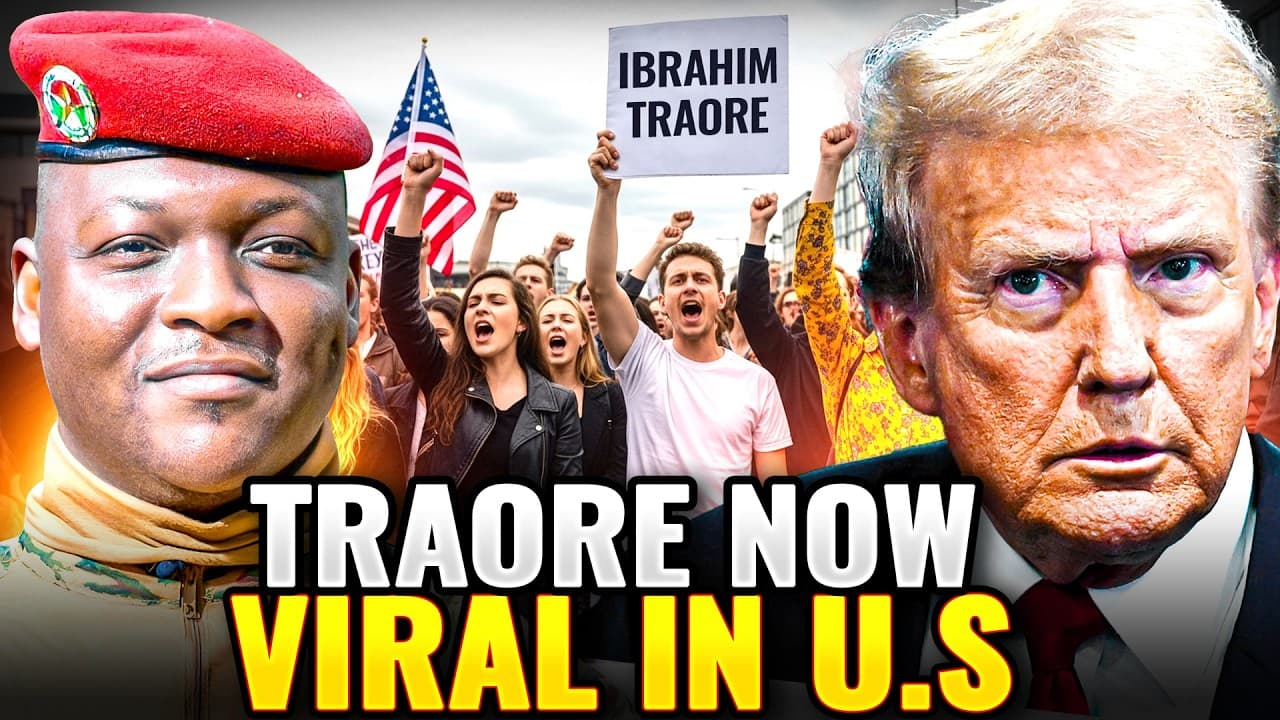
Ibrahim Traoré, a military leader from Burkina Faso, has become an unexpected symbol of authentic leadership for American protesters disillusioned with their own political figures. His defiance against Western dependency and his raw, unpolished approach have resonated deeply, particularly among black and immigrant communities, sparking a movement that challenges the status quo of leadership and inspires a new wave of resistance.
Transcript
let me tell you what Ibrahim Terori is doing he has got agricultural projects bkina Faso is having a farming boom right now because of this great African leader he has just made a law that any woman who has a child her medical bills are completely eliminated it's free to go to the doctor and have a child in Bkina Faso in this African country becaus... Read More
Key Insights
- Ibrahim Traoré is a military leader from Burkina Faso who has gained unexpected popularity in the U.S.
- Traoré's policies focus on independence from Western influence, rejecting IMF conditionalities and military dependency.
- American protesters have embraced Traoré as a symbol of authentic leadership, contrasting him with their own leaders.
- His rise to prominence highlights a desire for leadership that prioritizes principles over power.
- Traoré's influence has sparked a pan-African consciousness among African-Americans and first-generation immigrants.
- The movement inspired by Traoré challenges the narrative that Africa is a place of suffering, instead showcasing it as a source of strategic strength.
- His leadership style is seen as a blueprint for resisting corporate and political dependency in the U.S.
- The protests have led to a cultural and political shift, questioning Western policies and leadership models.
Install to Summarize YouTube Videos and Get Transcripts
Explore YouTube Video Summarizer or Get YouTube Transcript Extractor
Questions & Answers
Q: Why is Ibrahim Traoré's leadership resonating with American protesters?
Ibrahim Traoré's leadership resonates with American protesters due to his authentic approach and defiance against Western dependency. His policies focus on self-reliance and independence, rejecting IMF conditionalities and military dependency. This contrasts sharply with the perceived self-serving nature of U.S. politicians, making Traoré a symbol of genuine leadership and inspiring those disillusioned by American politics.
Q: What are the key policies of Ibrahim Traoré that have gained attention?
Ibrahim Traoré's key policies include expelling French forces, rejecting IMF conditionalities, and building homegrown food and transportation systems. These actions emphasize independence from Western influence and highlight his commitment to self-reliance. His defiance against being treated as a charity case by the West resonates with those seeking authentic leadership and has gained significant attention.
Q: How has Ibrahim Traoré's rise influenced African-American communities?
Ibrahim Traoré's rise has influenced African-American communities by sparking a pan-African consciousness and challenging narratives about Africa. His leadership style, which emphasizes independence and strategic strength, resonates with black Americans who see him as a reflection of black power that doesn't ask for permission. This has led to a cultural awakening and a shift in how Africa is perceived, from a place of suffering to a source of strategy.
Q: What impact has Traoré's leadership had on American protests?
Traoré's leadership has had a profound impact on American protests by providing a blueprint for resisting corporate and political dependency. His defiance against Western control has inspired protesters to question traditional leadership models and seek genuine representation. This has led to a cultural and political shift, with communities considering local applications of his strategies and challenging the status quo of leadership.
Q: Why is Traoré's influence seen as a challenge to Western leadership models?
Traoré's influence challenges Western leadership models by highlighting the effectiveness of independence and self-reliance. His rejection of Western dependency and focus on building internal strength contrast with the often power-driven nature of Western politics. This has prompted a reevaluation of leadership standards, emphasizing principles over power and inspiring a movement that questions traditional political narratives.
Q: How are American communities applying Traoré's strategies locally?
American communities are applying Traoré's strategies locally by exploring self-reliance and rejecting corporate dependency. Initiatives such as urban agriculture pilots and educational workshops focus on local production models inspired by Burkina Faso's food independence strategy. These efforts aim to replicate Traoré's defiance and build sustainable systems that prioritize community needs over external influence.
Q: What cultural shifts have occurred due to Traoré's influence?
Cultural shifts due to Traoré's influence include a renewed pan-African consciousness and a reevaluation of Africa's role in global politics. African-Americans and first-generation immigrants are embracing their heritage, seeing Africa as a source of strategic strength rather than a place of suffering. This has led to a cultural awakening, with communities adopting Traoré's principles and challenging traditional narratives about Africa.
Q: What challenges does the movement inspired by Traoré face?
The movement inspired by Traoré faces the challenge of turning admiration into application. While his leadership has sparked a cultural and political shift, there is a risk that the movement may become just another trend without lasting impact. Organizers emphasize the need for institutional memory, understanding and replicating Traoré's strategies to ensure the movement leads to tangible change and doesn't fade into symbolism.
Summary & Key Takeaways
-
Ibrahim Traoré, a military leader from Burkina Faso, has become a symbol of authentic leadership for American protesters. His defiance against Western influence and focus on self-reliance resonate with those disillusioned by U.S. politics. Traoré's rise has sparked a pan-African consciousness, challenging narratives about Africa and inspiring a movement for strategic resistance.
-
Traoré's policies prioritize independence from Western control, rejecting IMF conditions and military dependency. His raw leadership style contrasts with polished political figures, appealing to black and immigrant communities seeking genuine representation. This has led to a cultural and political shift, questioning traditional leadership models.
-
The movement around Traoré challenges the view of Africa as a place of suffering, instead highlighting its strategic strength. His influence has prompted American communities to consider local applications of his defiance, questioning corporate and political dependency. This shift in mindset is reshaping cultural and political landscapes, emphasizing clarity, courage, and community.
Read in Other Languages (beta)
Share This Summary 📚
Summarize YouTube Videos and Get Video Transcripts with 1-Click
Try YouTube Summary with ChatGPT & Claude or YouTube Transcript Generator
Explore More Summaries from Black Culture Diary 📚


Summarize YouTube Videos and Get Video Transcripts with 1-Click
Try YouTube Summary with ChatGPT & Claude or YouTube Transcript Generator