SAP ABAP - Types of Enterprise Software System
TL;DR
Centralized systems improve efficiency by consolidating data and reducing redundancy.
Transcript
in this video we will see different types of enterprise software systems so here let us see the agenda so first we will discuss beef and life wisdoms and the demerits of different life wisdom then we will see centralized system with the benefits of centralized system itself so in the previous video we saw typical process model that was being follow... Read More
Key Insights
- The video discusses different types of enterprise software systems, highlighting the transition from decentralized to centralized systems.
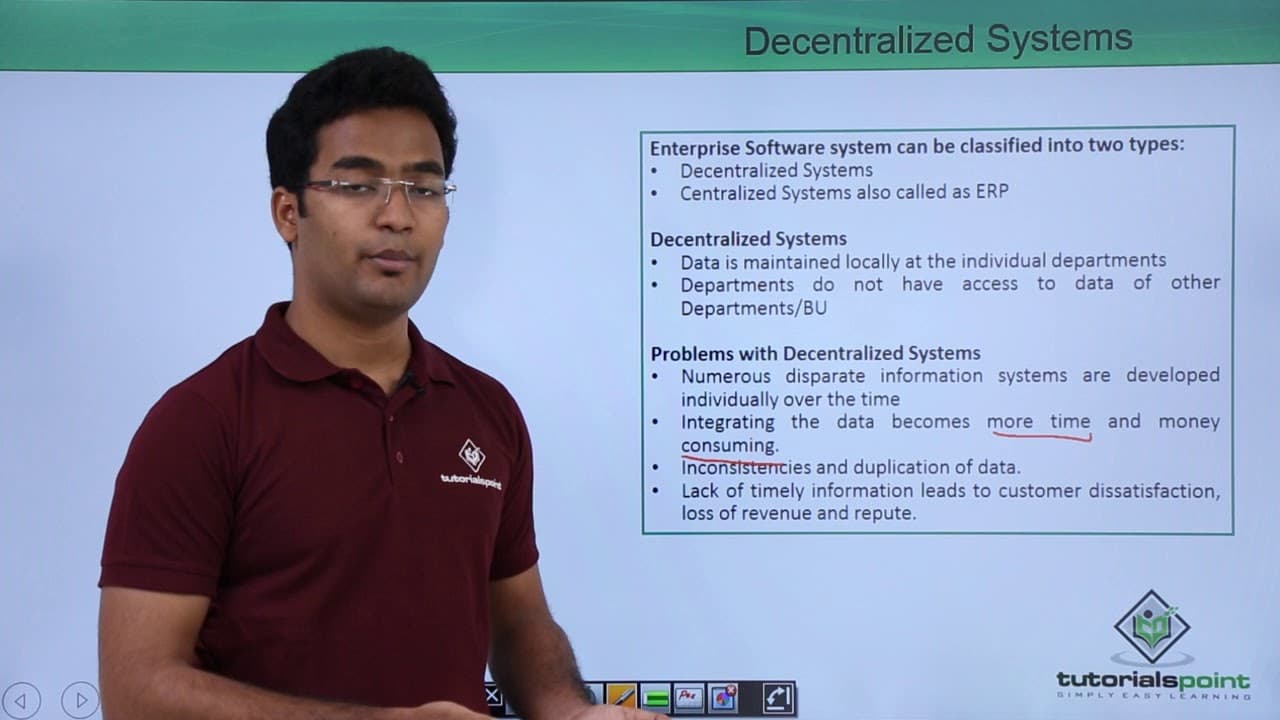
- Decentralized systems often lead to data duplication, inefficiencies, and increased costs due to maintaining multiple databases.
- A centralized system consolidates data into a single location, providing departments with real-time access to shared information.
- Centralized systems enhance productivity by eliminating data redundancy and ensuring timely access to information across departments.
- Improved inventory management and reduced material costs are benefits of adopting a centralized system, leading to increased revenue.
- Centralized systems promote better quality control and effective human resource management by streamlining data access and operations.
- Customer satisfaction is enhanced through real-time data availability, leading to improved service and increased throughput.
- The transition to centralized systems addresses the challenges of data discontinuity and redundancy inherent in decentralized systems.
Install to Summarize YouTube Videos and Get Transcripts
Explore YouTube Video Summarizer or Get YouTube Transcript Extractor
Questions & Answers
Q: What are the main drawbacks of decentralized systems?
Decentralized systems often lead to data duplication and inefficiencies due to the need to maintain multiple databases across departments. This results in increased time and cost for data management and integration, as well as challenges in providing timely information to customers, which can lead to dissatisfaction and revenue loss.
Q: How do centralized systems improve data management?
Centralized systems improve data management by consolidating data into a single location, eliminating the need for multiple databases. This approach reduces data duplication and redundancy, providing departments with real-time access to shared information, which enhances productivity, efficiency, and decision-making across the organization.
Q: What impact do centralized systems have on inventory management?
Centralized systems positively impact inventory management by providing real-time data access, allowing departments to make informed decisions based on up-to-date inventory levels. This leads to better resource allocation, reduced material costs, and improved quality control, ultimately enhancing operational efficiency and customer satisfaction.
Q: How do centralized systems enhance customer satisfaction?
Centralized systems enhance customer satisfaction by providing departments with real-time access to data, enabling them to respond quickly and accurately to customer inquiries. This improved service leads to better customer interaction, increased throughput, and ultimately, higher revenue as customers receive timely and efficient support.
Q: What are the productivity benefits of centralized systems?
Centralized systems boost productivity by streamlining data access and eliminating redundancy. Departments can access shared information in real-time, facilitating better coordination and decision-making. This leads to improved inventory management, quality control, and human resource management, reducing operational costs and enhancing overall organizational efficiency.
Q: How do centralized systems reduce material costs?
Centralized systems reduce material costs by providing accurate, real-time data on inventory levels and resource requirements. This allows organizations to optimize their purchasing and resource allocation, minimizing waste and ensuring that materials are used efficiently, which leads to cost savings and improved financial performance.
Q: What role do centralized systems play in human resource management?
Centralized systems play a crucial role in human resource management by providing real-time access to data on labor needs and availability. This enables HR departments to allocate resources more effectively, reducing labor costs and ensuring that the right number of employees are available to meet operational demands, enhancing overall efficiency.
Q: How do centralized systems address data discontinuity and redundancy?
Centralized systems address data discontinuity and redundancy by consolidating data into a single, unified database. This eliminates the need for multiple, disparate databases, ensuring that all departments have access to consistent, up-to-date information. This approach streamlines data management, reduces errors, and enhances organizational coherence and efficiency.
Summary & Key Takeaways
-
The video explores the transition from decentralized to centralized enterprise software systems. Decentralized systems often result in data duplication and inefficiencies, while centralized systems consolidate data, providing real-time access to information across departments, enhancing productivity and reducing costs.
-
Centralized systems eliminate the need for multiple databases, reducing data redundancy and promoting efficient data management. By providing real-time access to information, centralized systems improve inventory management, quality control, and customer satisfaction, ultimately increasing revenue and operational efficiency.
-
The benefits of centralized systems include improved productivity, reduced material costs, and effective human resource management. By streamlining data access, centralized systems enhance customer interaction and throughput, addressing the challenges of decentralized systems such as data discontinuity and redundancy.
Read in Other Languages (beta)
Share This Summary 📚
Summarize YouTube Videos and Get Video Transcripts with 1-Click
Try YouTube Summary with ChatGPT & Claude or YouTube Transcript Generator
Explore More Summaries from TutorialsPoint 📚



Summarize YouTube Videos and Get Video Transcripts with 1-Click
Try YouTube Summary with ChatGPT & Claude or YouTube Transcript Generator