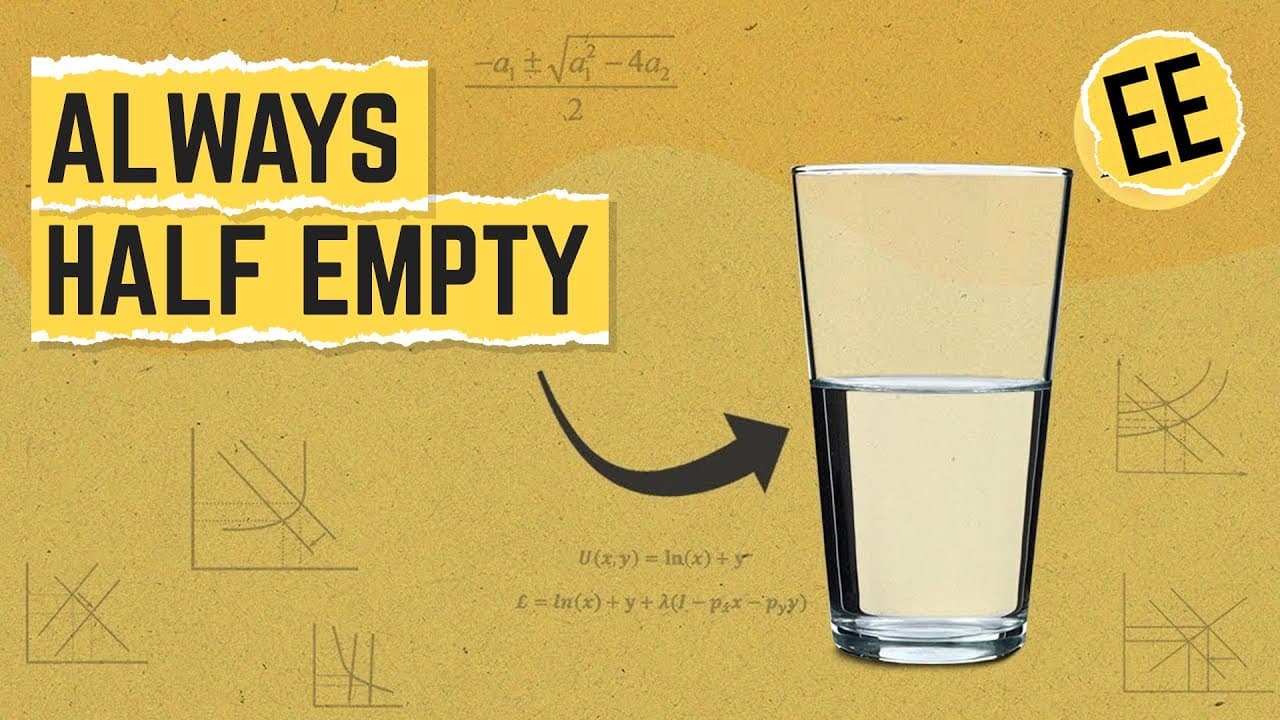
Are Economists Too Pessimistic? | Economics Explained
TL;DR
Economists often predict crises due to inherent biases and job roles.
Transcript
So somewhere between writing the video on MIT predicting the end of the world and researching how china forced themselves into a debt trap with their own high speed rail lines, a question occurred to me. Are economists too pessimistic? You almost always hear about how some economist or economic forum is predicting a crisis, or forecasting how our w... Read More
Key Insights
- Economists frequently predict crises, which may not always materialize, due to their role in identifying potential risks.
- The discipline of economics is a social science, making it challenging to predict human behavior accurately.
- Warnings from economists are often highlighted because bad news tends to attract more attention than positive news.
- Economists working in companies or government bodies focus on predicting potential negative impacts of projects, which influences their pessimistic outlook.
- Media and public interest in alarming economic predictions create a feedback loop that encourages economists to focus on negative outcomes.
- Economists' warnings, even if they don't come true, can lead to preventive measures that mitigate potential issues.
- The financial interests of investors and economists can influence the way economic predictions are presented to the public.
- Peer review and audience feedback are crucial in refining economic analyses and correcting mistakes in economic discussions.
Install to Summarize YouTube Videos and Get Transcripts
Explore YouTube Video Summarizer or Get YouTube Transcript Extractor
Questions & Answers
Q: Why are economists often seen as pessimists?
Economists are seen as pessimists because their role involves identifying potential risks and crises. This is compounded by the media's focus on negative news, which attracts more attention, and the inherent challenges of predicting human behavior in the social science of economics.
Q: How does the media influence economic predictions?
The media influences economic predictions by focusing on alarming news, which tends to attract more public attention. This creates a feedback loop where economists are encouraged to highlight potential crises, as negative forecasts are more likely to be reported and discussed widely.
Q: What role does peer review play in economics?
Peer review plays a crucial role in economics by ensuring that analyses and predictions are scrutinized and refined. It helps identify mistakes and improve the accuracy of economic discussions, allowing economists to learn from feedback and enhance the validity of their work.
Q: How do economists' warnings serve a purpose even if they don't come true?
Economists' warnings serve a purpose by prompting preventive actions that can mitigate potential issues. Even if the predicted crises don't materialize, the warnings lead to proactive measures that help organizations and governments prepare for and avoid negative outcomes.
Q: What are the challenges of predicting human behavior in economics?
Predicting human behavior in economics is challenging because it is a social science, and human actions are often irrational and unpredictable. Economists must account for complex and dynamic factors, making accurate predictions difficult and contributing to the perception of pessimism.
Q: How do financial interests influence economic predictions?
Financial interests influence economic predictions as investors and economists may have biases based on their investments. This can lead to predictions that align with their financial goals, affecting the objectivity of economic forecasts and potentially skewing public perception.
Q: Why is audience feedback important for economic analyses?
Audience feedback is important for economic analyses as it provides diverse perspectives and helps identify errors or alternative viewpoints. This interaction enhances the accuracy and reliability of economic discussions, ensuring that analyses are comprehensive and well-informed.
Q: What is the impact of economists' pessimistic outlook on their professional roles?
Economists' pessimistic outlook impacts their professional roles by making them cautious and risk-averse, which is necessary for identifying potential threats. This perspective helps organizations and governments make informed decisions, balancing optimism with realistic assessments of potential challenges.
Summary & Key Takeaways
-
Economists are often seen as pessimists because their role involves predicting potential risks and crises. This outlook is influenced by the nature of economics as a social science and the human tendency to focus on alarming news.
-
Economists' predictions, even if they don't come true, serve a purpose by prompting preventive actions. The media's focus on negative economic forecasts creates a cycle that encourages economists to highlight potential crises.
-
The financial interests of investors and the pressure to publish impactful research contribute to the pessimistic tone of economic predictions. Peer review and audience feedback play a vital role in refining and correcting economic analyses.
Read in Other Languages (beta)
Share This Summary 📚
Summarize YouTube Videos and Get Video Transcripts with 1-Click
Try YouTube Summary with ChatGPT & Claude or YouTube Transcript Generator
Explore More Summaries from Economics Explained 📚



Summarize YouTube Videos and Get Video Transcripts with 1-Click
Try YouTube Summary with ChatGPT & Claude or YouTube Transcript Generator